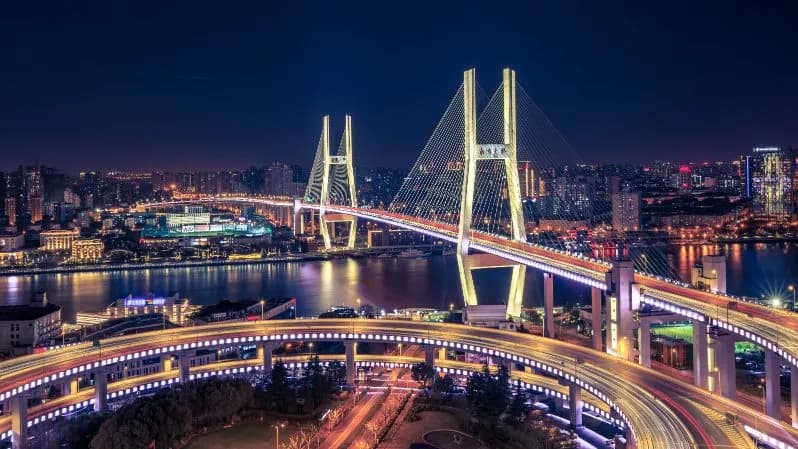
Tour overview
- Tour Code
- CN-SH-001
- Rating
- 4.9
- Duration
- 4 Days
- Destination
- Shanghai
- Tour Type
- Private for you only
- Suitable For
- China Culture Lovers
Starting from
$937 p.p
A private tour based on a stay in a 4-star hotel with double occupancy. The price is subject to the travel dates, the number of people, and the selected hotel.
Highlights
-Shanghai modern and nostalgic duet
-Hangzhou landscape and technology dialogue
-Nanxun authentic water town life
Your experience
Itinerary & tour details
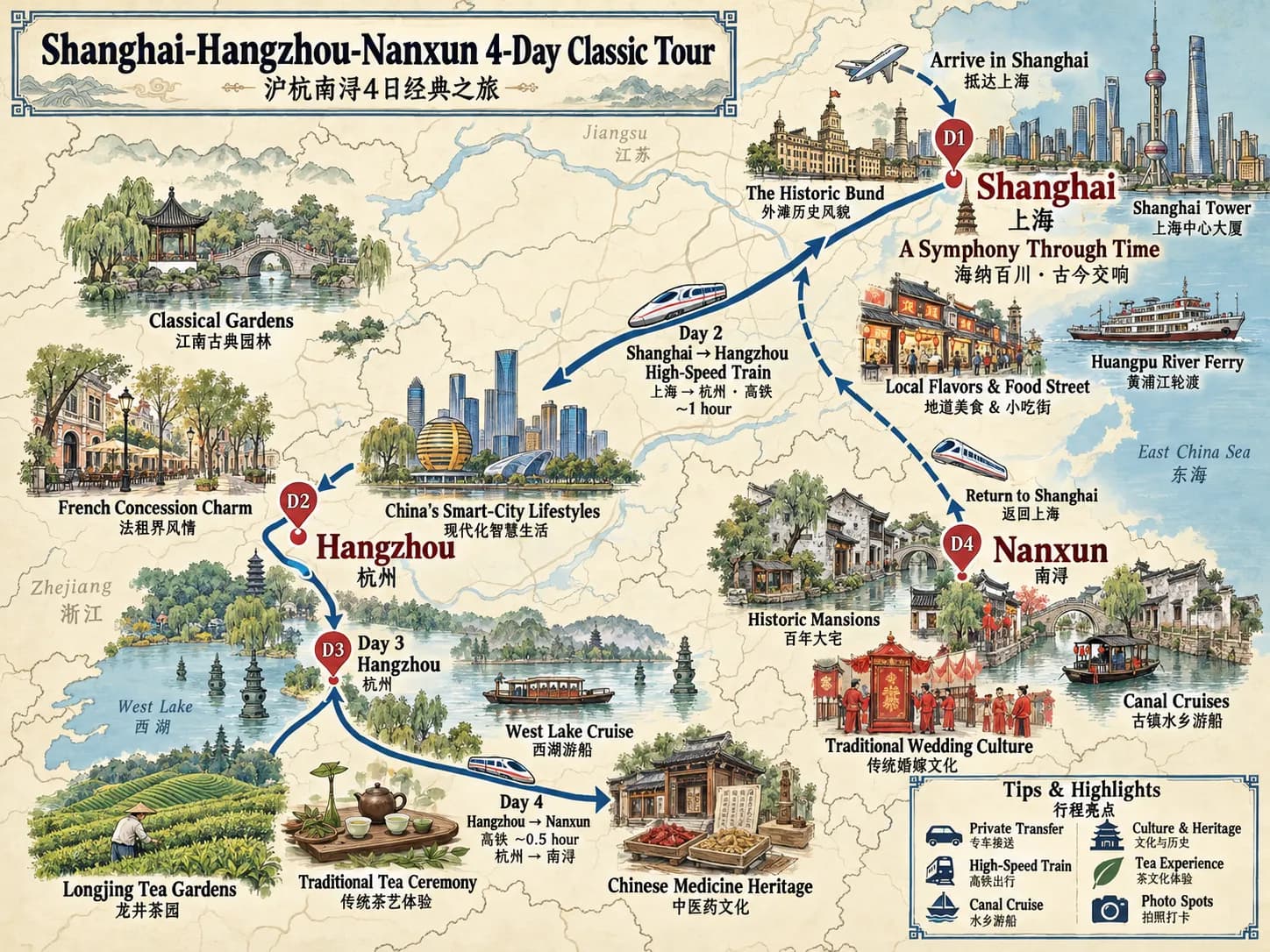
Welcome to Shanghai, a dynamic metropolis where a century of history meets cutting-edge innovation. Upon arrival, enjoy an exclusive private airport transfer arranged according to your confirmed itinerary. Your professional guide and private vehicle will ensure a comfortable introduction to the city, offering insights into Shanghai's fascinating transformation from a historic trading port into one of the world's leading financial and cultural centers.
After meeting your guide, transfer into the city and begin your exploration of Shanghai's distinctive character. Depending on your arrival time, you may first check in at your hotel or leave your luggage there before starting the sightseeing program. Take a moment to settle in and prepare for a day that combines historic architecture, authentic local food culture, riverfront scenery, and spectacular skyline views.
The Bund: A Journey Through Shanghai's Architectural History
Begin your sightseeing at the Bund, Shanghai's celebrated waterfront promenade and one of the city's most recognizable landmarks. Stretching along the western bank of the Huangpu River, the Bund is famous for its impressive collection of historic buildings representing different architectural styles, including neoclassical, Gothic, Baroque, and Art Deco influences.
As you stroll along the riverside promenade, admire the grand facades of former banks, trading houses, hotels, and financial institutions that reflect Shanghai's international commercial history. Your guide will introduce the stories behind selected buildings and explain how the waterfront developed into an important center of trade, finance, and international exchange during the late nineteenth and early twentieth centuries.
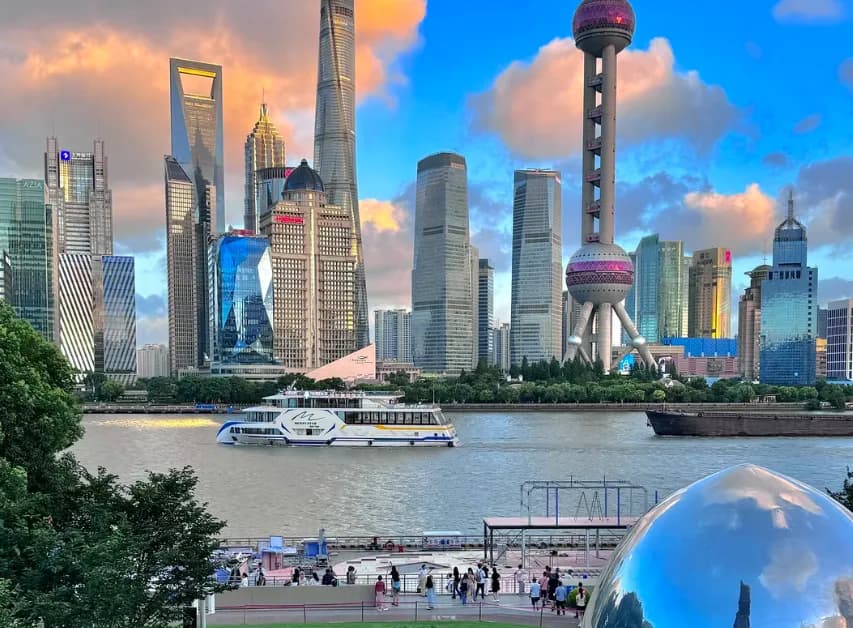
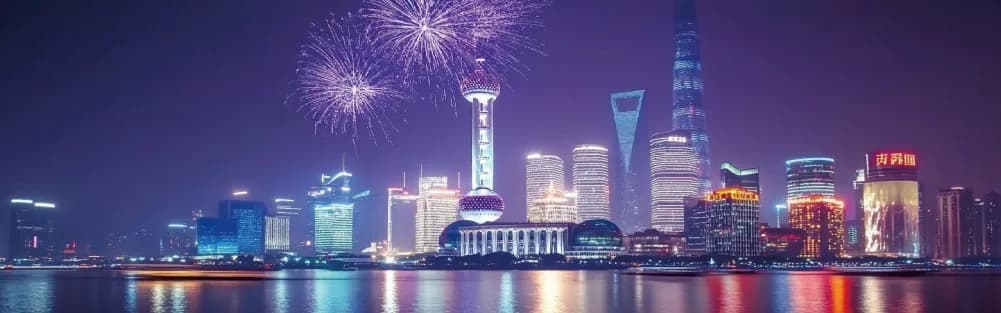
Pause at suitable viewpoints to observe the striking contrast between the historic architecture on the Puxi side and the modern skyscrapers of Pudong across the river. This visual contrast captures Shanghai's remarkable evolution, linking its historical identity with its contemporary ambitions.
Take time for photographs along the waterfront, particularly near the historic clock tower and the promenade's most recognizable architectural landmarks. Rather than rushing between attractions, enjoy a leisurely walk that allows you to appreciate the details of the buildings, the movement of river traffic, and the atmosphere of one of China's most famous urban landscapes.
Local Food Discovery: Authentic Flavors in Shanghai's Neighborhoods
Leave the main waterfront behind and explore a more intimate side of Shanghai through its neighborhood food culture. Your guide can introduce you to local eateries and small restaurants favored by residents, where traditional recipes and everyday dining customs remain an important part of urban life.
Discover the appeal of Shanghai-style shengjianbao, pan-fried buns with crisp golden bottoms, soft dough, and a savory filling. Other possible local specialties include scallion oil noodles, wontons, soup dumplings, and seasonal snacks, depending on the restaurants available along the route.
For a more personal experience, observe how neighborhood eateries prepare their signature dishes and learn about the ingredients, cooking methods, and eating traditions that distinguish Shanghai cuisine. Your guide can help identify suitable options based on your preferences, including lighter meals or vegetarian dishes where available.
The original itinerary highlights hidden local restaurants with a Michelin-style reputation. These should be understood as a culinary discovery experience rather than a guaranteed Michelin-starred dining reservation. Restaurant selection, waiting times, prices, and availability depend on the day of your visit.
Enjoy a relaxed meal or food-tasting stop at your own expense, allowing time to appreciate the flavors and atmosphere without interrupting the day's sightseeing rhythm.
Huangpu River Ferry: Experience Shanghai Like a Local
Continue to a designated public ferry terminal and board a Huangpu River ferry, an everyday mode of transportation that has connected the two sides of Shanghai for generations. Unlike a conventional sightseeing cruise, a public ferry offers a more direct glimpse into local life, allowing passengers to experience the river as part of the city's daily transportation network.
As the ferry crosses the Huangpu River, enjoy views of the surrounding waterfront, passing vessels, riverside promenades, and the ever-changing skyline. Depending on the selected route, you may see the historic Bund from a different angle while approaching the modern financial district of Pudong.
Listen to your guide's explanations about the river's role in Shanghai's development, from its historic importance in commercial shipping to its present-day significance as a defining feature of the city's urban landscape.
Take photographs from the designated passenger areas and enjoy the refreshing breeze during the crossing. Ferry routes, departure times, and ticket arrangements vary, so the specific terminal and crossing should be confirmed in advance. A public ferry ticket does not necessarily include a separate guided sightseeing cruise.
Shanghai Tower: A Spectacular View from the Clouds
In the late afternoon or evening, head to Shanghai Tower, one of the most prominent skyscrapers in the Lujiazui financial district. Its distinctive twisting form and extraordinary height make it a defining feature of Shanghai's contemporary skyline.
After entering the building, proceed through the designated visitor facilities and take the high-speed elevator to the observation area included in your ticket package. The rapid ascent provides a memorable introduction to the scale of Shanghai's vertical cityscape.
From the observation deck, enjoy panoramic views across the Huangpu River, the historic Bund, the surrounding financial district, and the vast urban landscape extending toward the horizon. On clear days, the elevated perspective reveals the relationship between Shanghai's historic neighborhoods, modern commercial centers, and expanding residential districts.
As daylight fades, watch the city gradually transform into a spectacular sea of lights. The illuminated buildings of Pudong contrast with the historic facades of the Bund, while the river reflects the colors of the surrounding skyline. This is an ideal opportunity for photography and a memorable conclusion to your first day in Shanghai.
Please note that observation deck access is subject to ticket availability, operating hours, weather, and visibility. Security checks and visitor queues may affect the time spent inside the tower.
After the visit, enjoy the remainder of the evening at leisure. Depending on your location and energy level, you may choose to dine at a nearby restaurant, take a short walk through the financial district, or return directly to your hotel for a restful evening.
Meals: Meals are arranged independently unless otherwise specified in the confirmed booking. Local food recommendations and restaurant stops can be coordinated with your guide.
Transportation: Private airport pick-up and sightseeing transfers according to the confirmed service arrangements. Public ferry transportation is subject to the selected route and ticket conditions.
Admission: Shanghai Tower admission and the designated ferry ticket are included only as specified in the confirmed package. Any additional attractions, restaurant expenses, and optional activities are at your own expense.
Accommodation: Shanghai.
After breakfast, begin your second day with a deeper exploration of Shanghai before traveling by high-speed train to Hangzhou. Today's itinerary brings together traditional garden design, historic residential streets, modern rail transportation, and an introduction to the digital services that have become part of everyday life in contemporary Chinese cities.
Meet your guide and depart for Yuyuan Garden, one of Shanghai's most celebrated classical Chinese gardens. Originally developed during the Ming Dynasty, the garden is known for its carefully arranged rockeries, tranquil ponds, ornamental bridges, traditional pavilions, and intricate architectural details.
Yuyuan Garden: Discover the Art of Classical Chinese Landscape Design
Enter the garden and explore its interconnected courtyards, winding paths, and scenic viewpoints. Unlike a modern public park, a classical Chinese garden is designed to create a sequence of carefully framed landscapes, with each turn revealing a new combination of water, rocks, plants, and architecture.
Observe the decorative windows, carved wooden elements, curved rooflines, and traditional pavilions that contribute to the garden's distinctive character. Your guide can explain how classical garden designers used visual balance, borrowed scenery, and symbolic details to create an intimate landscape within the urban environment.
Look for auspicious motifs and traditional decorative patterns that express themes of prosperity, longevity, harmony, and good fortune. These details provide insight into the cultural values embedded in Chinese architecture and garden design.
Allow time to pause beside the ponds, admire the carefully shaped rock formations, and photograph the traditional structures reflected in the water. The garden's atmosphere offers a peaceful contrast to the busy commercial streets outside its walls.
After the garden visit, explore the surrounding traditional commercial district if time permits. You may browse shops selling regional snacks, handicrafts, tea, and souvenirs, or enjoy refreshments at your own expense before continuing the journey.
Shanghai's Former French Concession: Tree-Lined Streets and Historic Villas
Continue to the historic Former French Concession, an area known for its leafy avenues, elegant residential buildings, historic villas, and distinctive blend of Chinese and European urban influences.
Take a leisurely walk beneath the plane trees along selected streets, observing the architectural details of the buildings and the changing character of the neighborhood. Depending on the route, you may encounter traditional lane houses, restored villas, independent boutiques, small galleries, and cafés occupying historic premises.
Your guide can introduce the area's historical development and explain how its architectural and residential character evolved over time. Look for decorative balconies, stone entrances, arched windows, and landscaped courtyards that reveal the diversity of Shanghai's historic built environment.
The neighborhood is also a popular place to observe contemporary local life. Residents walk their dogs, meet friends at cafés, shop at small specialty stores, and enjoy the shade of the mature trees. This everyday atmosphere offers a different perspective from the monumental buildings of the Bund and the high-rise financial district.
Depending on your interests and available time, your guide can select a suitable walking route through the neighborhood. Please note that the Former French Concession is a broad historic district rather than a single enclosed attraction, and access to private residences and buildings may be restricted.
High-Speed Rail Experience: Travel from Shanghai to Hangzhou
At the scheduled time, transfer to the designated railway station for your journey to Hangzhou aboard a high-speed train. China's high-speed rail network is an important part of the country's modern transportation system, connecting major cities with frequent services and comfortable passenger facilities.
After completing the station security procedures, locate your departure gate and board the train according to the information on your ticket. Once on board, settle into your assigned seat and enjoy the journey through the urban and suburban landscapes of the Yangtze River Delta.
The rail journey is commonly described as taking approximately 45 minutes on suitable direct services, although the actual duration depends on the selected train, departure station, and arrival station. Please use the confirmed ticket details rather than relying on a fixed travel time.
During the journey, enjoy the comfortable cabin environment and observe the changing scenery through the window. The experience provides a practical illustration of the speed and efficiency of modern intercity transportation in China.
Upon arrival in Hangzhou, meet your local driver or guide according to the confirmed arrangements and transfer to the next destination. The remainder of the day focuses on contemporary urban life and the digital services that distinguish many modern Chinese commercial environments.
Hangzhou Smart-City Experience: Digital Convenience in Everyday Life
Explore a suitable commercial district or public-facing retail venue in Hangzhou to discover how digital technology has become integrated into everyday shopping and urban services. Known for its technology sector and innovative business environment, Hangzhou provides a useful setting for observing China's rapidly developing digital economy.
Depending on venue availability, you may encounter self-service shopping systems, mobile payment facilities, digital membership services, automated collection points, and smart logistics displays. These technologies demonstrate how businesses use digital platforms to improve convenience and manage daily operations.
Your guide can explain how mobile payment applications are commonly used for purchases, transportation, food delivery, and other services. If you wish to try a digital payment system, make sure your payment application and account are configured appropriately before travel, as international visitors may face different registration and payment requirements.
The itinerary also highlights AI-enabled supermarkets and facial-recognition payment systems. These features should be treated as examples of technologies that may be encountered at selected venues rather than guaranteed activities. Availability varies by location, business policy, and current operating conditions.
For a practical demonstration, explore a suitable retail venue and observe how products are displayed, how self-service checkout operates, and how digital systems support inventory management or delivery logistics. Any hands-on participation should follow the venue's instructions and privacy requirements.
Learn about the development of rapid delivery services in major Chinese cities, where digital ordering platforms connect consumers, merchants, and delivery personnel. The commonly advertised delivery time of around 30 minutes is an illustrative service target rather than a guarantee for every order, product, or location.
After the visit, enjoy some free time to explore the surrounding commercial area or relax at a café. This flexible period allows you to experience Hangzhou at your own pace while preparing for the following day's tea culture and West Lake sightseeing.
Meals: Breakfast according to your confirmed hotel package; lunch and dinner are self-arranged unless otherwise specified.
Transportation: Private transfers for sightseeing and railway station connections. High-speed rail tickets and train arrangements should be confirmed in advance.
Important information: Yuyuan Garden and selected Former French Concession locations may be affected by visitor volumes and local access conditions. The smart-city experience depends on the availability of suitable public-facing venues; no specific commercial technology or payment demonstration is guaranteed.
Accommodation: Hangzhou.
Today is dedicated to Hangzhou's celebrated tea culture, the poetic scenery of West Lake, and the traditional knowledge that has shaped local life for generations. From the carefully cultivated Longjing tea gardens to a hands-on tea workshop and a relaxing boat ride, the day offers a combination of outdoor exploration, cultural learning, and regional culinary experiences.
After breakfast, meet your guide and travel toward the Longjing tea-growing area, where rolling green hills and carefully maintained tea plantations create one of Hangzhou's most recognizable rural landscapes.
Longjing Tea Gardens: Discover the Art of Tea Picking
Begin with a walk through the tea gardens, learning how the local terrain, climate, soil, and cultivation practices contribute to the distinctive characteristics of Longjing tea. The terraces and rows of tea bushes create a striking landscape, especially during the spring growing season when fresh leaves emerge across the hillsides.
Your guide can introduce the history of West Lake Longjing tea, one of China's best-known green teas, and explain the importance of careful harvesting and processing. The tea's reputation is closely associated with its fresh aroma, delicate flavor, and traditional pan-firing techniques.
If the season and farm arrangements permit, take part in a supervised tea-picking activity with local tea growers. Learn to recognize suitable young leaves and understand the traditional harvesting preference for tender shoots, often described as one bud with one or two young leaves, depending on the grade and local practice.
Try the picking technique yourself and discover why harvesting tea requires patience, attention to detail, and a good understanding of the plant's growth cycle. The activity provides an appreciation of the manual work involved in producing high-quality tea.
Please note that fresh-leaf availability varies considerably by season. Spring is generally the main harvest period for premium early-season Longjing tea, while activities at other times of the year may focus on plantation visits, cultivation demonstrations, or tea processing rather than actual picking.
As you walk through the plantation, enjoy views of the surrounding hills and traditional villages. Take photographs of the tea fields and learn about the role of tea cultivation in the local economy and the area's cultural identity.
Traditional Tea Workshop: Pan-Firing and Brewing Longjing Tea
Continue to a local tea house, farm courtyard, or suitable workshop venue for an introduction to traditional tea processing. Under the guidance of an experienced instructor, learn about the main stages involved in transforming freshly harvested tea leaves into finished green tea.
Discover how controlled heating, careful handling, and pan-firing techniques help preserve the leaves' color, aroma, and flavor. Your instructor may demonstrate the characteristic hand movements used during processing and explain how temperature and timing affect the final quality of the tea.
If hands-on participation is available, try selected steps under supervision. The activity provides insight into the skill required to produce Longjing tea and highlights the relationship between traditional craftsmanship and the quality of the finished product.
After the processing demonstration, take part in a Chinese tea ceremony. Learn how to prepare the teaware, measure the tea leaves, control the water temperature, and adjust the brewing time to bring out the tea's characteristic flavor.
Sample Longjing tea and compare its aroma, color, and taste across different brewing stages. Your instructor can explain the importance of water quality and brewing technique, as well as the customs associated with serving tea to guests in Chinese culture.
The original program references brewing Lion Peak Longjing with Hupao Spring water. If this specific combination is available, your instructor can explain its traditional reputation and role in Hangzhou's tea culture. Actual water sourcing and tea selection should be confirmed with the workshop provider.
Enjoy the quiet atmosphere of the tea house and take time to appreciate the subtle differences between successive infusions. The workshop offers a relaxed opportunity to connect with a local tradition that has been refined over many generations.
Hangzhou Tea-Inspired Cuisine: A Taste of Regional Culinary Creativity
At lunchtime, enjoy a tea-inspired meal at a suitable local restaurant, subject to the confirmed dining arrangements. Hangzhou's culinary traditions combine seasonal ingredients, careful preparation, and an emphasis on fresh flavors, while tea can provide an aromatic element in selected regional dishes.
Possible specialties include Longjing shrimp, a well-known Hangzhou dish that pairs tender shrimp with the delicate fragrance of green tea. Depending on the restaurant, you may also encounter tea-infused poultry, seasonal vegetables, or other dishes incorporating local ingredients.
Explore the relationship between regional cuisine and tea culture, learning how tea leaves or tea infusions can contribute fragrance, balance, and subtle complexity to food. Specific dishes depend on the restaurant's menu, seasonal availability, and your dietary preferences.
Meals are subject to the arrangements confirmed with your tour operator. If a tea banquet is not included in the package, the cost of lunch should be paid directly at the restaurant.
West Lake: Scenic Boat Ride and Classical Legends
In the afternoon, travel to West Lake, Hangzhou's celebrated UNESCO World Heritage Site. Surrounded by hills, landscaped shores, historic temples, causeways, and traditional pavilions, the lake has inspired generations of Chinese poets, painters, and storytellers.
Board the designated sightseeing boat and enjoy a leisurely journey across the water. From the lake, admire the changing views of wooded hills, historic structures, ornamental bridges, and landscaped islands.
Listen to your guide introduce the cultural legends associated with West Lake, including stories connected with Three Pools Mirroring the Moon and the famous Broken Bridge. These landmarks are deeply embedded in Chinese literary and popular traditions, adding layers of cultural meaning to the surrounding scenery.
Depending on the boat route, you may see some of the lake's best-known scenic features from the water. The exact route, boarding point, and available stops depend on the selected cruise service and current operating conditions.
Enjoy the opportunity to photograph the lake from different angles and observe how the scenery changes with the light, weather, and season. West Lake is particularly atmospheric when soft mist settles over the water, while clear days provide expansive views of the surrounding hills and shoreline.
After the boat ride, continue with a short lakeside walk if time permits. Follow a suitable section of the waterfront path and enjoy the balance of open water, mature trees, and traditional garden features that make West Lake one of China's most admired cultural landscapes.
Huqingyutang: Explore the Heritage of Traditional Chinese Medicine
Continue to Huqingyutang, a historic name associated with Hangzhou's traditional Chinese medicine culture. Depending on the selected venue and current opening arrangements, explore its heritage displays, traditional shopfronts, or exhibition spaces introducing the history of Chinese medicinal practices.
Learn about the historical role of herbal ingredients, traditional preparation methods, and the development of Chinese medicine shops as centers of treatment, consultation, and medicinal product preparation.
Your guide can introduce the traditional diagnostic framework often summarized as inspection, listening and smelling, inquiry, and palpation. These methods form part of the historical theory and practice of traditional Chinese medicine, reflecting a holistic approach to understanding a person's condition.
If the venue provides suitable educational displays, observe examples of commonly used medicinal plants and learn about their traditional names and historical applications. Any plant identification activity depends on the venue's available collection and should be understood as cultural education rather than personal medical advice.
Please note that an educational visit does not necessarily include a medical consultation, pulse diagnosis, or personalized treatment. Any clinical service would need to be arranged separately with an appropriately qualified practitioner.
Lakeside Afternoon Tea: A Relaxing End to the Day
Conclude the day with a relaxing tea break at a suitable lakeside tea house or café. Choose a comfortable setting with views toward the lake, nearby gardens, or distant hills, and enjoy a cup of Hangzhou tea while reflecting on the day's experiences.
Depending on the venue, you may select Longjing tea, other local teas, or a contemporary afternoon tea set accompanied by small pastries and refreshments. The original itinerary evokes the image of celadon teaware and sunset views toward Leifeng Pagoda; these details can be incorporated if the chosen venue, weather, and timing permit.
As the light softens over West Lake, enjoy a final opportunity for photographs and a peaceful moment away from the busier sightseeing areas. The combination of tea, water, and historic scenery offers a fitting conclusion to a day focused on Hangzhou's cultural identity.
After the tea break, return to your hotel or enjoy dinner at your own expense. Rest for the evening in preparation for the following day's visit to Nanxun, a historic water town known for its traditional residences, canals, and distinctive architectural heritage.
Meals: Breakfast according to your confirmed hotel package. Tea-inspired lunch and afternoon refreshments depend on the confirmed arrangements; any meals not explicitly included are self-arranged.
Transportation: Private transfers between the tea gardens, workshop, West Lake, Huqingyutang, and the selected tea venue according to the confirmed itinerary.
Admission: Tea-picking and processing activities, tea ceremony, West Lake boat ride, and Huqingyutang visit depend on the confirmed package and venue arrangements.
Important information: Tea picking is seasonal and may not be available outside the harvest period. Weather, garden access, workshop schedules, and boat operations may affect the sightseeing order. Please confirm the tea experience and meal inclusions before departure.
Accommodation: Hangzhou.
After breakfast, depart for Nanxun Ancient Town, a historic water town in northern Zhejiang Province known for its canals, traditional residences, stone bridges, and distinctive blend of Chinese and Western architectural influences.
Nanxun developed as an important center of commerce and silk production, and its historic streets reflect the wealth and cultural ambitions of the merchants and families who helped shape the town. Compared with some of the more crowded ancient towns in the Jiangnan region, Nanxun offers opportunities to explore historic architecture and waterways at a more relaxed pace, depending on visitor conditions.
Meet your driver at the scheduled time and travel toward Nanxun. Upon arrival, enter the designated scenic area and begin exploring its historic streets, canals, and traditional residential districts.
Canal-Side Exploration: Traditional Houses, Stone Bridges and Water-Town Scenery
Start with a leisurely walk along the waterways, where traditional houses line the canals and small stone bridges connect the historic streets. Observe the distinctive architectural features of the region, including whitewashed walls, dark tiled roofs, wooden balconies, carved entrances, and waterside courtyards.
The relationship between the buildings and waterways is central to the character of Nanxun. Historically, canals provided transportation for people and goods, while the houses and commercial premises along the banks supported the town's daily economic and social life.
Take time to explore the smaller lanes and discover details that may be overlooked during a hurried visit. Look for traditional doorways, decorative lattice windows, stone steps leading toward the water, and the varied facades of former residences and merchant premises.
The original itinerary describes a black-roofed boat journey through the canals. If a suitable sightseeing boat service is operating and included in your booking, board at the designated pier and enjoy a gentle cruise through the historic waterways.
From the boat, observe the town from the perspective of its canals, taking in the riverside houses, bridges, and quiet corners that define the water-town landscape. A canal cruise can also provide a more relaxed alternative to walking throughout the entire historic district.
Please note that boat availability, routes, operating times, and ticket inclusions depend on local arrangements. Morning mist and other atmospheric conditions are weather-dependent and should not be considered guaranteed features of the visit.
Zhang Family Mansion: Explore the Legacy of Jiangnan Merchants
Continue to Zhang Family Mansion, a historic residence associated with the commercial prosperity and cultural life of Nanxun's prominent families. The mansion provides an opportunity to understand how successful merchants invested their wealth in residences that combined practical living spaces with elaborate architectural and decorative features.
Explore the designated visitor areas and observe the arrangement of courtyards, halls, gardens, and connecting passageways. Traditional Chinese residences often use a sequence of enclosed and semi-open spaces to provide privacy, organize family life, and create a sense of order within the property.
Look closely at decorative woodwork, carved details, ornamental windows, and other architectural elements that reflect the craftsmanship of the period. Depending on the sections open to visitors, you may also encounter European-influenced design features that illustrate the international connections of some wealthy Jiangnan families.
Your guide can explain how Nanxun's historical prosperity was linked to the silk industry and regional trade, and how merchant families contributed to local education, architecture, philanthropy, and cultural development.
The mansion offers a valuable contrast to the traditional canal-side homes seen earlier in the day. While the waterfront streets reveal the everyday structure of the town, the grand residence demonstrates the resources and aspirations of families who played an important role in its economic history.
Allow time for photographs and a closer appreciation of the architecture before continuing to the next cultural activity.
Traditional Water-Town Wedding Culture: Discover Jiangnan Customs
Depending on the scenic area's program and the arrangements confirmed with your tour operator, experience a cultural presentation inspired by traditional Jiangnan wedding customs. The original itinerary highlights a water-town wedding ceremony, offering a themed introduction to the rituals and symbolism associated with marriage in traditional Chinese society.
Learn about customs such as ceremonial greetings, auspicious decorations, traditional wedding attire, and symbolic gestures representing family harmony and good fortune. Your guide or the local presenter can explain the cultural meaning behind selected elements and how wedding traditions varied across regions and historical periods.
If a staged performance or interactive demonstration is available, observe the sequence of the ceremony and appreciate the role of music, costumes, and traditional etiquette. Depending on the event format, visitors may be invited to participate in a limited, supervised activity or take photographs in designated areas.
The original program refers to the traditional ritual of worshipping Heaven and Earth. This custom is commonly associated with traditional Chinese wedding ceremonies and symbolizes the formal recognition of the marriage within a broader cultural and family context.
Please note that a wedding-themed experience should be understood as a cultural demonstration rather than a guarantee of participation in an actual local wedding. Performance schedules, costumes, participation opportunities, and additional charges depend on the venue and local arrangements.
After the activity, enjoy some free time to browse local shops, purchase traditional snacks, or take additional photographs along the canals. If you prefer a quieter experience, use this time to revisit a favorite street or relax at a local café.
Lunch and Leisure Time: Enjoy the Flavors of Nanxun
Before departing, enjoy lunch at your own expense at a restaurant within or near the historic area. Local dining options may include freshwater fish, regional noodle dishes, seasonal vegetables, and other Jiangnan specialties.
Choose a restaurant according to your preferences and available time, allowing enough flexibility for the afternoon transfer. If you have specific dietary requirements, inform your guide or driver in advance so that a suitable restaurant can be identified where possible.
After lunch, complete any final shopping or photography before meeting your driver at the designated pick-up location. Make sure you have collected your personal belongings and that all luggage is ready for the return journey.
Private Transfer to Shanghai: Journey's End
In the afternoon, depart Nanxun by private vehicle and return to Shanghai according to the confirmed transportation arrangements. The drive provides a comfortable opportunity to relax after several days of exploring the cultural landscapes and historic towns of the Jiangnan region.
Travel time depends on traffic, the precise drop-off location, and road conditions. If you have a flight or train departure scheduled for the same day, the transfer time should be coordinated carefully with your transportation operator to allow sufficient time for check-in, security procedures, and unexpected delays.
Upon arrival in Shanghai, proceed to your confirmed drop-off point, such as the designated airport, railway station, or another agreed location. Please verify the exact destination and service coverage before departure, as the original itinerary specifies a private transfer back to Shanghai but does not independently establish every possible drop-off arrangement.
Your journey concludes with a collection of memories spanning Shanghai's historic waterfront, Hangzhou's tea traditions and poetic lakeside scenery, and Nanxun's canals, merchant residences, and traditional cultural heritage.
Meals: Breakfast according to your confirmed hotel package; lunch and dinner are self-arranged unless otherwise specified.
Transportation: Private transfer to Nanxun and onward private transfer to Shanghai according to the confirmed itinerary.
Admission: Nanxun Ancient Town attractions, the Zhang Family Mansion, canal boat ride, and wedding-themed cultural experience are subject to the confirmed ticket package and local operating arrangements.
Important information: Boat rides and cultural performances may be affected by weather, seasonal schedules, visitor volumes, and venue operations. The exact sightseeing order may be adjusted to accommodate opening hours and the return transfer.
Your journey, simplified
How We Work
From the first idea to the final day, every detail is handled with care.
Share your travel ideas
Tell us where you want to go and what you enjoy.
Meet your travel advisor
We shape a personal itinerary around your priorities.
Confirm your journey
Review every detail and reserve with confidence.
Travel with support
Our team stays available throughout your trip.
Travel expert
Contact Your Travel Specialist
Get practical advice from a local specialist and turn this route into a trip that fits you.
Start planningRelated Articles
Swipe to explore