Best Xi'an Food for Foreigners: A Practical Food Guide for First-Time Visitors
Best Xi'an Food for ForeignersIf you are visiting Xi'an for the first time, you should not leave the city without trying its food. Xi'an is one of China's great food cities, famous for
If you are visiting Xi'an for the first time, you should not leave the city without trying its food. Xi'an is one of China's great food cities, famous for its hand-pulled noodles, flatbreads, lamb dishes, stuffed buns, cold noodles and Muslim-influenced cuisine.

But for many international visitors, ordering food in Xi'an can also feel a little challenging. Some dishes are spicy, some have unfamiliar textures, and some menus may not provide much English information.
The good news is that Xi'an has plenty of foods that are naturally suitable for foreign travelers. You do not need to start with the spiciest dishes or the most adventurous ingredients. A better approach is to focus on local specialties, choose mild flavors when necessary, and gradually try stronger flavors as you become more comfortable.

This guide introduces the best Xi'an foods for foreigners, explains what each dish tastes like, tells you which foods are usually spicy, and provides practical ordering tips for travelers with different dietary preferences.
Xi'an's food culture is strongly associated with wheat-based staples, beef and lamb, flatbreads, noodles and Muslim culinary traditions.
Unlike some regions of China where rice is the main staple, Xi'an has a particularly strong noodle and bread culture. Locals eat many different kinds of noodles, buns and flatbreads throughout the day.

For a foreign visitor, this actually makes Xi'an relatively easy to explore from a food perspective. Many famous dishes are filling, flavorful and relatively simple in their basic ingredients.
| Xi'an Food | Flavor | Spicy? | Good for First-Time Visitors? |
|---|---|---|---|
| Roujiamo | Savory, meaty, crispy and juicy | Usually no | ★★★★★ |
| Yangrou Paomo | Rich, savory lamb soup | Usually no | ★★★★★ |
| Liangpi | Cold, tangy, savory and chewy | Can be spicy | ★★★★☆ |
| Zeng Gao | Sweet, soft and sticky | No | ★★★★★ |
| Hulu Chicken | Crispy outside, tender inside | Usually no | ★★★★★ |
| Northwest Barbecue | Smoky, savory and cumin-rich | Optional | ★★★★★ |
What Is Roujiamo?
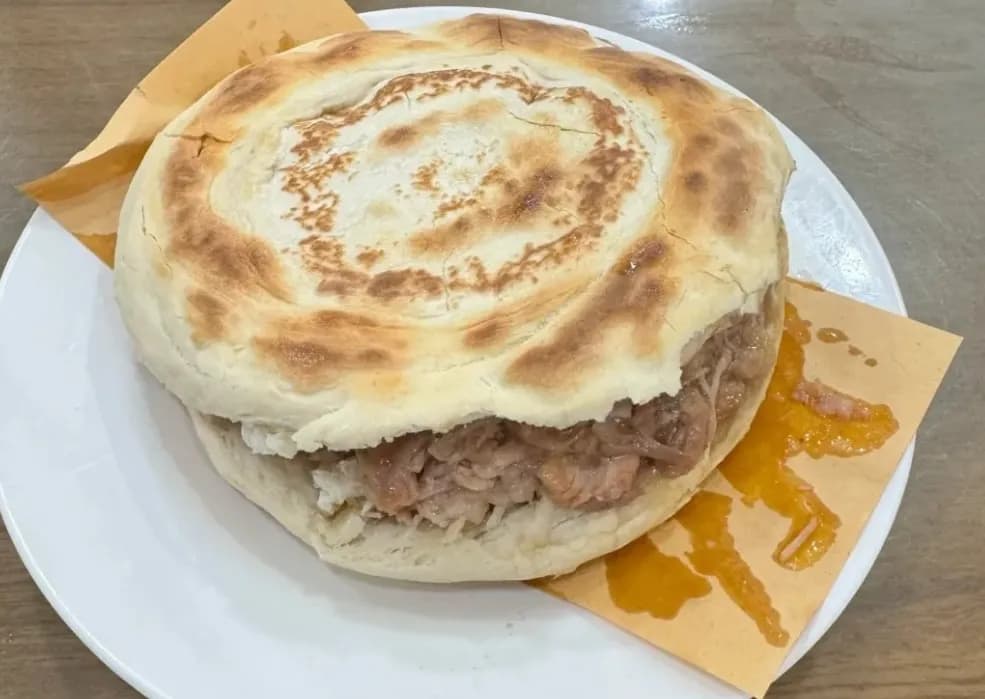
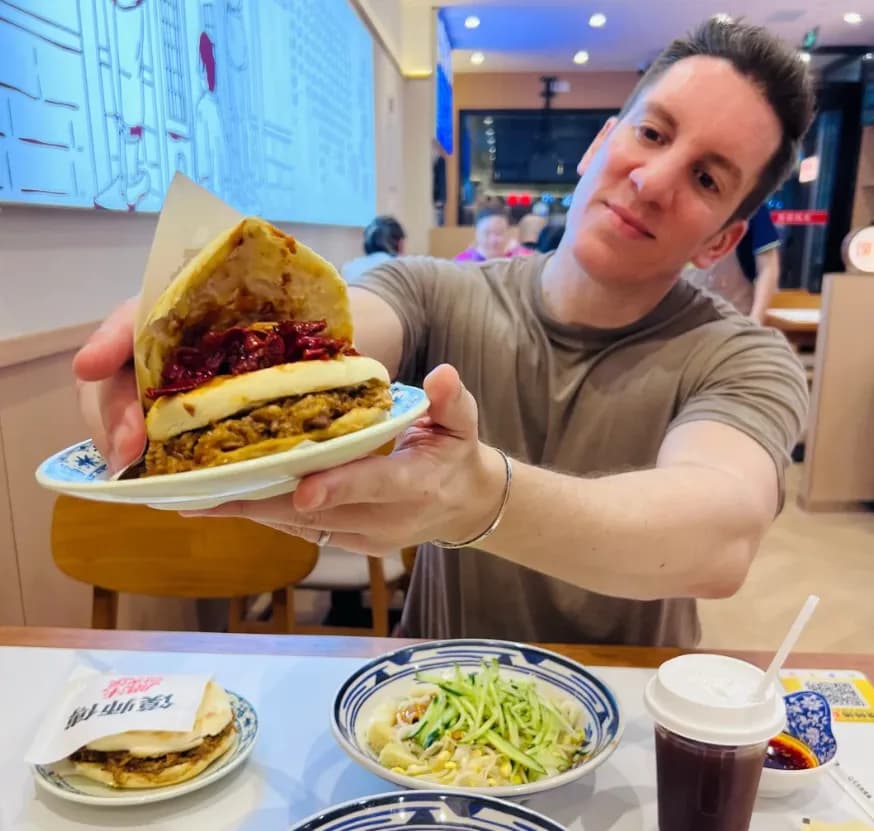
Roujiamo is one of the most recognizable foods in Xi'an and is often described as a Chinese-style meat sandwich.
The traditional version uses a crispy yet tender flatbread called baijimo, which is filled with chopped braised meat.
The bread is slightly crisp on the outside and soft inside, while the slow-cooked meat is rich, fragrant and juicy.
For visitors who are nervous about trying unfamiliar Chinese food, Roujiamo is one of the safest places to start.

Is Roujiamo Spicy?
Traditional Roujiamo does not have to be spicy.
However, some restaurants may add chili, pepper or other seasonings depending on the recipe.
If you do not eat spicy food, simply ask for a non-spicy version.
Why Is Roujiamo Good for Foreign Visitors?
The concept is easy to understand: crispy bread plus tender meat.
You can eat it as a quick breakfast, lunch, snack or casual meal while exploring the city.
If you only have time to try a few Xi'an specialties, Roujiamo should be near the top of your list.
What Is Yangrou Paomo?
Yangrou Paomo is a traditional Xi'an lamb soup made with tender pieces of lamb and pieces of flatbread soaked in a rich, savory broth.
One interesting part of the experience is that diners traditionally tear the bread into small pieces before the kitchen prepares the dish.

Visitors may be asked to break the bread into pieces roughly similar to the size of soybeans. It is part of the traditional eating experience rather than simply a cooking technique.
What Does Yangrou Paomo Taste Like?
The broth is rich and savory, while the lamb becomes tender and the bread absorbs the soup.
It is particularly satisfying on a cool day and offers a very different experience from spicy Sichuan-style food.
Is Yangrou Paomo Spicy?
Usually not.
However, condiments such as chili oil can be served separately.
If your foreign friend does not eat spicy food, ask for the soup without chili and add seasonings only if they are comfortable with them.
What Is Liangpi?
Liangpi is one of the most popular cold noodle dishes in Shaanxi.
The noodles are smooth, cool and slightly chewy. They are usually served with seasonings that create a combination of savory, tangy and spicy flavors.

Many versions also include gluten-like pieces known as mianjin, which add a pleasantly chewy texture.
Is Liangpi Spicy?
This is where foreign visitors should be careful.
Liangpi can be spicy.
Even when a restaurant describes something as “slightly spicy,” the chili level may feel much stronger to someone who is not accustomed to Chinese food.
If your guest does not tolerate spicy food, ask for no chili or choose a sesame-sauce-based Liangpi if available.
Why Should Foreigners Try Liangpi?
Liangpi is a great introduction to Xi'an's cold noodle culture.
The combination of smooth noodles, chewy wheat gluten, vinegar, sesame sauce and herbs creates a texture and flavor profile that is very different from Western pasta or noodles.
What Is Zeng Gao?
Zeng Gao is a traditional Xi'an-style sticky rice dessert made by steaming layers of glutinous rice and dates.
The texture is soft, sticky and slightly chewy, while the dates provide natural sweetness and a distinctive aroma.

What Does Zeng Gao Taste Like?
If your friend prefers sweet foods or is not ready for strong savory flavors, Zeng Gao is an excellent choice.
The combination of sticky rice and dates creates a comforting dessert that is very different from cakes, cookies or Western rice pudding.
It is not spicy.
What Is Hulu Chicken?
Hulu Chicken is a traditional Xi'an chicken dish known for its golden, crispy skin and tender meat.
The chicken is prepared through multiple cooking stages, producing a texture that is crisp on the outside while remaining tender inside.

It is commonly served with seasonings such as salt and pepper.
Why Is Hulu Chicken Good for Foreigners?
Chicken is a familiar ingredient for most international travelers, making Hulu Chicken an easy way to experience traditional Xi'an cuisine without starting with an unfamiliar ingredient.
It is also generally not dependent on chili for its flavor.
If you want to experience how locals eat in the evening, try Northwest-style barbecue.
Xi'an's barbecue culture includes grilled meat, flatbreads and vegetables cooked over charcoal and seasoned heavily with cumin and other spices.
Grilled Meat
Grilled lamb and other meats are especially popular.
The meat is usually smoky, savory and strongly flavored with cumin.
Some restaurants brush the meat with a rich house sauce before grilling, creating a deeper caramelized flavor.
Sweet-and-Sour Barbecue
If your friend does not like spicy food, look for barbecue dishes with a sweet-and-sour flavor.
The combination of sweetness and acidity can be easier for some international visitors to enjoy than heavily spicy barbecue.
Grilled Flatbread with Meat
Xi'an is sometimes jokingly called the “City of Breads” because of the huge variety of local bread and flatbread dishes.
That culture also appears in barbecue.
A crispy grilled flatbread can be filled with grilled meat, cumin and chili seasoning, creating a combination of crunchy bread, smoky meat and aromatic spices.
If you enjoy both meat and carbohydrates, this is one of the most satisfying street-food combinations to try in Xi'an.
Spicy food tolerance varies enormously between travelers.
One of the most important practical tips when eating in Xi'an is to understand that “mild” does not necessarily mean mild by international standards.
A dish described as slightly spicy in a local restaurant may still contain enough chili to surprise a traveler who rarely eats spicy food.
If your friend cannot tolerate chili, start with these options:
| Food | Recommended Spicy Level | Why It Works |
|---|---|---|
| Roujiamo | No chili | Meat and bread are familiar and easy to understand |
| Yangrou Paomo | No chili | Rich lamb soup without relying on chili |
| Zeng Gao | No chili | Sweet sticky rice and dates |
| Hulu Chicken | No chili | Crispy chicken with savory seasoning |
| Sesame-sauce Liangpi | Low or no chili | Cool noodles with nutty sesame flavor |
| Grilled meat | Ask for no chili | Cumin and charcoal provide plenty of flavor |
This is one of the most useful things to learn before your trip.
Say “No Spicy”
When ordering, you can say:
“No spicy, please.”
You can also show the phrase to the restaurant staff if communication is difficult.
Say “Shao La”
The Chinese phrase “Less spicy” (shǎo là) means “less spicy.”
For someone who has almost no tolerance for chili, however, saying “No spice” (bú yào là), meaning “no chili/no spicy,” is safer.
Ask About Chili Oil
Some dishes are prepared without chili but are served with chili oil separately.
This is ideal for groups with different preferences because travelers can add chili themselves.
Xi'an is particularly convenient for travelers who avoid pork because of its long history of Muslim cuisine.
The city has a large number of halal restaurants serving beef, lamb, chicken and other foods.
Many famous foods in the Muslim Quarter are based on beef or lamb rather than pork.
However, travelers with strict dietary requirements should still communicate clearly with restaurant staff and verify ingredients rather than assuming that every dish is suitable simply because it is sold in a Muslim-food area.
Good Choices for Travelers Avoiding Pork
Roujiamo made with beef or lamb can be a good option when clearly identified.
Yangrou Paomo is another natural choice because lamb is the main ingredient.
Northwest-style lamb skewers and other grilled lamb dishes are also popular.
When ordering, confirm the type of meat and ask whether the restaurant follows halal preparation practices if this is an important requirement for you.
Muslim Quarter
The Muslim Quarter is one of Xi'an's best-known food areas and is an easy introduction to the city's street-food culture.
It is colorful, lively and convenient for tourists, with many stalls and restaurants concentrated in a relatively small area.
However, the most famous main street can also be heavily commercialized and crowded, particularly during busy travel periods.
That does not mean the food is bad. It simply means that tourists should not assume that the busiest restaurant automatically offers the most authentic experience.
Sajinqiao
Sajinqiao is a popular alternative for travelers who want to explore local food away from the most heavily touristed section of the Muslim Quarter.
Look for small restaurants with local customers, simple menus and dishes being prepared continuously throughout the day.
For an international visitor, this can be a more interesting food experience than simply following the largest tourist crowds.
Dapiyuan
Dapiyuan is another traditional food area worth exploring.
It is particularly associated with Xi'an's Muslim culinary traditions and offers opportunities to try beef, lamb, noodles, flatbreads and other local specialties.
Rather than choosing a restaurant only because it has a large English-language sign, look at what local customers are ordering.
You do not need to find the most famous restaurant in the city to have a great meal.
For first-time visitors, several simple signals can be useful.
Look at the Customers
If a small restaurant is busy with local residents during normal meal times, that can be a useful sign that the food has a stable local customer base.
It is not a guarantee of quality, but it is often more informative than online popularity alone.
Look at What People Are Ordering
If you are unsure what to order, look at another table and identify the dish that appears most frequently.
You can point to it and ask for the same thing.
Choose Freshly Prepared Food
For noodles, barbecue and many street foods, freshly prepared dishes are generally more enjoyable than food that has been sitting for a long time.
You do not necessarily need to avoid unusual food forever.
The key is to avoid overwhelming your taste buds on your first meal.
Extremely Spicy Dishes
If you rarely eat chili, do not start by ordering the hottest version of a dish simply because it looks popular online.
Start mild and increase the spice level gradually.
Ordering Too Much Food
Chinese portions can be larger than some travelers expect, especially when ordering noodles, meat and bread-based dishes together.
For your first meal, order a few dishes and add more if necessary.
Assuming Every “Muslim Quarter” Restaurant Is the Same
The Muslim Quarter is a large food district rather than a single restaurant.
Quality, price and atmosphere can vary significantly from one shop to another.
Breakfast: Roujiamo
Start the day with a freshly prepared Roujiamo and a local drink.
Choose a non-spicy version if you are introducing Xi'an food to someone who is not used to chili.
Lunch: Yangrou Paomo
Try traditional lamb soup for lunch.
Take your time with the bread preparation and enjoy the rich broth.
Afternoon Snack: Liangpi
Try Liangpi as an afternoon snack.
Ask for no chili if necessary, or choose a sesame-sauce version.
Evening: Northwest Barbecue
Finish the day with grilled lamb, grilled meat and flatbread.
Ask the restaurant to reduce or remove chili while keeping the cumin seasoning.
Dessert: Zeng Gao
If you still have room, finish with Zeng Gao for a sweet taste of traditional Xi'an food culture.
Xi'an can be relatively affordable for international travelers, but prices vary significantly depending on location, restaurant type and the ingredients used.
Small local noodle shops and street-food stalls can be inexpensive, while well-known restaurants and tourist-oriented establishments may cost considerably more.
Instead of choosing food based only on price, compare the portion size, number of diners, location and type of restaurant.
Local food does not have to be expensive to be memorable.
Vegetarian travelers can find suitable food in Xi'an, but communication requires more attention.
Many traditional Xi'an specialties are based around meat, particularly beef and lamb, while some noodle dishes may use meat-based broth or animal products.
If you are vegetarian, clearly explain your dietary requirements and ask whether the dish contains meat, meat broth or other animal ingredients.
Do not assume that removing visible meat automatically makes a dish vegetarian.
Yes, but start with simple foods.
For children who are not used to spicy food, Roujiamo, mild noodles, Hulu Chicken and sweet Zeng Gao can be easier introductions than heavily seasoned cold noodles or spicy barbecue.
Always ask about chili before ordering.
You do not need to memorize complicated rules to enjoy food in Xi'an.
However, a few simple habits can make the experience easier.
Sharing Food Is Normal
Many Chinese meals are designed around sharing several dishes.
Ordering several specialties and allowing everyone to try a little is often more enjoyable than ordering one large portion for each person.
Use Chopsticks or Ask for a Fork
Chopsticks are standard in most local restaurants, but many restaurants can provide forks or spoons if you ask.
Do Not Be Afraid to Ask Questions
If you do not understand a dish, ask what type of meat it contains, whether it is spicy, and whether it contains ingredients you cannot eat.
A simple question before ordering is much better than discovering an unexpected ingredient after the food arrives.
| Rank | Food | Why Try It? |
|---|---|---|
| 1 | Roujiamo | The easiest introduction to Xi'an's bread and meat culture |
| 2 | Yangrou Paomo | A traditional local dish with rich lamb broth and no need for chili |
| 3 | Hulu Chicken | Crispy, tender and familiar to many international travelers |
| 4 | Northwest Barbecue | Smoky grilled meat with distinctive cumin flavor |
| 5 | Liangpi | A unique cold noodle experience with a different texture and flavor |
| 6 | Zeng Gao | A sweet traditional dessert that is easy to enjoy without spice |
This may sound strange, but it is one of the best pieces of advice for introducing Chinese food to a foreign friend.
You do not need to order the strongest-flavored dish simply because it is considered authentic.
Instead, start with foods that have familiar ingredients but distinctly local preparation.
For example, Roujiamo gives you bread and meat in a completely different format. Hulu Chicken introduces traditional Chinese cooking through a familiar ingredient. Yangrou Paomo provides a rich soup experience without requiring chili tolerance.
Once your friend becomes comfortable with the flavors, move on to Liangpi, spicy barbecue and other stronger regional specialties.
Xi'an is an excellent city for a first-time food adventure in China.
You can experience ancient culinary traditions without needing to start with extremely spicy dishes or unfamiliar ingredients.
If you are bringing a foreign friend to Xi'an, the best strategy is simple:
Experience the local specialties, control the spice level, respect dietary restrictions, and explore beyond the most touristy streets.
Start with Roujiamo, Yangrou Paomo, Hulu Chicken and Northwest barbecue. Then try Liangpi if your friend is comfortable with stronger flavors, and finish with Zeng Gao if they have a sweet tooth.
For the best local-food experience, do not limit yourself to the busiest section of the Muslim Quarter. Explore areas such as Sajinqiao and Dapiyuan, look for restaurants with local customers, and be willing to try small family-style shops.
Most importantly, remember that “authentic Xi'an food” does not have to mean “very spicy food.” Xi'an's culinary identity is much broader than chili. It is about wheat, noodles, bread, beef, lamb, charcoal grilling, traditional cooking techniques and a food culture that has developed over centuries.
That is what makes eating in Xi'an so rewarding for international travelers.
Related Articles
Swipe to explore