Why Do South Koreans Love Zhangjiajie So Much?
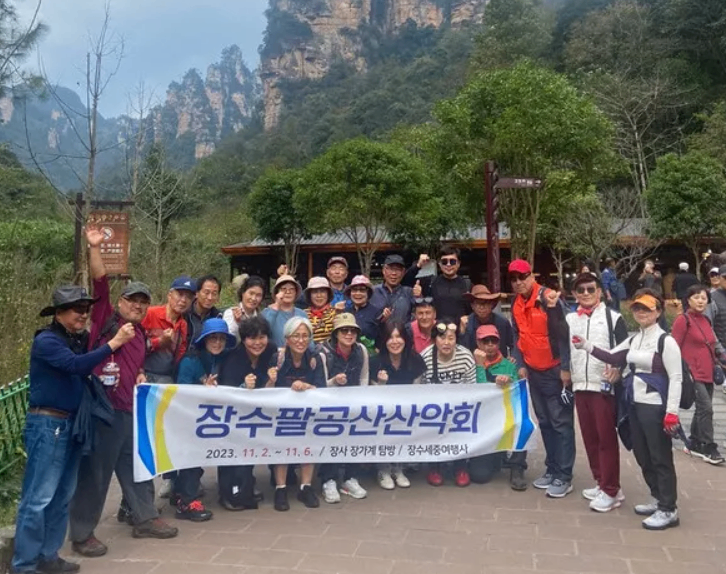
A popular saying in South Korea goes, "South Koreans cannot live without Zhangjiajie, just as the West cannot live without Jerusalem." Since the start of this year, Zhangjiajie has been a regular fixture on social media trending lists during holidays, with keywords like "Zhangjiajie is full of South Koreans" and "Why do South Koreans love Zhangjiajie so much?" In South Korea, there is also a widespread saying: "To show filial piety to your parents, send them to Zhangjiajie." When you see groups of elderly South Korean tourists exclaiming "Ohmo Ohmo" (a common Korean interjection) at the mountains, you’ll realize this is more than just a joke. This year, the number of South Korean tourists visiting China has surged by 900%, and Zhangjiajie has become their top destination. From January to February alone, Zhangjiajie received 106,106 inbound tourists, of which 45,823 were South Korean tourists, accounting for a staggering 43% of the total. South Korean tour groups to Zhangjiajie are fully booked until the end of October, and even the wooden cabins at Qixing Mountain for the next two months have been pre-booked by South Korean tourists. It’s hard to imagine how "Koreanized" Zhangjiajie’s tourism ecosystem has become today: almost every tour guide is proficient in Korean, Korean restaurants line the streets, even roadside milk tea shops have Korean menus, and South Korean won is accepted directly in scenic areas.
A Long - Standing Love Affair
You might wonder, why do South Korean tourists have such a strong preference for Zhangjiajie? "When I take a taxi in South Korea, all drivers, as soon as they hear I’m Chinese, will take out their phones to show me photos of Zhangjiajie," a Chinese girl who just arrived in South Korea said. "In South Korea, if you go out and ask people which Chinese cities they know, besides Beijing and Shanghai, it’s Zhangjiajie." In fact, many people who have visited Zhangjiajie before know that this "Korean Wave" is not a new phenomenon. As early as a decade ago, Zhangjiajie had already become a "spiritual sacred place" for South Korean tourists. "The mountain was full of staff and tour guides who could speak Korean. Back then, Korean signs were already popular throughout the scenic area, and restaurants also had Korean menus."
Geographical and Policy Convenience
Zhangjiajie is an almost barrier - free paradise for South Korean tourists. There are direct flights to Zhangjiajie Hehua Airport from Incheon and Daegu, with a total flight time of only 3 hours. There is a 24 - hour visa - on - arrival review service and 30 - minute convenient customs clearance for entry. From high - end hotels and homestays to restaurants and souvenir shops, there are complete POS machines that accept foreign cards. Even local small vendors in Hunan who do business here, such as fruit stall owners and milk tea shop owners, have learned a few simple Korean phrases, making it easy for them to take orders, collect payments, and even give directions.
A Landscape Beyond Korea's Reach
South Korea has many mountains, and South Koreans have always loved mountain climbing. When they saw the strange mountains of Zhangjiajie in TV advertisements back then, they were immediately excited. Travel agencies took the opportunity to launch the advertising slogan "Landscape you will never see in South Korea," which directly hit the pain point of South Korean tourists. On the other hand, travel agencies also established the "filial piety" image for Zhangjiajie at that time, encouraging young South Koreans to take their parents on trips to Zhangjiajie or pay for their parents to travel there. In newspaper archives from more than a decade ago, you can still find many relevant news headlines, such as "South Korean young people regard sending their parents to travel in Zhangjiajie as a filial ritual" and "The best gift for South Korean children to show filial piety to their parents: a trip to Zhangjiajie."
The Power of Pop Culture
Entering the 2010s, Zhangjiajie gradually opened up the South Korean youth tourism market, and the promotion of film and television dramas played a crucial role in this. First, there was the movie Avatar, released at the end of 2009. James Cameron filmed on location in Zhangjiajie, creating the magnificent otherworldly feel of Pandora. When South Korean audiences learned that the prototype of this magical landscape was the Chinese mountains that their parents had been longing for, they naturally had the idea of coming to see it with their parents. The scenic area responded quickly and immediately placed life - size Avatar figures in the corners of mountain roads suitable for taking photos. In 2016, the South Korean variety show Unity is Power filmed an episode in Zhangjiajie, describing the scenery as "every place your eyes can see is the best scenery in the world." By 2018, the hit South Korean drama My Mister also mentioned Zhangjiajie in a plot about showing filial piety to the elderly. With the promotion and broadcast of these programs on South Korean TV, Zhangjiajie became a hit on social media time and time again.
Questions?
-
Email
zhanwenjuan@lingshicha.net
-
WhatsApp