Zhangjiajie’s Inbound Tourism Boom vs. Underused Transit Visa-Free Policy: What’s Going On?
Let me tell you a weird thing I noticed during my recent trip to Zhangjiajie—this place is swamped with foreign tourists, but almost no one is using its transit visa-free policy. Like, what’s up with that huge contrast?
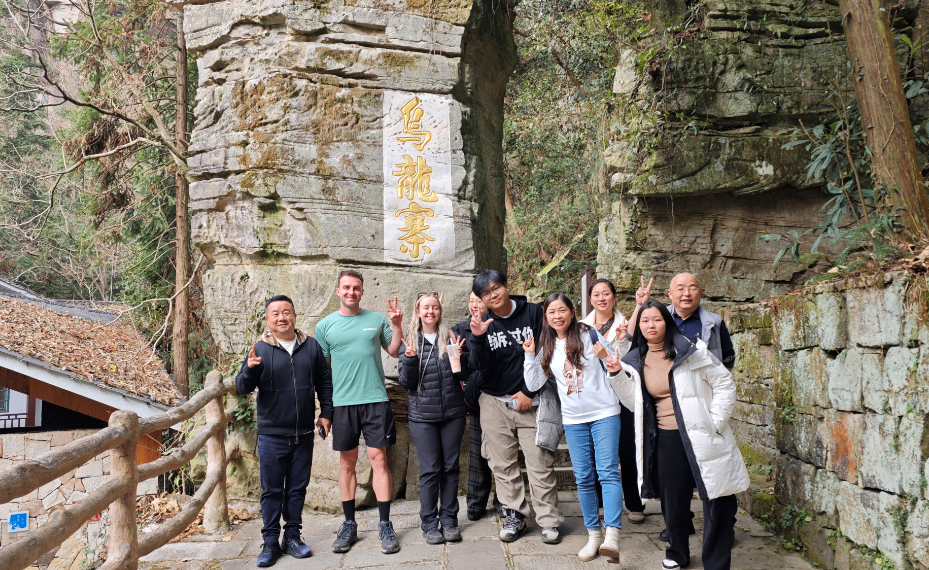
If you haven’t heard, Zhangjiajie is killing it in inbound tourism these days. For the second year in a row, the city’s border crossings have handled over 500,000 entries and exits—the highest among non-capital cities in central and western China. And get this: 93.6% of those travelers are foreigners. That’s a massive number, right? You walk around those iconic quartz sandstone peaks, and you’ll hear Korean, English, French, you name it.
But here’s the kicker: the city launched its transit visa-free program a year ago, and only 150-something people have taken advantage of it. 150! In a place that sees half a million international visitors annually. That’s not just a slow start—that’s a head-scratcher.
I sat down with Li Zaixing, the general manager of the Inbound Tourism Center at Hunan China Railway International Travel Service, to figure out why. And his answer was pretty straightforward: it’s a total mismatch between the policy’s design and how tourists actually visit Zhangjiajie.
Let’s break it down. The transit visa-free rule requires travelers to hold a connecting ticket to a third country. It’s built for transit passengers—people who are passing through a city on their way somewhere else. But most foreigners who go to Zhangjiajie? They’re dedicated tourists. They book group tours, fly in, spend days hiking the mountains, exploring the glass bridges, and eating spicy Hunan food, then fly straight back home. No third country involved. So they don’t qualify for transit visa-free at all.
Oh, and let’s not forget about South Korea—the biggest source of tourists for Zhangjiajie, and honestly, for most of Hunan province. Koreans already get a 30-day unilateral visa-free stay in China. Why would they bother with a 240-hour transit pass when they can stay longer without the hassle of a connecting ticket? It’s a no-brainer.
Compare that to Changsha, the capital of Hunan. Changsha’s airport has way more international flight options, linking to most of the 55 countries eligible for the 240-hour transit visa-free policy—especially European nations. Unsurprisingly, Changsha has had over 3,800 transit visa-free visitors since the policy rolled out. That’s how you make this kind of policy work: you need the flight routes to back it up.
Here’s the thing a lot of people don’t realize: transit visa-free is just one piece of China’s visa policy puzzle. It’s not meant to replace other visa-free options—it’s a supplement. Let’s look at the big picture: China has mutual visa-free agreements with 158 countries; 48 countries enjoy unilateral visa-free access to China; 55 countries are eligible for the 240-hour transit visa-free program.
When it comes to tourism, the first two options are way more “travel-friendly.” For example, Singaporean, Malaysian, and Thai tourists can stay 30 days per trip (and up to 90 days within 180 days) thanks to mutual visa-free deals. Korean tourists get 30 days of unilateral visa-free stay. Both are way better for a long vacation in Zhangjiajie than a 10-day (240-hour) transit window that forces you to book a connecting flight.
At the end of the day, Zhangjiajie’s situation tells us a crucial lesson for tourism policymakers: a policy is only as good as how well it fits the needs of your actual visitors. Zhangjiajie nails the inbound tourism game with its stunning scenery and group tour offerings, but its transit visa-free policy is targeting the wrong crowd.
Questions?
-
Email
zhanwenjuan@lingshicha.net
-
WhatsApp