Tour overview
- Tour Code
- CN-CQ-003
- Rating
- 4.9
- Duration
- 6 Days
- Destination
- Chongqing +Chengdu
- Tour Type
- Private for you only
- Suitable For
- China Culture Lovers
Starting from
$857 p.p
A private tour based on a stay in a 4-star hotel with double occupancy. The price is subject to the travel dates, the number of people, and the selected hotel.
Highlights
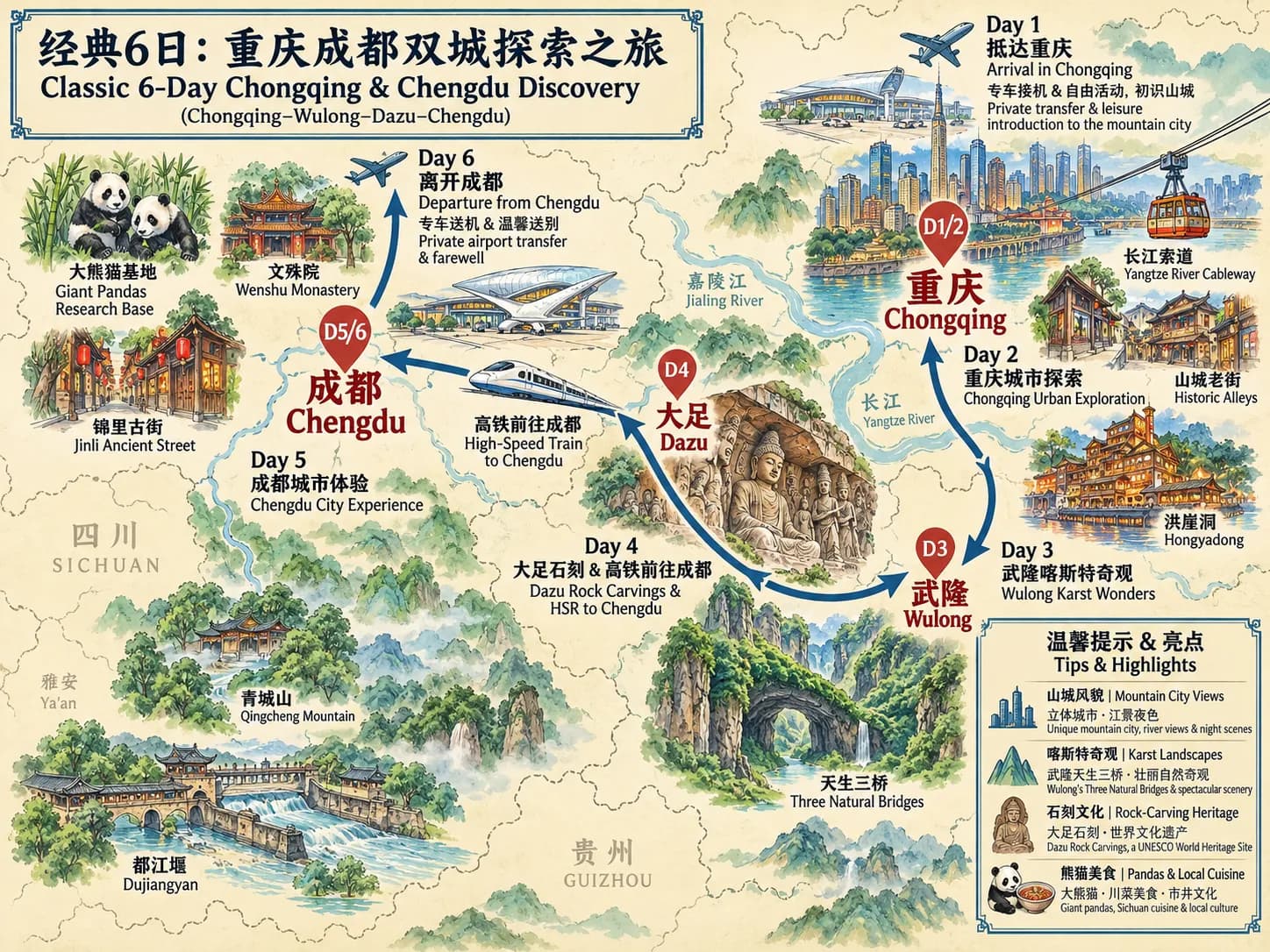
Cross the mountain city old street and the spectacular Yangtze River cable car
Visit the karst and world heritage stone carvings in Wulong
Watch pandas up close and wander around the ancient streets of Chengdu
Your experience
Itinerary & tour details
Welcome to Chongqing, one of China's most fascinating metropolitan destinations, famous for its dramatic mountain landscapes, layered urban architecture, winding rivers, and vibrant culinary culture. Built across steep hills at the confluence of the Yangtze and Jialing rivers, Chongqing offers a distinctive cityscape where elevated roads, skyscrapers, traditional streets, and riverside neighborhoods create an unforgettable first impression.
Upon arrival at Chongqing Airport or the designated railway station, your guide and driver will greet you and provide a comfortable private transfer to your hotel. During the journey, enjoy your first glimpse of the city's striking skyline, bustling commercial districts, and distinctive elevated road network. Your guide can also introduce the city's geography and recommend local specialties to try during your stay.
After arriving at the hotel, your guide will assist with check-in and help you settle into your room. The remainder of the day is reserved for relaxation after your journey. Depending on your arrival time and energy level, you may take a gentle walk around the hotel, explore nearby shopping streets, or stop at a local restaurant to experience Chongqing's famous spicy cuisine.
If you would like a first taste of local food, consider trying Chongqing noodles, spicy wontons, or a mild version of the city's signature hotpot. Chongqing cuisine is known for its bold flavors, aromatic chili, and numbing Sichuan peppercorns, but many restaurants offer different spice levels to suit individual preferences.
For travelers arriving early, a short evening stroll along a nearby commercial street can provide an introduction to the city's lively nightlife and illuminated skyline. However, there is no need to rush into a packed sightseeing schedule on the first day; saving your energy will help you enjoy the following day's urban exploration.
Accommodation: Hotel in Chongqing. Meals and optional activities are subject to the confirmed package arrangements.
After breakfast, begin your exploration of Chongqing with a visit to Shibati Traditional Style Blocks and the historic lanes around the city's old districts, where narrow streets, stairways, traditional-style buildings, and modern cafés reveal the layered character of this mountain metropolis. The city's terrain has shaped its urban development for generations, creating pedestrian routes that rise and fall between different street levels and offer unexpected views of the surrounding neighborhoods.
Continue to Shancheng Alley, a picturesque historic lane that captures the distinctive atmosphere of old Chongqing. Follow the stone steps past traditional façades, small cafés, independent shops, and quiet corners overlooking the city. Along the way, observe how older residential architecture coexists with contemporary cafés and renovated cultural spaces. The route is especially appealing to photography enthusiasts who enjoy capturing everyday city life, architectural details, and hillside views.
Take time to explore at a relaxed pace, stopping for photographs or a cup of coffee while your guide explains the area's historical background. Some sections include stairs and uneven pavement, so comfortable walking shoes are recommended. Depending on opening hours and local conditions, your guide may adjust the walking route to focus on the most accessible and interesting sections.
Next, experience one of Chongqing's most distinctive forms of urban transportation by taking the Yangtze River Cableway. Suspended above the river, the cableway connects the two banks and provides an unusual perspective on the city's dramatic topography. As the cabin crosses the Yangtze River, enjoy panoramic views of the waterway, bridges, riverside buildings, and high-rise skyline. The experience offers a memorable illustration of how Chongqing's urban life is closely connected to its rivers and steep terrain.
The cableway is both a practical transport link and a popular sightseeing attraction. During busy periods, queues may be substantial, so the visiting sequence should remain flexible. Weather, operating arrangements, and ticket availability can also affect the experience. Keep your camera ready, but remember that the best views may change as the cabin moves across the river.
After the cableway experience, visit Huguang Guild Hall, an important historical complex associated with the migration, commerce, and cultural exchange that shaped Chongqing over the centuries. The complex features traditional Chinese architectural elements, decorative woodwork, courtyards, and richly detailed façades. As you walk through the grounds, learn about the role of regional guild halls in bringing together merchants and migrants from different parts of China.
The guild hall provides a valuable contrast to Chongqing's modern skyline. Its courtyards and traditional structures offer a quieter setting in which to appreciate the city's commercial history and cultural diversity. Depending on the available exhibitions and access arrangements, you may also learn more about historical migration into Sichuan and the development of trade along the Yangtze River.
In the afternoon, discover Chongqing's celebrated elevated rail system, especially the famous section of Chongqing Rail Transit Line 2 near Liziba Station, where the train passes through an opening in a residential building. This remarkable example of urban engineering has become one of the city's most recognizable sights. Visit the designated viewing area to watch the train pass through the building and photograph the striking combination of transport infrastructure and residential architecture.
Continue to Eling Park, a peaceful hillside park offering attractive views over parts of the city. Walk along the landscaped paths and enjoy a different perspective on Chongqing's dense urban landscape, with its high-rise buildings, winding roads, and distant hills. Depending on the weather and visibility, the park can be a rewarding place to photograph the skyline and take a short break from the busy city center.
If time permits, explore the former consular buildings and historic surroundings associated with Chongqing's role as an important river port and commercial center. These areas reflect the city's international connections and changing urban identity. Specific sites and access arrangements can vary, so your guide may adapt this portion of the itinerary according to opening hours and the day's schedule.
As evening approaches, head to Hongyadong, one of Chongqing's most iconic destinations. Built into the hillside near the Jialing River, this multi-level complex features traditional-style wooden architecture, illuminated balconies, shops, restaurants, and narrow pedestrian passages. Its layered structure reflects the city's distinctive relationship with steep terrain, creating the impression of buildings stacked one above another along the mountainside.
Explore the complex at different levels to appreciate its architecture and atmosphere. The illuminated façades are especially impressive after dark, when warm lights contrast with the surrounding high-rises and reflections from the river. For an excellent panoramic photograph, consider viewing Hongyadong from the opposite riverbank or a designated riverside viewpoint, where the full outline of the complex is easier to appreciate.
Enjoy free time to browse souvenir shops and sample Chongqing's local snacks. Depending on your preferences, you may try spicy noodles, grilled skewers, sour-and-spicy glass noodles, or other regional specialties. If you would like a more substantial meal, consider experiencing Chongqing hotpot, famous for its aromatic broth and distinctive combination of chili and Sichuan peppercorns. Inform the restaurant of your preferred spice level and any dietary requirements.
After enjoying the night views and local food, return to your hotel. Today's itinerary combines historic neighborhoods, river transportation, urban engineering, traditional architecture, and Chongqing's lively evening atmosphere, offering a comprehensive introduction to the city's unique character.
Accommodation: Hotel in Chongqing. Cableway tickets, meals, and attraction admission should be confirmed according to the selected package.
After breakfast, depart Chongqing for Wulong Karst National Geology Park, a remarkable natural destination in southeastern Chongqing renowned for its towering limestone formations, deep gorges, natural stone bridges, and dramatic sinkholes. The drive generally takes around three hours or longer, depending on traffic, weather, and the exact departure location. As you leave the city, the scenery gradually changes from dense urban development to forested hills, rural settlements, and the rugged landscapes of the Wuling Mountains region.
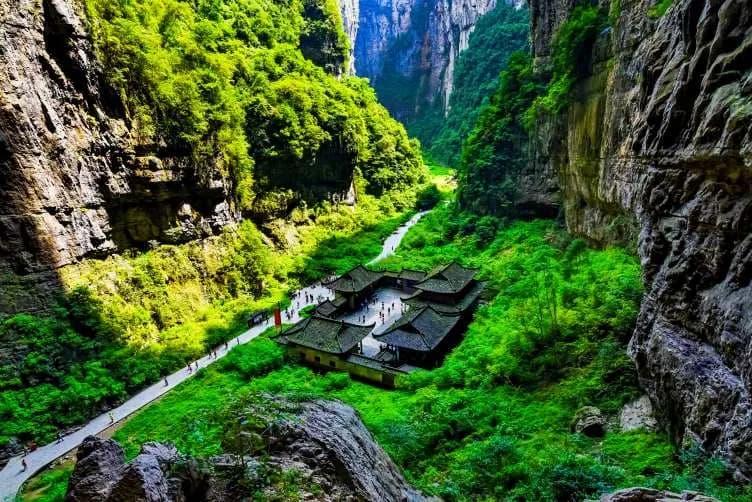
Upon arrival, begin exploring the spectacular Three Natural Bridges Scenic Area, a major highlight of the Wulong Karst landscape and part of a UNESCO World Heritage-listed karst region. Here, enormous natural limestone bridges span deep valleys, forming dramatic arches carved over geological time by water erosion and the gradual collapse of underground rock systems.
The three principal natural bridges are commonly known as Tianlong Bridge, Qinglong Bridge, and Heilong Bridge. Each has its own distinctive shape and setting, creating an impressive sequence of stone arches surrounded by steep cliffs, forested slopes, and deep ravines. As you move through the scenic area, look upward to appreciate the scale of the rock formations and the extraordinary geological forces that shaped them.
Follow the designated walking paths down into the valley, where the immense scale of the stone bridges becomes even more apparent. From the valley floor, the limestone arches rise dramatically overhead, framing the sky and surrounding cliffs. The changing viewpoints reveal different angles of the rock formations, making the walk especially rewarding for nature lovers and photographers.
Along the route, you may encounter traditional-style structures and scenic installations that provide a cultural dimension to the natural setting. One of the area's recognizable features is the historic-looking post station associated with the scenic area, which offers an attractive photographic backdrop against the towering cliffs. Your guide can explain the relationship between the region's dramatic scenery and its use as a setting for films and cultural productions.
Continue toward the Qinglong Tiankeng and the surrounding karst landscape, where deep depressions, steep rock walls, and forested slopes demonstrate the distinctive geology of the region. Wulong's sinkholes were formed through long-term processes involving water erosion and the collapse of underground cavities. Their immense scale creates an almost otherworldly landscape, especially when sunlight enters the valley and illuminates the vegetation and limestone walls.
The walking route involves stairs, changes in elevation, and sections of uneven ground. Although the scenic area has established visitor paths, a reasonable level of mobility is required to enjoy the main viewpoints. Wear comfortable shoes with good grip, bring drinking water, and allow time to rest along the way. Visitors who prefer a less demanding experience should discuss the available transport arrangements and walking distance with their guide before entering the scenic area.
Take time to photograph the towering stone bridges, narrow valleys, waterfalls where present, and the dramatic contrast between pale limestone and green vegetation. The scenery varies according to weather and season. Mist may create a mysterious atmosphere around the cliffs, while clear conditions provide better visibility of the rock formations and forested slopes.
After completing your visit, return to the designated departure point and begin the drive back to Chongqing. The return journey generally takes around three hours or longer depending on road conditions. Because the excursion includes both substantial driving and walking, a relaxed evening is recommended after returning to the city.
Upon arrival in Chongqing, return to your hotel and enjoy dinner at your own expense unless otherwise specified in the booking. You may choose a nearby restaurant or simply relax after a full day immersed in one of southwestern China's most extraordinary natural landscapes.
Accommodation: Hotel in Chongqing. Scenic-area admission, shuttle transport, and optional services should be confirmed according to the selected package.
After breakfast, check out of your hotel and travel toward Dazu Rock Carvings, one of China's most important collections of ancient religious sculpture and a UNESCO World Heritage Site. Created primarily between the ninth and thirteenth centuries, the carvings represent a remarkable artistic tradition in which Buddhist, Taoist, and Confucian themes appear across cliffs, caves, and sculpted panels.
The journey from central Chongqing to the Dazu area generally takes around one and a half to two hours or longer depending on traffic and the selected site. Upon arrival, begin exploring the designated scenic area and discover how the ancient artisans transformed natural rock faces into intricate visual narratives. Thousands of figures, inscriptions, and sculptural compositions preserve stories of religious belief, moral values, daily life, and traditional Chinese culture.
One of the most famous sections is Baodingshan, celebrated for its carefully arranged cliff carvings and impressive sculptural detail. Follow the designated pathways and take time to examine the figures' facial expressions, clothing, gestures, and surrounding decorative elements. Many compositions were designed to communicate religious teachings and moral lessons through vivid scenes that would have been understandable to historical audiences.
Depending on the confirmed sightseeing arrangement and available time, your visit may also include Beishan, another important site known for its densely arranged niches and detailed stone sculptures. The artistic styles and layouts vary between locations, offering insight into the development of religious sculpture over several centuries.
As you explore, your guide can explain the historical context of the carvings, the craftsmanship involved in creating them, and the ways Buddhist, Taoist, and Confucian ideas influenced local society. Unlike many isolated monuments, the Dazu carvings preserve an extensive visual record of religious practices and cultural values, making them an important destination for travelers interested in Chinese history and art.
Please follow local conservation rules during the visit. Some carvings may be protected from direct contact, and photography restrictions can apply in specific areas. Allow enough time to appreciate the details without rushing, as the sculptural scenes often contain multiple layers of figures and symbolism.
After completing the visit, transfer to the railway station for your high-speed train journey to Chengdu. The exact departure station and train schedule should be confirmed in advance, as travel arrangements may vary according to the selected service. Allow sufficient time for the road transfer, station entry, security screening, and boarding procedures.
Upon arrival in Chengdu, meet your local driver if a station pickup is included and transfer to your hotel. Check in and enjoy a relaxing evening after a day of cultural exploration and intercity travel. Depending on your arrival time, you may wish to take a short walk near the hotel or sample a simple Sichuan meal before resting.
Accommodation: Hotel in Chengdu. Train tickets, meals, and scenic-area services should be confirmed according to your booking arrangements.
Begin the day with an early visit to the Chengdu Research Base of Giant Panda Breeding, one of China's best-known wildlife conservation and research facilities. Morning is generally a good time to observe giant pandas because they are often more active during the cooler hours. The base features landscaped habitats, bamboo groves, shaded paths, and educational facilities designed to help visitors understand the lives of these distinctive animals.
Walk through the designated viewing areas and watch the pandas as they eat bamboo, explore their surroundings, climb, or rest in shaded enclosures. Depending on the season and the animals' behavior, you may also have the opportunity to observe younger pandas or red pandas in their designated habitats. Take time to photograph the animals while respecting viewing rules and maintaining a suitable distance.
Continue to the Panda Museum or other available educational exhibits to learn about panda biology, habitat protection, breeding research, and conservation initiatives. The exhibits provide useful context for the visit and explain why the giant panda has become an internationally recognized symbol of wildlife protection. Specific exhibits and viewing areas may vary according to operating conditions.
After the panda experience, return toward central Chengdu and visit Wenshu Monastery, one of the city's most important Buddhist temples. Known for its traditional architecture, quiet courtyards, incense-filled halls, and mature trees, the monastery provides a peaceful contrast to the lively city streets.
Walk through the temple complex and observe the traditional halls, decorative rooflines, Buddhist statues, and courtyards used for worship and contemplation. Depending on the time of day, you may see visitors offering incense, monks carrying out religious activities, or worshippers quietly praying. Please remain respectful, keep noise to a minimum, and follow any restrictions regarding photography or access to religious spaces.
The monastery is also a good place to learn about Chengdu's long-standing Buddhist traditions and the role of temples in local community life. If available, you may visit the monastery's vegetarian restaurant or nearby traditional teahouses to experience another aspect of the city's culinary and social culture. Meals and optional purchases are payable separately unless included in your package.
In the late afternoon or evening, head to Jinli Ancient Street, a popular pedestrian area known for its traditional-style architecture, red lanterns, handicraft shops, and Sichuan snack stalls. The lively atmosphere becomes especially attractive after sunset, when illuminated façades and narrow lanes create a warm, nostalgic setting for an evening stroll.
Explore the street at your own pace, browsing local handicrafts, souvenirs, and specialty shops. Depending on the day's program, you may encounter folk-art displays or traditional performances that showcase aspects of Sichuan's cultural heritage. Your guide can introduce the history and local customs associated with the area while helping you discover its most interesting corners.
Jinli is also an excellent destination for sampling Chengdu's famous street food. Consider trying dan dan noodles, spicy wontons, Sichuan-style dumplings, sweet water noodles, or other regional specialties. If you prefer milder flavors, choose steamed snacks, desserts, or dishes with less chili. Inform food vendors or restaurant staff of any dietary restrictions and your preferred spice level.
Enjoy the lively evening atmosphere before returning to your hotel. Today's itinerary brings together wildlife conservation, Buddhist heritage, traditional architecture, and local cuisine, providing a varied introduction to Chengdu's culture and lifestyle.
Accommodation: Hotel in Chengdu. Meals, attraction tickets, and optional food experiences are subject to the confirmed package arrangements.
Enjoy breakfast at your hotel and take some time to prepare for your departure. Depending on your flight schedule, the morning may be free for rest or personal activities. You may take a short walk near the hotel, enjoy a final cup of Sichuan tea, or purchase local specialties such as tea leaves, snacks, and souvenirs before leaving the city.
Please check out according to the hotel's policy and ensure that you have collected all belongings, travel documents, valuables, and electronic devices. If your flight departs later in the day, ask the hotel about luggage storage so that you can make the most of your remaining time without carrying your bags.
At the confirmed pickup time, your driver will meet you at the hotel and provide a private transfer to Chengdu Airport. If your onward journey departs from a railway station instead, the transfer destination should be confirmed in advance. Travel time depends on traffic and the location of your hotel, so allow sufficient time for check-in, baggage drop, security screening, and boarding.
As you leave Chengdu, take with you memories of China's extraordinary cultural and natural diversity, from Chongqing's dramatic mountain cityscape and illuminated riverside districts to Wulong's immense limestone formations, Dazu's remarkable ancient carvings, and Chengdu's beloved giant pandas and traditional teahouse culture.
Your six-day journey through Chongqing and Chengdu concludes here. We hope the trip has provided a rewarding combination of history, nature, local cuisine, and memorable city experiences. We wish you a smooth journey home and look forward to welcoming you back to China for another unforgettable adventure.
Your journey, simplified
How We Work
From the first idea to the final day, every detail is handled with care.
Share your travel ideas
Tell us where you want to go and what you enjoy.
Meet your travel advisor
We shape a personal itinerary around your priorities.
Confirm your journey
Review every detail and reserve with confidence.
Travel with support
Our team stays available throughout your trip.
Travel expert
Contact Your Travel Specialist
Get practical advice from a local specialist and turn this route into a trip that fits you.
Start planningRelated Articles
Swipe to explore