Tour overview
- Tour Code
- CN-XA-001
- Rating
- 4.9
- Duration
- 3 Days
- Destination
- Xi 'an
- Tour Type
- Private for you only
- Suitable For
- China Culture Lovers
Starting from
$417 p.p
A private tour based on a stay in a 4-star hotel with double occupancy. The price is subject to the travel dates, the number of people, and the selected hotel.
Highlights
Explore the Terracotta Warriors and the underground palace of Hanyangling Mausoleum up close
Visit ancient sites in Hanfu to experience the grandeur of the Tang Dynasty
Enjoy delicious food in Muslim Street and panoramic view of the ancient city wall
Your experience
Itinerary & tour details
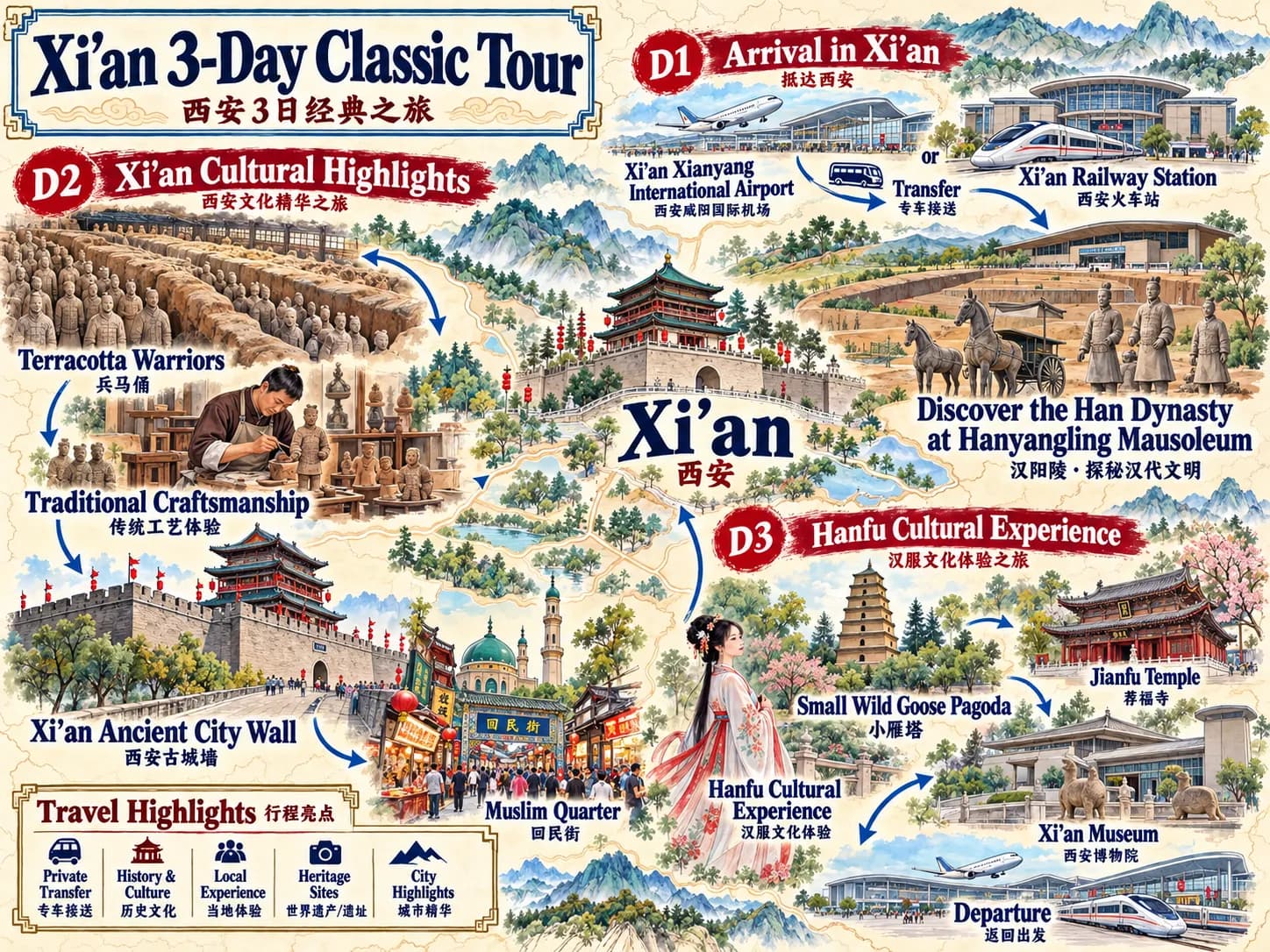
Welcome to Xi’an, one of China’s most historically significant cities and the former capital of several great dynasties. Known for its extraordinary archaeological discoveries, ancient city walls, imperial heritage, and vibrant culinary traditions, Xi’an offers an ideal introduction to China's rich cultural history. Upon arrival at Xi’an Xianyang International Airport or your designated railway station, you will be greeted by your local guide and transferred by private vehicle to the city center.
During the journey, your guide will introduce the fascinating history of Xi’an, formerly known as Chang’an, which flourished as an imperial capital during the Han and Tang dynasties. As an important starting point of the ancient Silk Road, the city welcomed merchants, scholars, and travelers from across Asia and beyond, creating a rich cultural legacy that remains visible in its architecture, museums, and traditional neighborhoods today.
After arriving in the city, begin your sightseeing with a visit to the remarkable Mausoleum of Emperor Jingdi, also known as Hanyangling Mausoleum. Located in the northern outskirts of Xi’an, this archaeological complex is the burial site of Emperor Jing of the Western Han Dynasty and his empress. The site offers a fascinating glimpse into imperial life, burial customs, and the sophisticated craftsmanship of ancient China.
Unlike the monumental scale of the Terracotta Army associated with the Qin Dynasty, Hanyangling is especially notable for its thousands of miniature terracotta figures, which represent soldiers, servants, animals, and other elements of the imperial household. These figures were created to accompany the emperor in the afterlife and provide valuable evidence of the social organization, military traditions, and daily activities of the Han Dynasty.
Explore the museum's exhibition areas and learn about the archaeological discoveries made at the site. One of the most distinctive features of Hanyangling is the underground burial complex, where glass floors and carefully designed viewing areas allow visitors to observe selected excavation pits and the arrangement of the ancient burial objects, subject to the current exhibition layout.
As you examine the miniature figures, notice their different postures, clothing styles, and facial details. Some figures originally had movable wooden arms and colorful clothing, although many organic materials have deteriorated over time. Their varied appearances offer a fascinating contrast with the larger, more individually detailed warriors of the Qin Dynasty and illustrate changes in funerary practices between the two imperial periods.
Your guide will explain how the archaeological evidence at Hanyangling contributes to our understanding of the Western Han Empire, including its social hierarchy, military organization, ritual practices, and concepts of the afterlife. The visit provides historical context for the following day's exploration of the Terracotta Warriors, allowing you to compare two extraordinary burial complexes created for different emperors and eras.
Take time to explore the designated galleries, review the archaeological displays, and photograph the permitted exhibition areas. The site combines underground archaeological remains with modern museum interpretation, offering an engaging experience for travelers interested in history, archaeology, and ancient Chinese civilization.
After completing the visit, return to central Xi’an. Depending on your arrival time and the day's schedule, you may have opportunities to enjoy the passing city scenery or stop for refreshments along the way. Upon reaching your hotel, complete check-in and enjoy the remainder of the day at leisure.
If you feel energetic, consider taking a short independent walk around your hotel neighborhood or enjoying a relaxed dinner featuring Shaanxi specialties. Xi’an is famous for its hand-pulled noodles, roujiamo, savory pancakes, and dumplings, providing plenty of opportunities to sample regional cuisine. Alternatively, rest at the hotel and prepare for the next day's sightseeing.
Meals: Meals are self-arranged unless otherwise specified in the confirmed booking.
Transportation: Private airport or railway station pick-up, transfer to Hanyangling Mausoleum, and return transfer to the hotel according to the confirmed itinerary.
Accommodation: Xi’an
After breakfast, meet your guide and driver for a full day exploring the archaeological treasures and cultural attractions of Xi’an. Today's itinerary combines the world-famous Terracotta Warriors with a hands-on traditional craft experience, panoramic views from the ancient city wall, and a visit to the historic Muslim Quarter. Together, these experiences reveal the city's imperial legacy, artistic traditions, and lively contemporary culture.
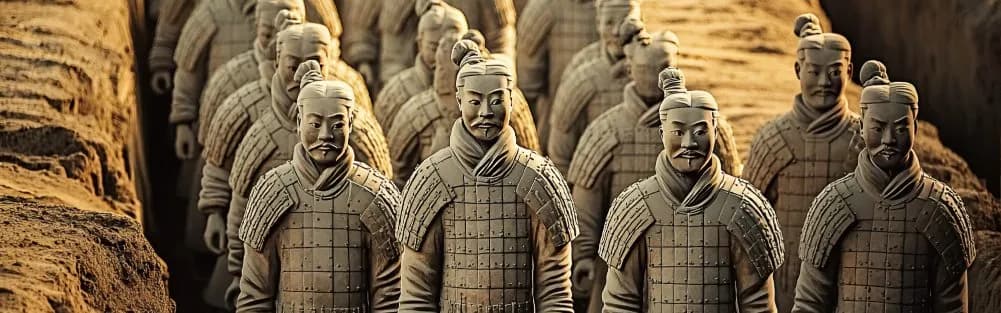
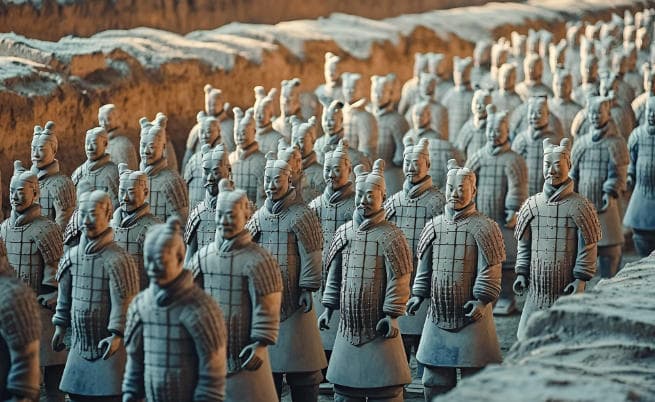
Begin with a visit to the Emperor Qinshihuang’s Mausoleum Site Museum, home to one of the most extraordinary archaeological discoveries in the world. Created more than two thousand years ago, the Terracotta Army was commissioned for Qin Shi Huang, the first emperor to unify China, as part of his vast funerary complex. Thousands of life-sized clay warriors, horses, and chariots were buried to protect the emperor in the afterlife.
Upon arrival, explore the museum's principal excavation pits, beginning with the impressive Pit No. 1. Rows of infantry warriors and horses stand in carefully arranged formations, illustrating the scale and organization of the Qin military system. Observe the distinctive hairstyles, facial features, armor, and postures of the figures, each of which contributes to the remarkable individuality of this ancient army.
Continue to Pit No. 2, where different military formations reveal further details about the organization of the Qin forces. Your guide will explain how the arrangement of infantry, cavalry, and chariot-related figures helps historians understand the tactics and military technology of the period. At Pit No. 3, discover a smaller excavation area traditionally interpreted as having a command-related function.
As you explore, learn about the discovery of the Terracotta Army in the 1970s and the ongoing archaeological work required to preserve the figures. Many warriors were originally painted in vivid colors, although much of the pigment has deteriorated following excavation and exposure. Modern conservation specialists use careful examination and specialized techniques to protect these fragile objects and reveal more about their original appearance.
Your guide will also introduce the broader historical context of Qin Shi Huang's reign, including the unification of the Chinese states, the standardization of administrative systems, and the development of imperial institutions. This background helps explain why the Terracotta Army is not merely a collection of statues but an extraordinary reflection of the political ambition and organizational power of the early Chinese empire.
After the museum visit, continue to a traditional terracotta warrior craft workshop, where you can discover the artistic techniques associated with miniature clay warrior production. Under the guidance of local artisans or workshop instructors, learn about the shaping, detailing, and finishing processes used to create small terracotta figures inspired by the famous archaeological discoveries.
Depending on the workshop program, you may have the opportunity to shape clay, refine facial details, add decorative features, or observe the preparation of miniature figures. This hands-on activity provides a more personal connection with the craftsmanship of ancient China and offers insight into the patience and skill required to reproduce the distinctive appearance of the warriors.
Enjoy the opportunity to create or select a miniature terracotta warrior as a memorable souvenir of your visit. The exact activities and materials available depend on the workshop arrangements, and any take-home item or additional craft package should be confirmed with the local provider.
In the afternoon, return to Xi’an's historic center and visit the Xi’an City Wall, one of the largest and best-preserved ancient city fortifications in China. Developed extensively during the Ming Dynasty, the wall remains one of the city's most recognizable landmarks and provides a fascinating illustration of traditional Chinese defensive architecture.
Enter through the designated access point and explore the broad ramparts, historic gates, and watchtowers. As you walk along the elevated pathways, enjoy panoramic views of Xi’an's historic neighborhoods and modern skyline. The contrast between the ancient fortifications and contemporary cityscape creates excellent opportunities for photography.
Your guide will explain the historical function of the wall and how its gates, towers, and defensive structures worked together to protect the city. The wall also provides a useful perspective on Xi’an's urban development, showing how the historic center has evolved while retaining many of its traditional characteristics.
Depending on the available time and your interests, you may choose to walk along an accessible section of the ramparts or consider renting a bicycle as an optional activity, subject to local availability and additional charges. Comfortable walking shoes are recommended, as some sections involve stairs and extended walking.
Continue to the Great Mosque of Xi’an, an important religious and architectural landmark that reflects the long history of Muslim communities in the city. Unlike many mosques in other parts of the world, the Great Mosque combines Islamic religious traditions with traditional Chinese architectural elements, creating a distinctive complex of courtyards, gateways, pavilions, and decorative details.
Explore the designated visitor areas and observe the integration of Chinese-style rooflines, timber structures, landscaped courtyards, and Islamic religious features. The mosque provides a valuable introduction to the cultural exchanges that took place along the ancient Silk Road and the development of Muslim communities in Xi’an over many centuries.
As you walk through the complex, appreciate the peaceful atmosphere and architectural craftsmanship. Please remember that the Great Mosque remains an active religious site. Visitors should respect local customs, dress appropriately, follow photography restrictions, and avoid disturbing worshippers during prayer times.
In the late afternoon or evening, head to Hui Street, also known as the Muslim Quarter, one of Xi’an's most famous culinary and cultural districts. The neighborhood is renowned for its lively pedestrian lanes, traditional storefronts, specialty food stalls, and distinctive regional flavors. It is an excellent place to experience the everyday atmosphere of the city while discovering its long-standing food traditions.
Stroll through the bustling streets and explore the variety of local snacks on offer. Popular specialties include roujiamo, hand-pulled noodles, lamb paomo, savory pancakes, grilled skewers, and traditional pastries. Depending on your preferences, you can sample several smaller dishes or choose a restaurant for a more substantial meal.
Beyond its food, the Muslim Quarter offers an opportunity to observe the cultural diversity that has shaped Xi’an for centuries. Browse local shops, look for traditional sweets and regional products, and enjoy the lively street scenes as the district becomes increasingly atmospheric in the evening.
After exploring the market area, return to your hotel according to the confirmed transportation arrangements. The day's combination of archaeology, traditional craftsmanship, historical architecture, religious heritage, and regional cuisine provides a comprehensive introduction to the many layers of Xi’an's cultural identity.
Meals: Breakfast according to the confirmed hotel package; lunch and dinner are self-arranged unless otherwise specified.
Transportation: Private transfers between your hotel, the Terracotta Warriors, the craft workshop, the City Wall, the Great Mosque, and the Muslim Quarter according to the confirmed itinerary.
Important information: Workshop activities, museum admission, city wall access, and mosque visiting hours are subject to local arrangements and ticket inclusions. Religious-site access may be restricted during certain periods.
Accommodation: Xi’an
Enjoy breakfast at your hotel before beginning your final morning of cultural exploration in Xi’an. Today offers a different perspective on the city's heritage through a traditional Hanfu experience, a visit to the historic Small Wild Goose Pagoda and Jianfu Temple complex, and an exploration of the Xi’an Museum's rich archaeological collections. In the afternoon, your driver will transfer you to the airport or railway station for your onward journey.
Begin with a traditional Hanfu experience, an opportunity to discover the elegance of historical Chinese clothing and gain a deeper appreciation of traditional dress culture. Hanfu refers to styles of clothing associated with the Han Chinese tradition and encompasses a variety of garments, silhouettes, fabrics, and decorative elements developed across different historical periods.
At the selected experience venue, choose an appropriate traditional outfit with assistance from the staff. Depending on the available package, the experience may include dressing assistance, hairstyle arrangements, period-inspired makeup, and guidance on posing for photographs. The styling may draw inspiration from historical periods such as the Han or Tang dynasties, subject to the costumes offered by the provider.
Once dressed, enjoy time for photographs in designated scenic areas or traditional-style settings. The flowing sleeves, layered fabrics, and elegant silhouettes of Hanfu create a striking visual connection with China's historical artistic traditions. The experience also provides a fun and memorable way to engage with the cultural heritage you have encountered throughout your visit to Xi’an.
Your photographer or experience assistant, where included, may offer suggestions for poses and compositions that highlight the outfit's details. Please confirm the duration of the session, costume selection, makeup services, and whether professional photography or digital images are included in the package. Additional services may incur separate charges.
After the Hanfu experience, proceed to the Small Wild Goose Pagoda, one of Xi’an's most important surviving Buddhist monuments from the Tang Dynasty. Built more than a thousand years ago, the pagoda reflects the city's historical role as a center of Buddhist scholarship, religious activity, and international cultural exchange.
Admire the pagoda's elegant brick structure and distinctive architectural proportions. Compared with the larger Big Wild Goose Pagoda, the Small Wild Goose Pagoda offers a quieter atmosphere and a different perspective on Tang Dynasty religious architecture. Its long history also reflects the challenges faced by ancient buildings in a region affected by earthquakes and other natural events.
Explore the designated grounds and learn about the pagoda's historical relationship with the translation and preservation of Buddhist scriptures. During the Tang Dynasty, Xi’an attracted monks and scholars from different regions, and Buddhist institutions played an important role in the city's intellectual and spiritual life.
Continue through the Jianfu Temple complex, historically associated with the Small Wild Goose Pagoda. The temple grounds offer an opportunity to appreciate traditional Chinese religious architecture, courtyard layouts, and the relationship between Buddhist institutions and the surrounding urban environment.
As you explore, take time to appreciate the tranquil atmosphere and architectural details. The temple and pagoda together illustrate how religious buildings served as important centers of learning, worship, and cultural exchange in imperial China. Access to individual buildings may vary according to opening hours and local religious activities.
Later, visit the Xi’an Museum, a cultural institution dedicated to the city's long history and archaeological heritage. Its collections feature a range of artifacts that help explain Xi’an's development from ancient settlements into one of China's most influential imperial capitals.
Explore the exhibition galleries and discover objects associated with different dynasties, including ceramics, sculptures, calligraphy, paintings, and other historical materials. The collections illustrate changes in artistic styles, religious practices, everyday life, and political culture across successive periods of Chinese history.
Pay particular attention to the objects associated with the Han and Tang dynasties, which help place your earlier visits to Hanyangling and the Terracotta Warriors within a broader historical context. Decorative ceramics, Buddhist sculptures, and other archaeological finds provide valuable evidence of the craftsmanship and cultural exchanges that shaped the region.
The museum also offers an opportunity to connect the architectural landmarks of Xi’an with the objects and historical records that help explain their significance. By comparing the material culture of different periods, you can gain a deeper understanding of how the city developed through centuries of political change, commercial exchange, and artistic innovation.
Depending on your departure time, enjoy some final moments exploring the museum's designated galleries or nearby grounds. Please allow sufficient time for the transfer to the airport or railway station, especially during busy travel periods or when departing from a location outside the city center.
At the appointed time, meet your driver for a private transfer to Xi’an Xianyang International Airport or the designated railway station. Your pick-up time will be coordinated with your confirmed flight or train schedule to allow adequate time for travel, check-in, baggage procedures, and security screening.
Before departure, confirm your flight or train number, destination, terminal or station, and transfer arrangements. If your travel schedule changes, inform your tour provider as early as possible so that the pick-up plan can be reviewed.
Your three-day Xi’an journey concludes with a rich collection of cultural experiences, from the underground archaeological treasures of Hanyangling and the Terracotta Warriors to the traditional architecture of the City Wall, the distinctive heritage of the Muslim Quarter, and the elegance of Hanfu clothing. These experiences provide a memorable introduction to the history, craftsmanship, and cultural diversity of one of China's most fascinating cities.
Meals: Breakfast according to the confirmed hotel package; lunch and other meals are self-arranged unless otherwise specified.
Transportation: Transfers between your hotel, the Hanfu experience venue, Small Wild Goose Pagoda, Jianfu Temple, Xi’an Museum, and the airport or railway station according to the confirmed itinerary.
Important information: Hanfu costumes, makeup, photography services, museum opening hours, and access to religious sites depend on the confirmed package and local operating conditions. Please reconfirm your departure transfer details before the final day.
Your journey, simplified
How We Work
From the first idea to the final day, every detail is handled with care.
Share your travel ideas
Tell us where you want to go and what you enjoy.
Meet your travel advisor
We shape a personal itinerary around your priorities.
Confirm your journey
Review every detail and reserve with confidence.
Travel with support
Our team stays available throughout your trip.
Travel expert
Contact Your Travel Specialist
Get practical advice from a local specialist and turn this route into a trip that fits you.
Start planningRelated Articles
Swipe to explore