Tour overview
- Tour Code
- CN-CD-002
- Rating
- 4.9
- Duration
- 3 Days
- Destination
- Chengdu,Four Girls Mountain
- Tour Type
- Private for you only
- Suitable For
- China Culture Lovers
Starting from
$353 p.p
A private tour based on a stay in a 4-star hotel with double occupancy. The price is subject to the travel dates, the number of people, and the selected hotel.
Highlights
Visit the panda park and the millennium irrigation miracle
Hike in Changping Valley grassland to enjoy the panoramic view of snow mountains
Explore the twin bridge valley glacier and alpine lakes
Your experience
Itinerary & tour details
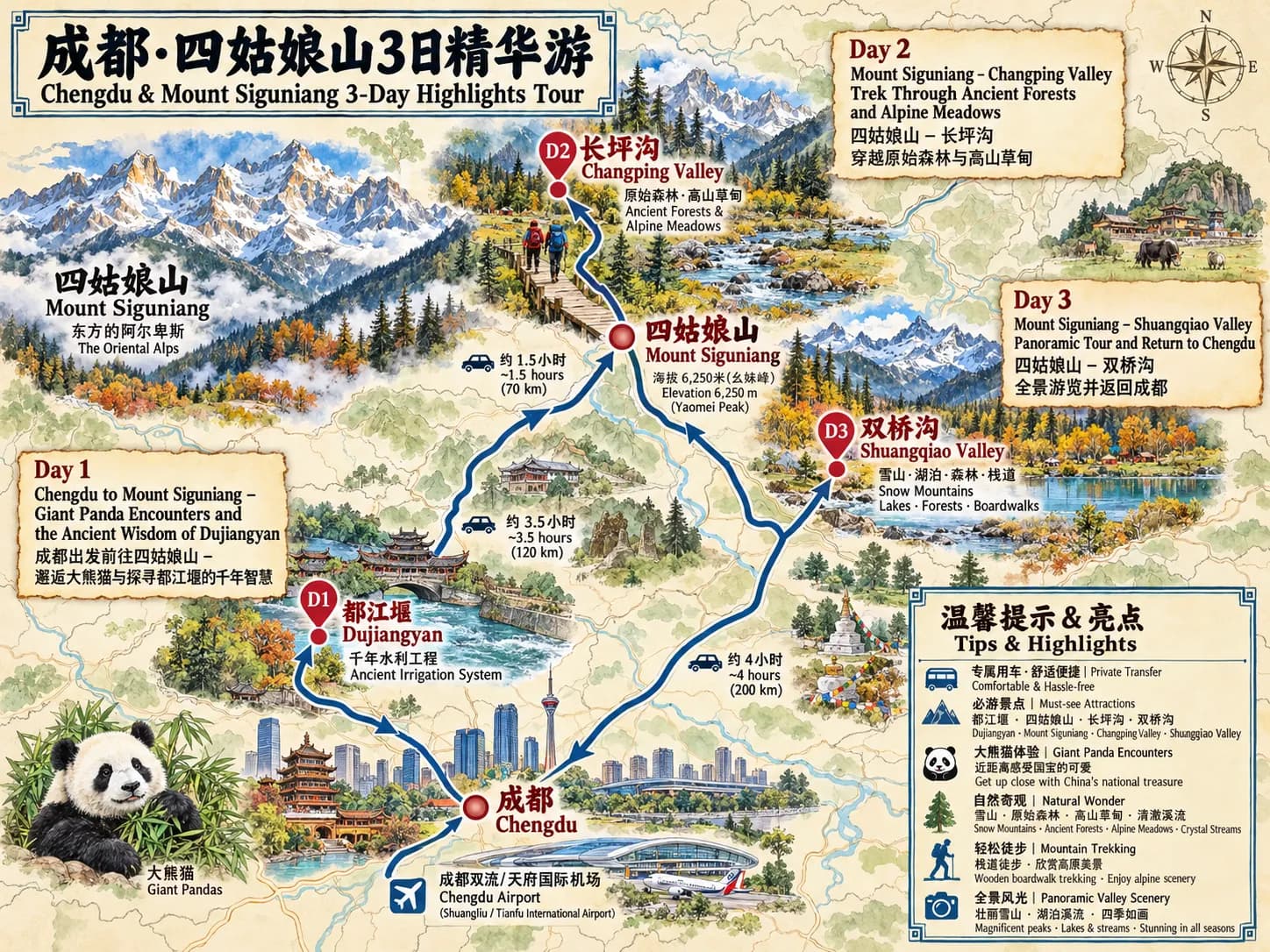
Depart Chengdu in the morning and begin your journey into the spectacular mountain landscapes of western Sichuan. Leaving behind the lively streets of the provincial capital, travel toward Dujiangyan, a region where remarkable natural scenery, traditional engineering, and wildlife conservation come together. Today's itinerary offers a fascinating introduction to Sichuan's cultural heritage before continuing into the highlands surrounding Mount Siguniang.
Your first stop is the Dujiangyan Panda Base, a conservation facility dedicated to the care, research, and protection of giant pandas. Set in a green environment with bamboo groves and landscaped habitats, the base provides an opportunity to observe these iconic animals while learning about the work involved in panda conservation. Watch the pandas as they eat bamboo, explore their surroundings, rest in shaded areas, or interact with their habitats. Depending on the animals' behavior and the day's arrangements, you may also learn about pandas that have returned to China after living overseas as part of international conservation and research programs.
As you explore the base, discover how researchers and animal-care professionals support panda health, breeding, and long-term conservation. Your guide can introduce the pandas' distinctive dietary habits, natural habitat, and the challenges involved in protecting this vulnerable species. The visit is particularly enjoyable for wildlife enthusiasts and families, offering memorable photography opportunities and a closer understanding of China's efforts to safeguard its national treasure. Please note that individual panda appearances and activity levels vary, and specific overseas-returned pandas may not always be available for public viewing.
After the panda visit, enjoy lunch in the Dujiangyan area before continuing to the historic Dujiangyan Irrigation System, a UNESCO World Heritage Site and one of China's most remarkable examples of ancient hydraulic engineering. Developed more than 2,000 years ago, this ingenious system transformed the Min River's water flow and helped protect the fertile Chengdu Plain from flooding while supporting agricultural irrigation. Unlike a conventional dam, its design works with the river's natural conditions, demonstrating an extraordinary understanding of water management and the surrounding landscape.
Explore the scenic area and learn about its principal engineering components, including the Fish Mouth Levee, Flying Sand Weir, and Bottle-Neck Channel. Each element serves a specific purpose in controlling, dividing, or regulating the river's flow. As you walk along the riverbanks and across designated bridges, observe how the ancient system continues to function within the modern landscape. Your guide can explain the historical significance of the project and the engineering principles that have allowed it to remain in use for centuries.
Beyond its technical achievements, Dujiangyan also offers attractive riverside scenery, traditional architectural features, and views of the surrounding mountains. Take time to photograph the flowing water, historic structures, and the interaction between human ingenuity and the natural environment. Depending on the available time and visitor conditions, you may also explore selected pathways and viewpoints within the scenic area.
In the afternoon, continue by road toward Mount Siguniang (Four Girls Mountain), a spectacular mountain destination known for its dramatic peaks, alpine valleys, forests, and Tibetan cultural heritage. The drive generally takes approximately three to four hours, although actual travel time depends on traffic, road conditions, weather, and any scheduled stops. As the route climbs into the highlands, the landscape gradually changes to steep mountain slopes, winding rivers, traditional villages, and increasingly expansive views.
Enjoy the changing scenery along the journey and take opportunities to stretch during suitable rest stops. The drive itself is an important part of the experience, revealing the dramatic geography of western Sichuan and the transition from the Chengdu Plain to the mountainous region around Mount Siguniang. Upon arrival, check in to your hotel near the scenic area and take time to relax after the day's travel.
The evening is best spent acclimatizing to the higher elevation. Temperatures can drop significantly after sunset, even during warmer months, so prepare warm clothing and avoid strenuous activity immediately after arrival. You may enjoy a relaxed dinner featuring local Sichuan or Tibetan-influenced dishes, depending on the restaurant's availability, and prepare your hiking essentials for the following day.
Accommodation: Hotel near Mount Siguniang Scenic Area. Meals and optional activities are subject to the confirmed package arrangements.
After breakfast, prepare for a full day of mountain exploration in Changping Valley, one of the most scenic valleys within the Mount Siguniang area. Known for its snow-capped peaks, dense forests, clear streams, and broad alpine landscapes, Changping Valley offers an immersive experience of the region's natural beauty. Today's trek is designed for travelers who want to experience the mountain environment on foot, with opportunities to adjust the route according to fitness, weather, and trail conditions.
Travel to the valley entrance and begin your walk near the traditional Tibetan temple at the foot of the surrounding mountains. The opening section introduces the distinctive scenery of the area, where traditional religious architecture, prayer flags, forested slopes, and rugged mountain peaks create a memorable highland atmosphere. Take a moment to appreciate the peaceful surroundings before continuing along the designated trail into the valley.
As the trek progresses, follow forest paths beneath towering trees and through sections of primeval woodland. The trail passes a changing succession of natural features, including mountain streams, moss-covered rocks, open clearings, and viewpoints toward the surrounding peaks. Listen to the sound of flowing water and enjoy the fresh mountain air as you move deeper into the valley. The scenery changes with elevation, creating a varied hiking experience rather than a single continuous landscape.
Along the way, look out for waterfalls, glacially shaped terrain, alpine plants, and seasonal wildflowers where conditions permit. The region's plant life changes according to altitude and season, with fresh greenery and flowering meadows in warmer months and more subdued colors during colder periods. Snow may remain visible on higher peaks even when the lower valley is green, creating a striking contrast between the forest and the alpine environment.
Continue toward Muluozi Meadow, a broad alpine grassland surrounded by imposing mountain scenery. This open landscape provides a welcome contrast to the forested sections of the trail, with wide views of the valley and nearby peaks. Take time to rest, enjoy the scenery, and capture photographs of the dramatic mountain backdrop. Depending on the season, you may see grazing animals, including yaks, in the surrounding grasslands, although wildlife and livestock sightings cannot be guaranteed.
The full out-and-back route described in the original itinerary is approximately 22 kilometers and may take seven to eight hours, depending on walking speed, rest stops, trail conditions, and the chosen turnaround point. This is a substantial mountain hike rather than an easy sightseeing walk. The route should be planned according to the group's physical condition, the weather, and the available daylight, with sufficient time reserved for returning to the valley entrance.
For travelers who are new to hiking, one advantage of Changping Valley is the possibility of turning back at an appropriate point rather than attempting the entire route. Discuss your preferred distance with your guide before setting out, and establish a clear turnaround time. A shorter walk can still provide rewarding forest scenery and mountain views without requiring the full day's exertion.
Please note that high altitude can make even moderate physical activity more demanding. Walk at a steady pace, drink water regularly, bring sufficient food and snacks, and wear supportive hiking shoes with good grip. Layered clothing, rain protection, sun protection, and a fully charged phone are also recommended. Mountain weather can change quickly, and trail conditions may be affected by rain, snow, or temporary closures. Follow local guidance and do not continue beyond a safe point simply to reach a particular viewpoint.
After reaching your chosen turnaround point, retrace your route through the forest and valley toward the entrance. Take breaks when needed and enjoy the changing perspective as the light shifts across the surrounding mountains. Once back at the entrance, return to your hotel and relax after an active day in the highlands.
The evening is free for rest and recovery. Enjoy dinner at your own expense unless otherwise specified in your booking, and prepare your luggage for the following day's visit to Shuangqiao Valley and return journey to Chengdu.
Accommodation: Hotel near Mount Siguniang Scenic Area. Please confirm the hiking route, guide arrangements, and any applicable scenic-area transport services in advance.
After breakfast, check out of your hotel and head to Shuangqiao Valley, one of the most accessible and visually diverse scenic areas within Mount Siguniang National Park. Compared with the longer trek through Changping Valley, Shuangqiao Valley is well suited to travelers who want to experience dramatic mountain scenery while reducing the amount of continuous uphill walking. The valley features towering peaks, alpine forests, meadows, rivers, lakes, and expansive viewpoints across the mountain landscape.
Upon arrival, use the scenic area's designated sightseeing bus service, following the official operating arrangements and the route confirmed for your visit. The bus allows you to travel deeper into the valley and access selected viewpoints without walking the entire distance. Rather than rushing from one stop to another, take time at the main viewing areas to appreciate the different formations of the surrounding mountains and the way the landscape changes with elevation.
As you explore the valley, enjoy views of rugged ridgelines, forest-covered slopes, clear streams, and alpine lakes. Some viewpoints reveal striking contrasts between dark evergreen forests, pale rocky peaks, and patches of snow at higher elevations. Depending on the season, the valley may also feature colorful wildflowers, golden autumn foliage, or snow-covered scenery. These seasonal changes give Shuangqiao Valley a different character throughout the year.
Watch for yaks grazing in open grassland where permitted and look for native alpine plants along the designated pathways. The area is also an excellent place for landscape photography, with opportunities to capture the mountain ranges reflected in water, the layered contours of the valley, and the dramatic scale of the surrounding peaks. Please remain within designated visitor areas and avoid disturbing livestock or vegetation.
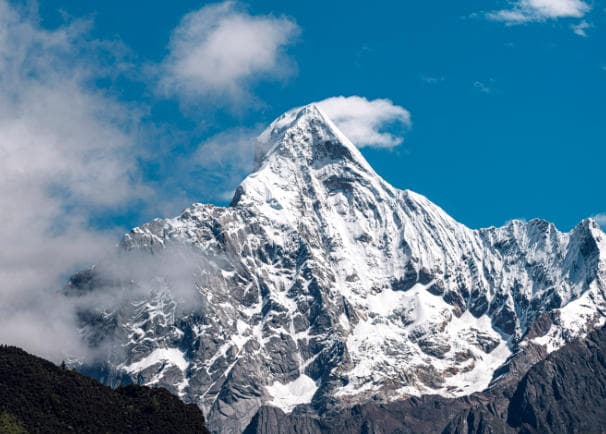
One of the day's important stops is Maobiliang (Mao Bi Liang), a well-known panoramic viewpoint offering a striking perspective of the Four Girls Mountain range. From this elevated vantage point, the peaks rise prominently above the surrounding landscape, creating one of the region's most recognizable mountain panoramas. On clear days, the changing light can reveal remarkable details across the ridges and snow-covered summits.
The viewpoint is particularly popular for sunrise photography, when the first sunlight may illuminate the mountain peaks with warm golden tones. However, a sunrise visit generally requires a separate early departure and careful coordination with your transport schedule. Since today's itinerary includes a return drive to Chengdu, the stop should be planned according to the available time, weather, and confirmed arrangements rather than assuming sunrise viewing is guaranteed.
Throughout the morning, take advantage of the valley's accessible viewing points to enjoy a final appreciation of Mount Siguniang's natural environment. Compared with the previous day's extended hike, today's experience offers a more relaxed way to observe the mountain landscape, making it a suitable conclusion for travelers who want both active exploration and comfortable sightseeing.
After completing the Shuangqiao Valley visit, begin the return journey to Chengdu in the afternoon. The drive generally takes approximately four to five hours, although road conditions, traffic, weather, and rest stops may affect the actual duration. Enjoy the changing scenery as the road descends from the highlands toward the Chengdu Plain, passing mountain valleys, rivers, and rural settlements along the way.
Because this is a relatively long return journey, allow sufficient time for breaks and keep essential items accessible during the drive. If you have an onward flight or train departure on the same day, the itinerary should be reviewed carefully to ensure that the return transfer leaves an adequate time buffer. An overnight stay in Chengdu may be more appropriate if your onward connection is scheduled soon after the expected arrival time.
Upon arrival in Chengdu, your three-day journey comes to an end. The itinerary combines giant panda conservation, ancient irrigation engineering, high-altitude hiking, Tibetan cultural influences, and the spectacular mountain scenery of Mount Siguniang. From the forested trails of Changping Valley to the panoramic peaks of Shuangqiao Valley, the journey offers a varied introduction to one of Sichuan's most impressive natural regions.
We hope you leave with lasting memories of the region's dramatic landscapes, fresh mountain air, and rich cultural heritage. We wish you a safe onward journey and look forward to welcoming you back to Sichuan for another unforgettable adventure.
Your journey, simplified
How We Work
From the first idea to the final day, every detail is handled with care.
Share your travel ideas
Tell us where you want to go and what you enjoy.
Meet your travel advisor
We shape a personal itinerary around your priorities.
Confirm your journey
Review every detail and reserve with confidence.
Travel with support
Our team stays available throughout your trip.
Travel expert
Contact Your Travel Specialist
Get practical advice from a local specialist and turn this route into a trip that fits you.
Start planningRelated Articles
Swipe to explore