Chinese Shadow Puppetry: How Light and Shadows Tell Ancient Stories
Imagine watching a story unfold on a white screen, with colorful characters fighting, dancing and falling in love, even though none of them are real actors. Behind the screen, performers move carefull
Imagine watching a story unfold on a white screen, with colorful characters fighting, dancing and falling in love, even though none of them are real actors. Behind the screen, performers move carefully crafted leather puppets while musicians provide traditional melodies. This is Chinese shadow puppetry, an extraordinary form of storytelling with a history stretching back many centuries.

How Does Shadow Puppetry Work?
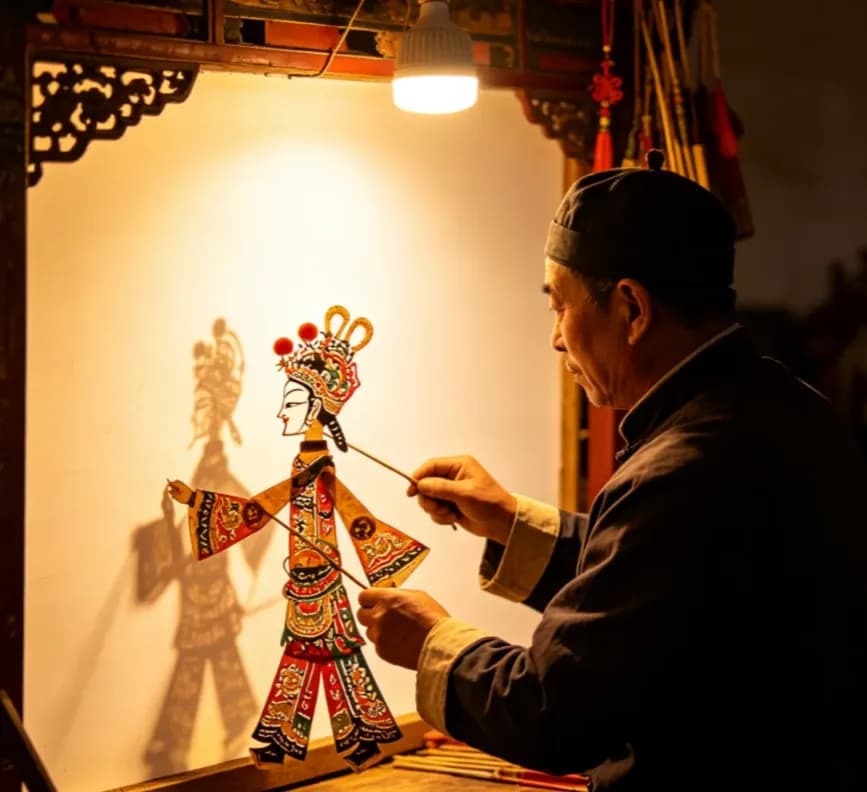
Traditional puppets are often made from animal hide that has been carefully treated, carved and decorated with colorful patterns. Each figure has movable joints, allowing performers to control its head, arms and legs using thin rods. A light source behind the screen creates the shadows that audiences see.
What Stories Do the Puppets Tell?
Many traditional performances draw inspiration from Chinese legends, historical events, folklore and classic literary stories. Heroes, emperors, mythical creatures and ordinary people all appear in these productions. The combination of music, movement and storytelling creates a unique theatrical experience.
Where Can Travelers Discover This Art?
Xi'an and other historic cities have traditions associated with shadow puppetry. Visitors can look for folk art museums, cultural performances and workshops where artisans demonstrate how puppets are made and operated.
Even if you cannot understand every word of the performance, the expressive characters and visual storytelling make shadow puppetry an enjoyable introduction to traditional Chinese performing arts.
Related Articles
Swipe to explore