Chinese Calligraphy: Why Writing Is Considered an Art in China
In China, writing has traditionally been more than a way to communicate information. For centuries, beautiful handwriting has been regarded as an expression of personality, education and artistic abil
In China, writing has traditionally been more than a way to communicate information. For centuries, beautiful handwriting has been regarded as an expression of personality, education and artistic ability. Chinese calligraphy transforms ordinary characters into works of art through the movement of a brush, the rhythm of ink and the balance of space.

The Four Treasures of the Study
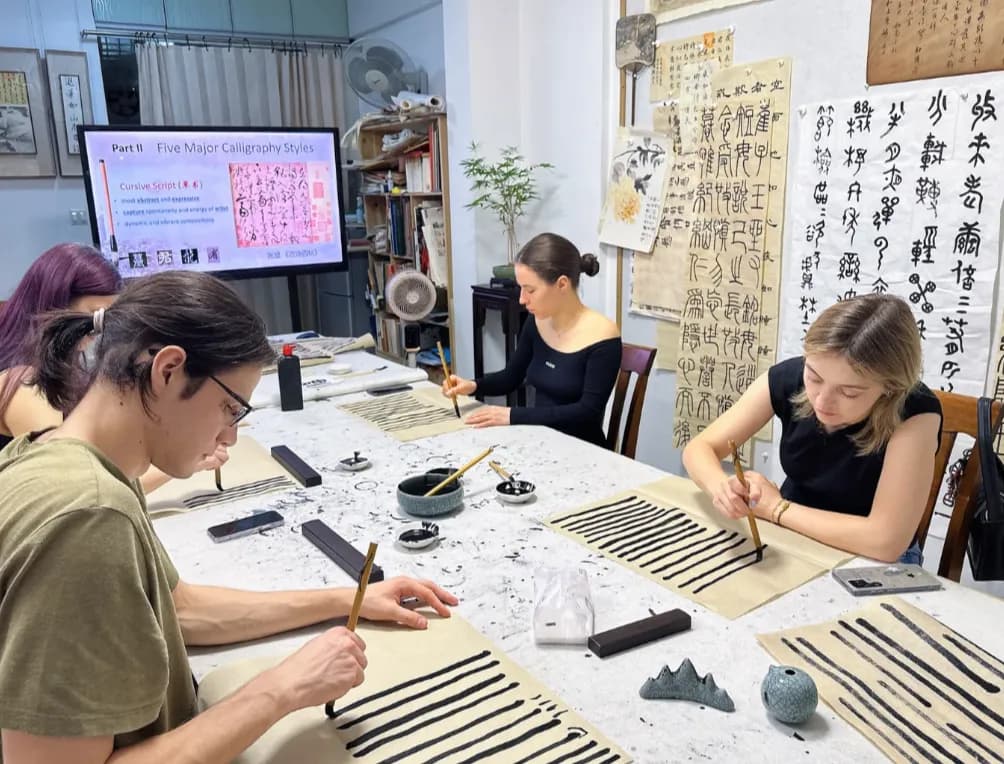
Traditional Chinese calligraphy is closely associated with four essential tools: the brush, ink, paper and inkstone. Together, they are known as the Four Treasures of the Study. The quality of these materials can influence the appearance of each stroke, but the artist's control and experience are equally important.
Why Do Calligraphy Styles Look So Different?
Chinese calligraphy has several major styles, including seal script, clerical script, regular script, running script and cursive script. Some are formal and carefully structured, while others are more flowing and expressive. Experienced calligraphers learn to control pressure, speed and brush direction to create different effects.
Can Tourists Try Chinese Calligraphy?
Yes. Cultural centers, museums and traditional art workshops in cities such as Beijing, Shanghai and Xi'an sometimes offer introductory calligraphy classes. Beginners can learn how to hold a brush, practice basic strokes and write simple Chinese characters.
Even a short workshop can change the way you look at Chinese writing. What first appears to be a collection of unfamiliar symbols begins to reveal its artistic beauty.
Related Articles
Swipe to explore