China 144-Hour Visa-Free Transit Rules & Eligible Cities Explained
If you are searching for “China 144-hour visa-free transit”, there is one important update you should know first:China’s former 72-hour and 144-hour visa-free transit policies have been expanded to 24
If you are searching for “China 144-hour visa-free transit”, there is one important update you should know first:
China’s former 72-hour and 144-hour visa-free transit policies have been expanded to 240-hour visa-free transit. Eligible foreign travelers can stay in China for up to 240 hours, or 10 days, without applying for a Chinese visa in advance.

However, one important concept should not be confused:
240-hour Visa-Free Transit ≠ Visa-Free Entry.
If you want to use China’s 240-hour visa-free transit policy, your itinerary generally needs to follow this structure:
Country/Region A → China → Country/Region B
Country/Region B must be a different third country or region from your departure point A.
For example:
Singapore → Shanghai → Japan
is a typical third-country transit itinerary.
But:
Singapore → Shanghai → Singapore
does not meet the basic third-country transit requirement.
Therefore, before booking your flights, the most important thing is not simply to check whether your passport is eligible for visa-free travel to China. You should first determine which specific Chinese visa-free policy applies to your itinerary.
Strictly speaking, 144 hours is no longer the maximum stay under China’s current visa-free transit policy.
In December 2024, China expanded the former 72-hour and 144-hour visa-free transit policies to 240 hours (10 days). The policy has since been expanded further to cover more eligible countries, entry ports, and permitted travel areas.

That is why you may still find many travel guides using the term:
China 144-hour visa-free transit
This remains a common travel search term, and many older articles have not yet been updated.
However, if you are planning a trip to China now, you should focus on:
China 240-hour visa-free transit
rather than planning your trip according to the former 144-hour rules.
The most important keyword here is:
Transit
China’s 240-hour visa-free transit policy mainly applies to eligible foreign travelers who pass through China on their way to a different third country or region.
In simple terms:
A → China → B
Where:
A = your departure country or region
China = your transit destination
B = a different third country or region
For example:
France → Beijing → Japan
or:
Australia → Shanghai → South Korea
or:
Singapore → Guangzhou → Thailand
These itineraries follow the basic:
A → China → B
structure.
Visa-Free Transit Is Not the Same as Visa-Free Entry
This is one of the most commonly misunderstood parts of China’s visa policy.
Visa-Free Transit means that you are passing through China on your way to another country or region.
By contrast:
Visa-Free Entry
refers to separate visa-exemption policies that allow eligible foreign nationals to enter China without a visa.
These are different immigration policies and should not be confused.
For example, a traveler may be able to enter China without a visa because their nationality is covered by a separate unilateral visa-exemption policy.
In that case, they are using:
Visa-Free Entry
rather than:
240-Hour Visa-Free Transit
Therefore, do not simply assume:
“My passport allows visa-free travel to China, so I can use the 240-hour transit policy.”
You should first confirm which specific Chinese visa-free policy applies to your situation.
If you remember only one rule from this guide, remember this:
China’s 240-hour visa-free transit policy is based on traveling from one country or region, through China, to another different third country or region.

The basic structure is:
Country/Region A → China → Country/Region B
Not:
Country/Region A → China → Country/Region A
Which Itineraries May Qualify?
| Itinerary | Basic Structure | May Qualify? |
|---|---|---|
| Singapore → Shanghai → Japan | A → China → B | Yes, if other requirements are met |
| Australia → Beijing → South Korea | A → China → B | Yes, if other requirements are met |
| United States → Shanghai → Thailand | A → China → B | Yes, if other requirements are met |
| France → Beijing → Vietnam | A → China → B | Yes, if other requirements are met |
| Japan → Shanghai → Japan | A → China → A | No, not under the basic third-country transit structure |
| Singapore → Beijing → Singapore | A → China → A | No, not under the basic third-country transit structure |
| Australia → Shanghai → Beijing | A → China → China | No, the onward destination is still in China |
Keep in mind that:
Meeting the A → China → B structure does not automatically guarantee visa-free entry.
Travelers must also meet the applicable nationality, passport, ticket, entry-port, permitted-area, and other requirements.
Final admission is determined by Chinese immigration authorities.
You should not interpret the policy as requiring:
“Three separate flight tickets.”
What matters is that your complete itinerary follows:
A → China → B
In other words, you enter China from one country or region and continue to another different country or region.
For example:
London → Beijing → Tokyo
follows the basic third-country transit structure.
The key point is:
Your departure point A and onward destination B must be different countries or regions.
Whether you purchase a single connecting ticket or use another qualifying form of onward travel documentation should be determined according to the applicable Chinese immigration requirements.
Therefore, it is better not to write:
You must buy three separate flight tickets.
A more accurate explanation is:
You need qualifying onward travel from China to a different third country or region.
As of August 20, 2026, China’s 240-hour visa-free transit policy applies to citizens of 57 countries.
Kyrgyzstan and Vietnam were added to the relevant policy on August 20, 2026, bringing the total number of eligible countries to 57.
The eligible countries currently include:
Europe
Albania, Austria, Belarus, Belgium, Bosnia and Herzegovina, Bulgaria, Croatia, Cyprus, Czech Republic, Denmark, Estonia, Finland, France, Germany, Greece, Hungary, Iceland, Ireland, Italy, Latvia, Lithuania, Luxembourg, Malta, Monaco, Montenegro, Netherlands, North Macedonia, Norway, Poland, Portugal, Romania, Russia, Serbia, Slovakia, Slovenia, Spain, Sweden, Switzerland, Ukraine, and the United Kingdom.
Americas
Argentina, Brazil, Canada, Chile, Mexico, and the United States.
Oceania
Australia and New Zealand.
Asia and the Middle East
Brunei, Indonesia, Japan, Qatar, Singapore, South Korea, United Arab Emirates, Kyrgyzstan, and Vietnam.
Because visa policies can change, travelers should check the latest eligible-country list again before booking their flights and starting their trip.
Simply holding a passport from an eligible country does not automatically mean that you can use the 240-hour visa-free transit policy.
You generally also need to meet the following requirements.
Hold an Eligible Ordinary Passport
Travelers generally need to hold a valid ordinary passport issued by an eligible country.
Different types of travel documents may be subject to different entry requirements.
If you hold a special travel document, temporary travel document, or another type of non-ordinary passport, you should confirm your eligibility in advance.
Have a Qualifying Onward Ticket or Travel Document
You need qualifying onward travel to a different third country or region.
The relevant ticket or proof of onward travel generally needs to show:
A confirmed destination
A confirmed departure date
A confirmed seat or other required travel information
This is an important part of the visa-free transit process.
Enter Through an Eligible Port
Not every international airport, railway station, or port in China can process 240-hour visa-free transit.
Travelers must enter through a port covered by the policy.
The current policy covers:
65 designated ports across 24 provincial-level regions.
Stay Within the Permitted Area
The 240-hour visa-free transit policy does not mean that you can freely travel anywhere in mainland China.
The permitted travel area depends on the applicable regional rules.
If you plan to visit several Chinese cities during your stay, you should confirm that your destinations are within the permitted area before booking domestic transportation.
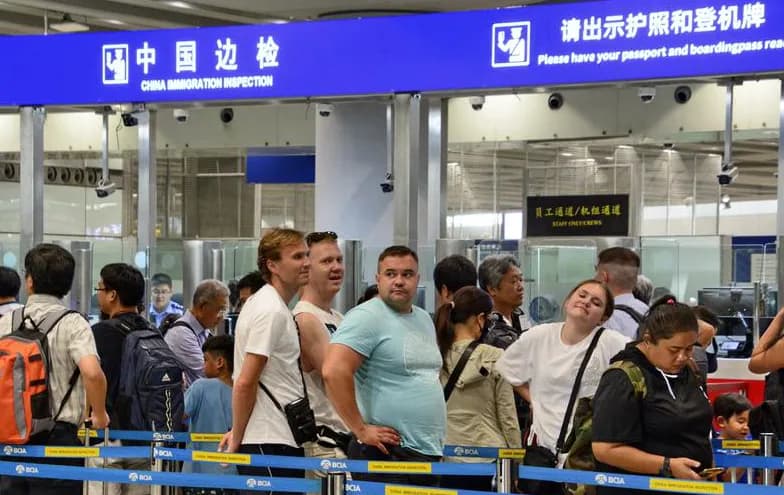
Pass Immigration Inspection
Even if your itinerary appears to qualify, entry is not automatic.
Chinese immigration authorities may check:
Your passport
Your ticket
Your itinerary
Your entry port
Your onward destination
Other relevant documents
The final decision on temporary entry is made by the immigration authorities.
The maximum stay is:
240 hours, or 10 days.
There is an important detail that travelers should understand:
The 240-hour period is not simply calculated by adding 240 hours to the exact time your plane lands.
Under the relevant rules, the permitted stay is generally calculated from 00:00 on the day following entry.
For example, if you enter China on:
September 10
the 240-hour calculation generally begins from:
00:00 on September 11
Therefore, you should not calculate your final departure deadline simply as:
Flight arrival time + 240 hours
Instead, follow the actual permitted stay period determined by immigration authorities when you enter China.
This point is important:
The 240-hour visa-free transit policy applies to designated entry ports and permitted travel areas, rather than simply making an entire city “visa-free.”
The former 144-hour policy was often described in terms of eligible cities, which is why you may still see search results such as:
China 144-hour visa-free cities
However, the current 240-hour policy has expanded to:
65 designated ports across 24 provincial-level regions.
Major Regions and Eligible Entry Locations
| Region | Major Eligible Entry Locations or Destinations |
|---|---|
| Beijing | Beijing Capital International Airport, Beijing Daxing International Airport |
| Shanghai | Shanghai Pudong International Airport, Shanghai Hongqiao International Airport |
| Guangdong | Guangzhou and other designated ports |
| Jiangsu | Nanjing and other designated ports |
| Zhejiang | Hangzhou, Ningbo and other designated ports |
| Sichuan | Chengdu |
| Shaanxi | Xi’an |
| Chongqing | Chongqing |
| Yunnan | Kunming and designated ports |
| Guangxi | Nanning, Guilin and designated ports |
| Fujian | Xiamen, Fuzhou and designated ports |
| Hainan | Haikou, Sanya and designated ports |
| Shandong | Qingdao, Jinan and other designated ports |
| Hubei | Wuhan |
| Hunan | Changsha, Zhangjiajie |
| Henan | Zhengzhou |
| Heilongjiang | Harbin |
| Guizhou | Guiyang |
| Shanxi | Taiyuan and designated areas |
| Jiangxi | Nanchang and designated areas |
| Anhui | Hefei, Huangshan and designated areas |
Important: This table is intended as a practical overview and is not a complete official list of all designated ports.
The fact that a province or city is covered by the policy does not mean that every airport, railway station, or port in that area can process 240-hour visa-free transit.
Before booking your flight, confirm that your specific entry port is covered by the policy.
China has expanded the number of ports covered by its 240-hour visa-free transit policy several times.
The current policy covers:
65 designated ports across 24 provincial-level regions.
In November 2025, China added five more relevant ports, bringing the total to 65.
The newly added ports included:
Guangzhou Pazhou Ferry Terminal
Hengqin Port
Zhongshan Port
Hong Kong-Zhuhai-Macao Bridge Port
West Kowloon Station of the Guangzhou-Shenzhen-Hong Kong Express Rail Link
Therefore, if you find older articles mentioning:
20 ports
38 ports
60 ports
pay close attention to the publication date.
China has continued expanding its visa-free transit policy, so older port numbers may no longer be accurate.
Yes, if they are within the permitted area of the policy.
The 240-hour visa-free transit policy allows eligible travelers to travel within the designated permitted areas during their stay.
Therefore, the following assumption is incorrect:
“If I enter through an eligible airport, I can travel anywhere in China.”
The permitted area can vary depending on the applicable regional policy.
For example, some policy areas cover an entire provincial-level region, while others apply only to specific cities or areas.
If your travel plan includes several Chinese cities, check the following before booking domestic flights or train tickets:
Your Chinese entry port
The policy area associated with that entry port
The permitted travel area
Your planned destinations
Your final departure port
Yes, if your planned destinations are within the permitted area of the applicable policy.
Some policy areas allow travelers to travel between multiple cities within the relevant province or designated region.
However, you should not interpret the policy as:
“240 hours = unlimited travel throughout China for 10 days.”
If your itinerary crosses multiple provinces, you should confirm that all of those areas are covered by the applicable 240-hour visa-free transit rules.
If you are unsure, it is better to confirm your route before departure rather than trying to arrange a complicated itinerary after entering China.
Eligible travelers can generally engage in activities such as:
Tourism
Sightseeing
Short-term business activities
Visiting friends or family
Other permitted short-term activities
However, employment, formal study, and certain types of news reporting may require an appropriate visa or prior approval.
The 240-hour visa-free transit policy cannot replace a work visa, student visa, or long-term residence permit.
If you plan to work, study long-term, or carry out activities requiring special authorization in China, you should apply for the appropriate visa or permit in advance.
If you fully meet all the requirements of the 240-hour visa-free transit policy, you generally do not need to apply for a Chinese visa in advance.
However, not needing a visa in advance does not mean that you do not need supporting documents.
Before departure, it is recommended to prepare:
A valid passport
A qualifying onward ticket
Your complete travel itinerary
Information about your third-country or region destination
Any visa or entry permit required by your next destination
One important point to remember:
China allowing you to enter visa-free under the transit policy does not mean that your next country will also allow you to enter visa-free.
For example:
Singapore → Shanghai → Japan
Even if you qualify for China’s 240-hour visa-free transit policy, you must separately check whether you meet Japan’s entry requirements.
If you plan to use the 240-hour visa-free transit policy, you can inform the airline staff about your transit itinerary when checking in at your departure airport.
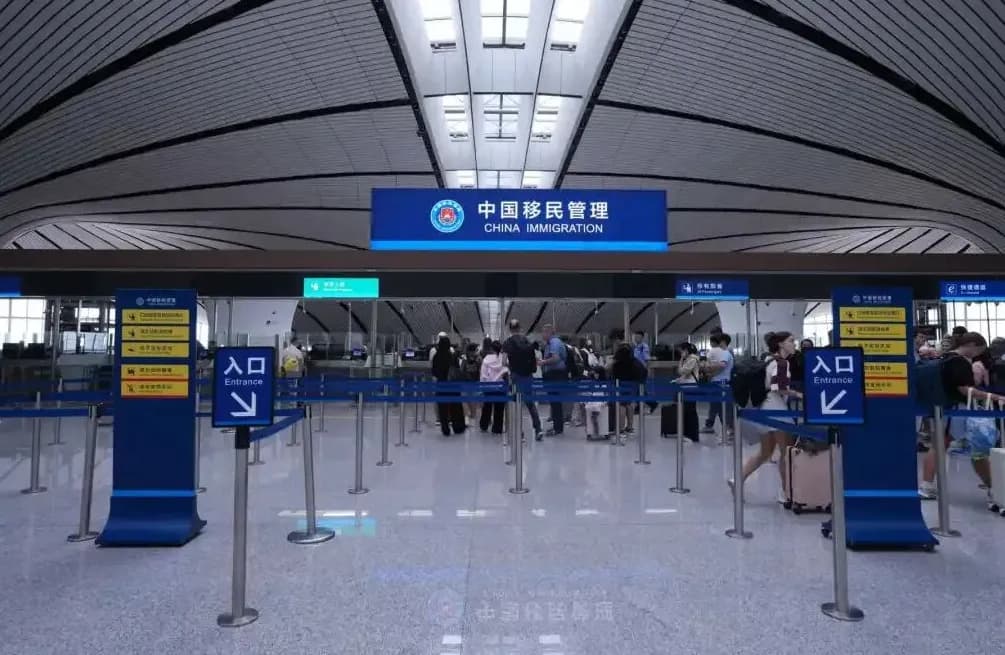
After arriving at an eligible Chinese port, follow the signs and instructions for the relevant visa-free transit and immigration procedures.
The actual process may include:
Inform the airline → Complete entry information → Apply for temporary entry → Immigration inspection → Collect baggage → Customs inspection → Enter China
The exact procedure may vary from one port to another.
For this reason, allow enough time for immigration procedures and avoid making your international connection or subsequent domestic transportation too tight.
To make the transit process smoother, keep the following documents easily accessible.
Passport
Use the same valid passport associated with your international flight reservation.
Onward Ticket
Have your onward ticket or other qualifying proof of travel to a different third country or region available.
Complete Travel Itinerary
Keep your complete travel plan on your phone.
If possible, also save an offline copy in case you do not have internet access.
Visa or Entry Permit for Your Next Destination
If your next country requires a visa or another entry permit, make sure you obtain it before departure.
Remember:
China’s 240-hour visa-free transit policy only covers your entry into China.
It does not automatically give you the right to enter your next country.
| Item | Former 144-Hour Policy | Current 240-Hour Policy |
|---|---|---|
| Maximum stay | 144 hours | 240 hours |
| Equivalent | 6 days | 10 days |
| Current status | Former policy | Current expanded policy |
| Third-country transit required | Yes | Yes |
| Eligible countries | Fewer | 57 as of August 20, 2026 |
| Designated ports | Fewer | 65 |
| Coverage | More limited | 24 provincial-level regions |
| Main purpose | Short-term transit | Short-term transit |
In December 2024, China expanded the former 72-hour and 144-hour visa-free transit policies to 240 hours and has since continued to expand the list of eligible countries and ports.
Therefore, when reading an older “144-hour visa-free” guide, always check its publication date.
Before booking your flights, use this checklist to confirm the main requirements:
| Check | What to Confirm |
|---|---|
| Nationality | Is your passport country currently eligible? |
| Passport | Do you hold an eligible ordinary passport? |
| Itinerary | Does your trip follow A → China → B? |
| Third country | Is B different from A? |
| Onward ticket | Do you have qualifying onward travel documentation? |
| Entry port | Is your Chinese entry port covered by the policy? |
| Travel area | Are your planned Chinese destinations within the permitted area? |
| Time limit | Will you leave China within the permitted 240-hour period? |
| Next destination | Do you meet the entry requirements for your next country? |
| Documents | Do you have your passport, tickets, and relevant travel documents ready? |
If you searched for:
China 144-hour visa-free transit
the first thing to know is that China’s former 144-hour visa-free transit policy has been expanded.
Eligible foreign travelers can now stay in China for up to:
240 hours, or 10 days.
However, more important than the difference between 144 and 240 hours is understanding:
Visa-Free Transit ≠ Visa-Free Entry.
If you want to use China’s 240-hour visa-free transit policy, first check whether your itinerary follows:
Country/Region A → China → Country/Region B
rather than:
Country/Region A → China → Country/Region A
China should be the transit point on your journey from A to B.
Before departure, check:
Whether your nationality is currently eligible
Whether you hold an eligible ordinary passport
Whether you have qualifying onward travel
Whether your onward destination is a different third country or region
Whether your Chinese entry port is covered by the policy
Whether your planned destinations are within the permitted travel area
Whether you will leave China within the permitted 240-hour period
Whether you meet the entry requirements of your next destination
China’s immigration policies may change over time. Before booking your flights and traveling, always check the latest requirements through official Chinese immigration authorities, including the National Immigration Administration.
Your journey, simplified
How We Work
From the first idea to the final day, every detail is handled with care.
Share your travel ideas
Tell us where you want to go and what you enjoy.
Meet your travel advisor
We shape a personal itinerary around your priorities.
Confirm your journey
Review every detail and reserve with confidence.
Travel with support
Our team stays available throughout your trip.
Travel expert
Contact Your Travel Specialist
Get practical advice from a local specialist and turn this route into a trip that fits you.
Start planningRelated Articles
Swipe to explore