China Visa-Free Transit Ports 2026: 24-Hour and 240-Hour Entry Port Guide
China Visa-Free Transit Ports 2026If you are planning to enter China without a visa under the transit exemption policy, one of the most important things to check is which port you can use to enter Chi
If you are planning to enter China without a visa under the transit exemption policy, one of the most important things to check is which port you can use to enter China.
China's visa-free transit policy does not mean that every international airport, railway station or seaport automatically provides the same visa-free entry conditions. The applicable ports, travel areas and transit requirements depend on whether you are using the 24-hour visa-free transit policy or the 240-hour visa-free transit policy.

As of 2026, China provides 24-hour visa-free transit at its open ports for eligible international transit passengers. The 240-hour visa-free transit policy is available to eligible travelers from 57 countries through 65 designated ports in 24 provincial-level regions.
This guide focuses specifically on China's visa-free transit ports. It explains which ports participate in the 240-hour transit program, how the 24-hour transit system works, what areas you can travel to after entering through a designated port, and how to choose the right entry port for your China itinerary.
Last updated: September 2026. China's immigration policies and designated ports can change, so travelers should confirm the latest information with China's National Immigration Administration before departure.
There are two different port systems that foreign travelers should understand.
| Transit Policy | Eligible Ports | Maximum Stay | Can You Leave the Port? |
|---|---|---|---|
| 24-hour visa-free transit | China's open ports | 24 hours | Generally no, unless a temporary entry permit is obtained |
| 240-hour visa-free transit | 65 designated ports in 24 provincial-level regions | 240 hours | Yes, within the permitted travel area |
The distinction is extremely important when choosing your flight.

If you simply need to connect between two international flights, the 24-hour transit policy may be sufficient. If you want to leave the airport and spend several days sightseeing in China, you should check whether your nationality, itinerary and chosen entry port qualify for the 240-hour visa-free transit policy.
A visa-free transit port is an airport, railway port, seaport or other designated entry point where eligible foreign travelers can use China's visa-free transit arrangements.
However, an international airport is not automatically a 240-hour visa-free transit port simply because it operates international flights.
This is one of the most important points for travelers to understand.
Your nationality, international itinerary and entry port must all meet the requirements of the applicable visa-free transit policy.
The 240-hour visa-free transit policy currently covers 65 designated ports across 24 provincial-level regions in China.
These ports allow eligible travelers from 57 countries to enter China without obtaining a visa in advance when they are transiting to a third country or region and meet the other requirements.
The 240-hour policy is particularly useful because travelers can leave the airport or port and visit destinations within the designated travel area.
Major China 240-Hour Visa-Free Transit Entry Points
Some of the most useful entry points for international travelers include major airports in Beijing, Shanghai, Guangzhou, Chengdu, Xi'an and other major tourist or transportation hubs.

Choosing your entry port is not simply a matter of finding the cheapest international flight.
Under China's 240-hour visa-free transit system, the port you use can determine the geographical area in which you are permitted to travel.
This means that your China itinerary should be planned around the entry port.

For example, if you want to visit Beijing, Xi'an and Shanghai, you should not assume that entering China through any 240-hour eligible airport automatically allows you to travel freely between all three cities.
Instead, check the specific permitted travel area associated with the entry port you intend to use.
Think About the Port and Travel Area Together
| What You Check | Why It Matters |
|---|---|
| Nationality | Determines whether you can use the 240-hour policy |
| International itinerary | Determines whether you qualify as a transit passenger |
| Entry port | Determines whether you can use the policy at that port |
| Permitted travel area | Determines where you can travel after entry |
| Onward departure port | Must comply with the applicable transit requirements |
The 24-hour visa-free transit policy is broader than the 240-hour system.
China implements a 24-hour transit visa exemption at its open ports for eligible foreign travelers who are passing through China to a third country or region.
Travelers need a valid international travel document and a confirmed onward ticket and must meet the relevant border inspection requirements.
Can You Leave the Airport Under the 24-Hour Policy?
Normally, travelers using the 24-hour visa-free transit arrangement must remain within the restricted area of the port.
If you need to leave the restricted area, you should apply for a temporary entry permit from the port's immigration border inspection authority.
This means the 24-hour policy is mainly suitable for passengers who have a short international connection rather than travelers planning a sightseeing trip in China.
| Feature | 24-Hour Transit | 240-Hour Transit |
|---|---|---|
| Maximum stay | 24 hours | 240 hours |
| Port coverage | Open ports | 65 designated ports |
| Eligible countries | Broadly available to eligible transit passengers | 57 eligible countries |
| Travel outside port | Generally not permitted without temporary entry authorization | Permitted within the designated travel area |
| Best for | Short international connections | Short China trips and stopovers |
The 240-hour visa-free transit policy currently covers citizens of 57 countries.
European Countries
Austria, Belgium, Czech Republic, Denmark, Estonia, Finland, France, Germany, Greece, Hungary, Iceland, Italy, Latvia, Lithuania, Luxembourg, Malta, Netherlands, Poland, Portugal, Slovakia, Slovenia, Spain, Sweden, Switzerland, Monaco, Russia, United Kingdom, Ireland, Cyprus, Bulgaria, Romania, Ukraine, Serbia, Croatia, Bosnia and Herzegovina, Montenegro, North Macedonia, Albania, Belarus and Norway.
Countries in the Americas
United States, Canada, Brazil, Mexico, Argentina and Chile.
Countries in Oceania
Australia and New Zealand.
Countries in Asia
South Korea, Japan, Singapore, Brunei, United Arab Emirates, Qatar, Indonesia, Vietnam and Kyrgyzstan.
If you are eligible for the 240-hour policy, choosing the right entry port can make your trip significantly easier.
Choose a Port Close to Your Main Destination
If your primary goal is to visit Beijing, entering through a Beijing airport is usually more practical than entering through a distant city and then spending several hours on domestic transportation.
The same principle applies to Shanghai, Chengdu, Xi'an and other major destinations.
Check the Permitted Travel Area Before Booking Hotels
Do not book your entire China itinerary first and check the visa-free rules afterward.
Instead, identify your eligible entry port first and then build your China itinerary around its permitted travel area.
Check Your International Departure Route
Your onward destination is an important part of the visa-free transit qualification.
The journey must generally be a transit route from one country or region through China to another country or region.
Check the Port Before Buying a Non-Refundable Ticket
Airline ticket prices can be attractive, but a cheap flight is not useful if the arrival port does not match your visa-free transit eligibility.
Always confirm the current official requirements before purchasing a non-refundable international itinerary.
For travelers who qualify for the 240-hour policy, a short China stopover can be added to an international journey.
| International Route | Possible China Stopover | Suitable For |
|---|---|---|
| Tokyo → Shanghai → Singapore | Shanghai | First-time visitors to eastern China |
| Seoul → Beijing → Paris | Beijing | History and culture |
| Paris → Shanghai → Tokyo | Shanghai | City sightseeing and food |
| Sydney → Guangzhou → Tokyo | Guangzhou and permitted nearby destinations | Southern China travel |
| Los Angeles → Beijing → Seoul | Beijing | Chinese history and landmarks |
These are itinerary examples rather than automatic guarantees of eligibility. Travelers should confirm that both the entry port and the planned travel area comply with the current 240-hour rules.
Arriving at an eligible port does not mean immigration procedures disappear.
You should prepare the following information before traveling.
| Document | Purpose |
|---|---|
| Valid ordinary passport | Proof of identity and nationality |
| Confirmed onward ticket | Shows your qualifying transit itinerary |
| Hotel reservation | Provides accommodation information |
| Travel itinerary | Shows where you plan to travel in China |
| International flight information | Supports your transit route |
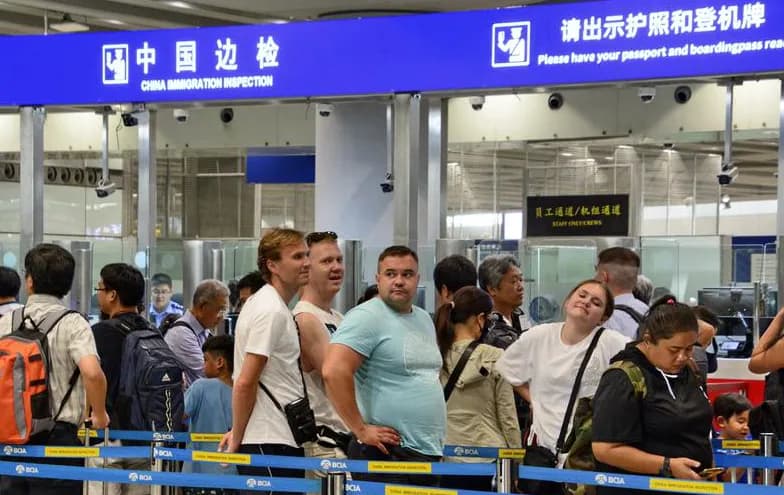
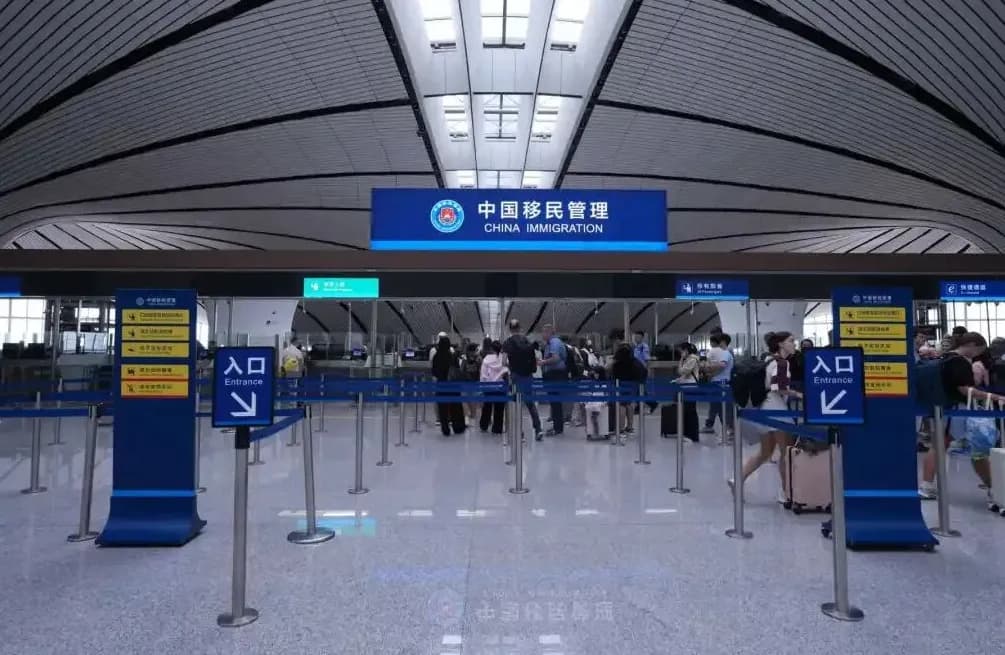
After arriving in China, eligible passengers proceed through the relevant immigration inspection process.
Immigration officers may check your passport, onward ticket, itinerary and other information needed to determine whether you meet the visa-free transit requirements.
If you are using the 240-hour policy, the immigration authorities determine the applicable visa-free transit period and permitted travel conditions based on your specific entry.
Travelers should keep their passport and travel documents with them throughout the trip.
This is an important question for travelers planning complicated itineraries.
You should not assume that entering China through one designated 240-hour port gives you unlimited permission to use domestic transportation throughout China.
The permitted travel area associated with your entry port matters.
If your itinerary includes a domestic flight or high-speed train to another province or city, check whether that destination is included in the permitted area before making the reservation.
Yes. China's visa-free transit system is not limited to airports.
Depending on the specific policy and designated-port list, eligible travelers may be able to enter China through airports, railway ports and seaports.
This is particularly useful for travelers arriving from neighboring countries by train or for passengers using international cruise routes.
However, travelers should confirm that their specific railway or seaport is currently designated for the applicable visa-free transit policy.
Before booking your trip, use this checklist:
Check your nationality. Make sure your passport is from a country covered by the relevant visa-free transit policy.
Check your passport. Confirm that you hold an eligible ordinary passport and that it meets the applicable requirements.
Check your international itinerary. Make sure China is a transit point between your origin and a third country or region.
Check the entry port. Confirm that your airport, railway port or seaport is currently eligible.
Check the permitted travel area. Make sure your planned Chinese destinations are covered.
Check your onward departure. Make sure your onward transportation meets the transit requirements.
Check the maximum stay. Do not plan an itinerary that exceeds the permitted visa-free period.
Check the latest official information. Immigration rules and designated ports can change.
How many visa-free transit ports does China have in 2026?
China's 240-hour visa-free transit policy currently covers 65 designated ports across 24 provincial-level regions. The separate 24-hour visa-free transit arrangement is available at China's open ports for eligible transit passengers.
Can I enter China through any international airport under the 240-hour policy?
No. You should not assume that every international airport participates in the 240-hour visa-free transit program. Travelers should confirm that their specific arrival port is included in the current designated-port system.
Which Chinese airports offer 240-hour visa-free transit?
Major international gateways participating in the policy include airports serving destinations such as Beijing, Shanghai, Guangzhou, Chengdu and Xi'an, among other designated ports. The exact list should be checked against the latest official information before travel.
Can I use a different airport to leave China?
This depends on the applicable transit rules and the permitted travel area associated with your entry port. Your onward journey must meet the requirements of the 240-hour visa-free transit policy.
Can I leave the airport under the 240-hour visa-free transit policy?
Yes. Unlike the normal 24-hour transit arrangement, eligible travelers using the 240-hour policy can leave the port and travel within the designated permitted area.
Can I leave the airport under the 24-hour visa-free transit policy?
Generally, you must remain within the restricted area of the port. If you need to leave that area, you should apply for a temporary entry permit through the port immigration border inspection authority.
Can I travel anywhere in China after entering through a 240-hour visa-free transit port?
No. The 240-hour policy is subject to geographical restrictions. Your permitted travel area depends on the applicable rules for your entry port.
Is Shanghai Pudong Airport a China visa-free transit port?
Shanghai Pudong International Airport is one of China's major international gateways and participates in the visa-free transit system. Travelers should still confirm that their nationality, itinerary and specific travel dates meet the current 240-hour requirements.
Is Beijing Capital Airport available for visa-free transit?
Beijing Capital International Airport is a major designated international gateway for China's visa-free transit arrangements. Travelers should verify the current policy requirements for their nationality and itinerary before departure.
For foreign travelers, the most important question is not simply whether China offers visa-free transit.
The more useful question is:
"Which China visa-free transit port can I use for my itinerary?"
Once you know your nationality, international route and intended destination, choosing the correct entry port becomes much easier.
If you are only connecting through China for a few hours, the 24-hour transit arrangement may be sufficient.
If you want to spend several days sightseeing in China, the 240-hour visa-free transit policy is potentially much more useful, provided your nationality and itinerary qualify and your chosen entry port is included in the designated-port system.
Before booking your flight, always check the three things together: eligible nationality, eligible entry port and permitted travel area.
That simple check can prevent one of the most frustrating problems for international travelers: arriving at the wrong port with an itinerary that does not match the visa-free transit rules.
Important: China's visa and immigration policies can be updated. Always confirm the latest designated ports, eligible nationalities, travel areas and entry requirements with China's National Immigration Administration or the relevant Chinese embassy or consulate before departure.
Your journey, simplified
How We Work
From the first idea to the final day, every detail is handled with care.
Share your travel ideas
Tell us where you want to go and what you enjoy.
Meet your travel advisor
We shape a personal itinerary around your priorities.
Confirm your journey
Review every detail and reserve with confidence.
Travel with support
Our team stays available throughout your trip.
Travel expert
Contact Your Travel Specialist
Get practical advice from a local specialist and turn this route into a trip that fits you.
Start planningRelated Articles
Swipe to explore