Jiangsu Travel Guide: 26 Best 5A Tourist Attractions in China’s Leading Scenic Province
26 Best 5A Tourist Attractions in China’s Leading Scenic ProvinceWhen travelers think about the best places to visit in China, Beijing, Shanghai, Xi'an and Guilin often come to mind first. But if
When travelers think about the best places to visit in China, Beijing, Shanghai, Xi'an and Guilin often come to mind first. But if you want to experience classical Chinese gardens, ancient water towns, historic cities, lakes, mountains, Buddhist culture and traditional Jiangnan landscapes in one region, Jiangsu Province deserves much more attention.
Jiangsu currently has 26 National 5A-rated tourist attractions, the highest number among China's provinces and provincial-level regions. The latest national tourism service data from China's Ministry of Culture and Tourism lists 26 5A attractions in Jiangsu, while the Jiangsu provincial government also states that the province's number of 5A scenic areas remains the highest in the country.

But the number itself is not the most interesting part.
Jiangsu's 26 attractions cover remarkably different types of travel experiences. You can walk through the classical gardens of Suzhou in the morning, explore a water town in the afternoon, watch the lights of Nanjing's Qinhuai River at night, cruise around Taihu Lake, visit a giant Buddhist statue, explore the setting of famous historical stories, or even see elk in a protected wetland.
This guide explains where to go in Jiangsu, what each major 5A attraction is known for, how long to spend there, and how to combine several destinations into a practical China itinerary.
| Attraction | City | Main Experience |
|---|---|---|
| Suzhou Classical Gardens | Suzhou | Classical Chinese gardens and traditional architecture |
| Zhouzhuang Ancient Town | Suzhou | Canals, stone bridges and historic water-town life |
| Tongli Ancient Town | Suzhou | Canals, gardens and traditional residences |
| Taihu Lake Tourism Area | Suzhou | Lake scenery, islands and Jiangnan landscapes |
| Shajiabang–Yushan–Shanghu Tourism Area | Changshu | Wetlands, lakes, mountains and local culture |
| Jinji Lake Tourism Area | Suzhou | Modern cityscape, lakefront walks and nightlife |
| Yuantouzhu | Wuxi | Taihu Lake scenery and seasonal blossoms |
| Lingshan Grand Buddha | Wuxi | Buddhist culture and large-scale religious architecture |
| CCTV Wuxi Film and Television Base | Wuxi | Chinese historical film sets and live performances |
| Huishan Ancient Town | Wuxi | Historic streets, ancestral halls and local culture |
| Global Dinosaur Town | Changzhou | Dinosaur-themed attractions and family entertainment |
| Tianmu Lake | Liyang | Lake scenery, forests and leisure travel |
| Yancheng Chunqiu Tourism Area | Changzhou | Ancient history, archaeology and cultural tourism |
| Zhongshan Scenic Area and Sun Yat-sen Mausoleum | Nanjing | History, architecture, forests and city heritage |
| Confucius Temple–Qinhuai River Scenic Area | Nanjing | Historic streets, temples, river cruises and night views |
| Jinshan–Jiaoshan–Beigushan Scenic Area | Zhenjiang | Mountains, temples, rivers and historic sites |
| Maoshan Scenic Area | Jurong | Mountain scenery and Taoist culture |
| Huaguo Mountain | Lianyungang | Mountain scenery and the legendary Monkey King connection |
| Lian Island | Lianyungang | Coastal scenery and beaches |
| Yunlong Lake | Xuzhou | Lake scenery, parks and city leisure |
| Haohe Scenic Area | Nantong | Historic city waterways and waterfront scenery |
| Slender West Lake | Yangzhou | Classical gardens, waterways and traditional landscapes |
| Qinhu Tourism Area | Taizhou | Wetlands, waterways and ecological tourism |
| Zhou Enlai Memorial and Former Residence Area | Huai'an | Modern Chinese history and memorial sites |
| Dafeng Elk National Nature Reserve | Yancheng | Elk, wetlands and wildlife conservation |
| Hongze Lake Wetland | Suqian | Wetlands, birds, lakes and ecological scenery |
All 26 are included in the current Ministry of Culture and Tourism listing for Jiangsu.
The answer is not simply that Jiangsu has many scenic places. The province has an unusually dense combination of historic cities, waterways, classical gardens, lakes, cultural heritage and modern tourism infrastructure.
Much of southern Jiangsu is part of the traditional Jiangnan cultural landscape, where canals, gardens, historic residences and water towns developed together over centuries.
Nanjing adds major imperial and modern Chinese history. Yangzhou contributes its famous gardens and waterways. Wuxi and Suzhou are closely associated with Taihu Lake and classical Jiangnan scenery. Northern Jiangsu adds wetlands, wildlife and coastal landscapes.

This geographical variety is one reason Jiangsu works particularly well for travelers who want to experience several different aspects of China without traveling across enormous distances.
Suzhou Classical Gardens
Best for: Classical Chinese gardens, architecture, photography and culture
If you only have time for one cultural destination in Jiangsu, Suzhou is an obvious place to start.
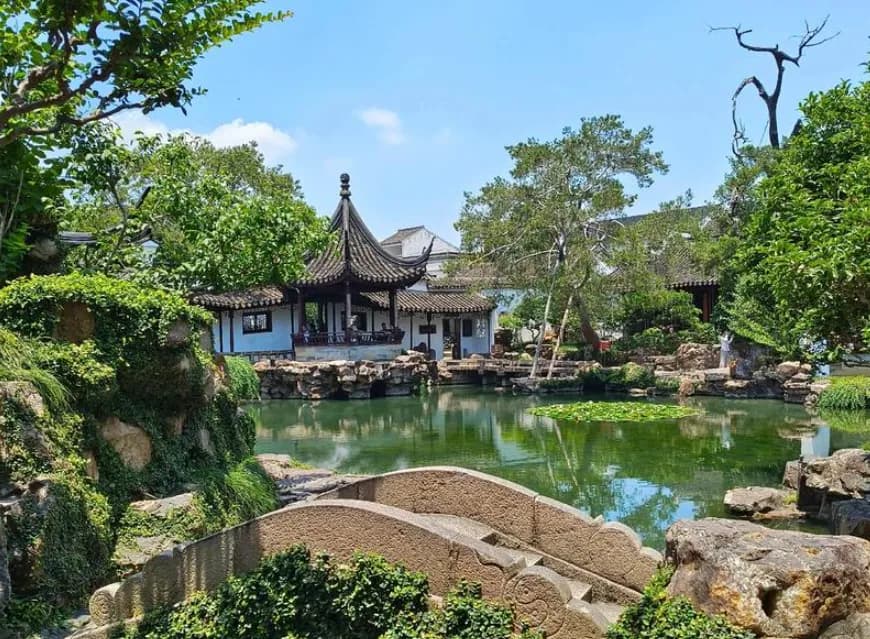
The official 5A designation covers the group known as Suzhou Classical Gardens, represented by Humble Administrator's Garden, Lingering Garden and Tiger Hill. The Ministry of Culture and Tourism lists the attraction as one of Jiangsu's current 26 5A scenic areas.
These gardens are not simply parks with beautiful plants. They are carefully designed landscapes combining water, rocks, buildings, bridges, windows, courtyards and framed views.
For international visitors, the easiest mistake is trying to rush through several gardens in one morning. Choose one or two gardens and take time to understand how the spaces are designed.
How Long to Spend in Suzhou
Allow at least one full day for the classical gardens and historic center. Two days gives you enough time to add a water town such as Zhouzhuang or Tongli.
Zhouzhuang Ancient Town
Best for: Ancient water towns, canals, stone bridges and traditional architecture
Zhouzhuang is one of the most recognizable water towns in the Jiangnan region.
Its appeal comes from the combination of narrow waterways, stone bridges, traditional houses and streets built around the water. Rather than looking for one single landmark, spend time walking through the lanes and observing how the town is organized around its canals.
Zhouzhuang is particularly atmospheric in the early morning and around sunset, when the light becomes softer and the waterways reflect the old buildings.
Tongli Ancient Town
Best for: Water-town architecture, gardens and a slower cultural experience
Tongli offers another perspective on Jiangnan's historic water towns.
Compared with a large modern city, the attraction is compact enough to explore on foot. Traditional residences, canals, bridges and gardens create a landscape where the journey between landmarks is part of the experience.
If your itinerary already includes Zhouzhuang, you do not necessarily need to visit both on the same day. Travelers interested in photography and slower travel may prefer staying overnight in one water town.
Taihu Lake Tourism Area
Best for: Lake scenery, mountains, islands and countryside
Taihu Lake is one of the defining natural landscapes of southern Jiangsu.
The Suzhou Taihu Lake tourism area combines water, hills, islands, gardens and countryside. It provides a useful contrast to the dense historical environment of central Suzhou.

Jiangsu's long-term tourism planning specifically identifies the Taihu region as an important ecological and cultural tourism area, built around lake landscapes and Jiangnan cultural heritage.
Yuantouzhu
Best for: Taihu Lake views, gardens and seasonal flowers
Yuantouzhu is one of the classic places to experience Taihu Lake around Wuxi.
The attraction combines lakefront landscapes, gardens, bridges and viewing areas. Its scenery changes considerably with the seasons, making it particularly attractive for repeat visitors.
Spring is famous for cherry blossoms, but travelers visiting outside the blossom season can still enjoy the lake and traditional landscape design.
Lingshan Grand Buddha
Best for: Buddhist culture, architecture and family-friendly sightseeing
Lingshan Grand Buddha is one of the most recognizable Buddhist tourism destinations in Jiangsu.
The giant Buddha statue is only one part of the broader attraction. The complex also includes religious buildings, cultural spaces and landscaped areas.
Allow several hours rather than treating the Buddha statue as a quick photo stop.
CCTV Wuxi Film and Television Base
Best for: Chinese history, film sets and families
Wuxi's film and television base offers a different kind of cultural tourism.
The attraction recreates historical settings used for Chinese television and film productions, including areas associated with famous stories from the Three Kingdoms and Water Margin traditions.
This can be particularly interesting for international visitors who want to understand how historical China is represented in popular Chinese entertainment.
Huishan Ancient Town
Best for: Historic streets, traditional architecture and local life
Huishan Ancient Town is a good choice for travelers who prefer wandering through historic neighborhoods rather than visiting a large theme-style attraction.
The area contains traditional buildings, ancestral halls, old streets and local cultural sites.
Consider visiting in the morning, when the atmosphere is generally more relaxed, and combine the visit with other Wuxi attractions during the same day.
Zhongshan Scenic Area and Sun Yat-sen Mausoleum
Best for: Chinese history, architecture, forests and outdoor walking
Nanjing's Zhongshan Scenic Area is one of the city's most important historic landscapes.
The area combines forested hills with historic monuments, including the Sun Yat-sen Mausoleum. For visitors interested in modern Chinese history, the site provides useful context for understanding Nanjing's role in China's transition during the early twentieth century.
Because the scenic area is large, wear comfortable walking shoes and allow several hours.
Confucius Temple–Qinhuai River Scenic Area
Best for: Night views, history, traditional streets and river scenery
If Zhongshan represents Nanjing's monumental landscape, the Confucius Temple and Qinhuai River area represents the city's urban cultural life.
Walk through the historic streets, explore the Confucius Temple area and consider taking a night cruise on the Qinhuai River.
The evening is particularly atmospheric, when traditional-style buildings along the river are illuminated.
Do not schedule this attraction too early in the day if the night scenery is one of your main reasons for visiting.
Jinshan, Jiaoshan and Beigushan Scenic Area
Best for: Mountains, temples, rivers and history
Zhenjiang's three-mountain scenic area brings together three distinct landscapes around the Yangtze River.
Jinshan, Jiaoshan and Beigushan each have their own historical and cultural character, making this a good destination for travelers who enjoy combining natural scenery with temples and historical sites.
Maoshan Scenic Area
Best for: Mountain scenery and Taoist culture
Maoshan is particularly associated with Taoist culture and mountain landscapes.
It is a useful choice for travelers who want something different from the Buddhist cultural destinations around Wuxi.
Slender West Lake
Best for: Classical gardens, waterways and photography
Slender West Lake is one of Yangzhou's signature attractions.
The landscape combines narrow waterways, bridges, pavilions, gardens and carefully framed views. It represents a different style of classical Chinese landscape design from the enclosed gardens of Suzhou.
For photographers, walking beside the water in the early morning or late afternoon can be more rewarding than simply following a fixed sightseeing route.
Tianmu Lake
Best for: Lakes, forests, relaxation and family travel
Tianmu Lake in Liyang is a good option when you want to slow down.
Compared with the dense historical attractions of Nanjing and Suzhou, Tianmu Lake focuses more on natural scenery and leisure.
It can work particularly well as a short getaway from Shanghai, Nanjing or other cities in the Yangtze River Delta.
Shajiabang–Yushan–Shanghu Tourism Area
Best for: Wetlands, lakes, mountains and local history
This large tourism area near Changshu combines several types of landscapes instead of focusing on one landmark.
Shajiabang is associated with revolutionary-era history and wetland landscapes, while Yushan and Shanghu provide mountains, forests and water scenery.

It is particularly suitable for travelers who have already experienced Suzhou's gardens and want a more varied countryside environment.
Spring and Autumn Yancheng Tourism Area
Best for: Ancient history, archaeology and cultural tourism
The Spring and Autumn Yancheng Tourism Area in Changzhou focuses on an ancient archaeological and cultural landscape associated with the Spring and Autumn period.
This destination is worth considering if your interest in China goes beyond famous buildings and scenic photography and extends to early Chinese history.
Global Dinosaur Town
Best for: Families, children and entertainment
Global Dinosaur Town in Changzhou is one of the easiest choices for families traveling with children.
The attraction combines dinosaur-themed experiences with entertainment and leisure facilities. It provides a very different experience from Jiangsu's traditional gardens and historic sites.
If you are traveling with young children, this is one of the attractions that can break up a history-heavy itinerary.
CCTV Wuxi Film and Television Base
Families can also enjoy the Wuxi film base because the experience is more interactive than a conventional museum. Historical streets, reconstructed buildings and performances can make traditional Chinese stories easier for children to engage with.
Qinhu Tourism Area
Best for: Wetlands, waterways and ecological tourism
Qinhu Tourism Area in Taizhou is centered around water and wetland landscapes.
The area is particularly suitable for travelers who want a quieter side of Jiangsu and prefer boats, wetlands and natural scenery to crowded historic streets.
Dafeng Elk National Nature Reserve
Best for: Wildlife, wetlands and nature photography
Dafeng is one of the most distinctive destinations on Jiangsu's 5A list because its attraction is closely connected with wildlife conservation.
The area provides habitat for elk and other wetland wildlife, making it a very different experience from the gardens and temples of southern Jiangsu.
For wildlife photography, bring a telephoto lens and avoid approaching animals too closely. The purpose of a protected area is conservation as well as tourism.
Hongze Lake Wetland
Best for: Wetlands, birds and open landscapes
Hongze Lake Wetland offers another perspective on Jiangsu's natural environment.
Instead of classical architecture, visitors can expect broad wetlands, waterways, vegetation and opportunities to observe birds and other wildlife.
The destination is particularly interesting for travelers who want to add an ecological component to a Jiangsu itinerary.
Haohe Scenic Area
Best for: Waterfront scenery and city walks
Haohe is a historic water system running through Nantong and is often described as an important part of the city's identity.
It is a relatively easy destination to combine with urban sightseeing because the attraction is integrated into the city rather than located far outside it.
Lian Island
Best for: Beaches, coastal scenery and seaside travel
Lian Island gives Jiangsu's 5A list a coastal dimension.
Located in Lianyungang, it offers beaches and seaside scenery that are very different from the inland lakes and classical gardens of southern Jiangsu.
If you are already traveling through northern Jiangsu, Lian Island can be combined with Huaguo Mountain.
Huaguo Mountain
Best for: Mountain scenery, mythology and literature
Huaguo Mountain is strongly associated with the legendary Monkey King from the Chinese literary classic Journey to the West.
Even travelers unfamiliar with the novel can enjoy the mountain scenery, but reading a short introduction to the Monkey King story before visiting can make the experience much more meaningful.
The mountain is also one of the official 5A attractions currently listed by the Ministry of Culture and Tourism.
Zhou Enlai Memorial and Former Residence Area
Best for: Modern Chinese history and memorial tourism
Located in Huai'an, this attraction focuses on Zhou Enlai's birthplace, former residence and related memorial sites.
For international travelers studying modern Chinese history, it provides an opportunity to explore a historical figure and period through physical sites rather than only through books or museums.
Yancheng and the Ancient Cultural Heritage of Jiangsu
Jiangsu's cultural tourism is not limited to famous imperial monuments. The province also contains archaeological sites, traditional towns, memorial spaces and landscapes connected with different periods of Chinese history.
The province's current tourism development plan places considerable emphasis on integrating cultural heritage, museums, non-material cultural heritage and tourism experiences.
There is no single “best” attraction for every traveler. A much more useful approach is to match the destination with your interests.
| If You Like... | Start With... |
|---|---|
| Classical Chinese gardens | Suzhou Classical Gardens |
| Ancient water towns | Zhouzhuang or Tongli |
| Chinese history | Zhongshan Scenic Area, Sun Yat-sen Mausoleum, or Zhou Enlai Memorial Area |
| Night views and city atmosphere | Confucius Temple–Qinhuai River |
| Lakes and countryside | Taihu Lake, Yuantouzhu or Tianmu Lake |
| Buddhist culture | Lingshan Grand Buddha |
| Taoist culture | Maoshan |
| Families with children | Global Dinosaur Town |
| Wildlife | Dafeng Elk National Nature Reserve |
| Wetlands | Qinhu or Hongze Lake Wetland |
| Beach and coast | Lian Island |
| Chinese mythology | Huaguo Mountain |
If this is your first trip to Jiangsu, you do not need to attempt all 26 attractions. A focused route through Suzhou, Wuxi and Nanjing will give you a strong introduction to the province.
| Day | Destination | Main Experience |
|---|---|---|
| Day 1 | Suzhou | Suzhou Classical Gardens and historic city center |
| Day 2 | Suzhou | Zhouzhuang or Tongli Ancient Town |
| Day 3 | Wuxi | Yuantouzhu and Taihu Lake |
| Day 4 | Wuxi | Lingshan Grand Buddha and Huishan Ancient Town |
| Day 5 | Nanjing | Zhongshan Scenic Area and Sun Yat-sen Mausoleum |
| Day 6 | Nanjing | Confucius Temple and Qinhuai River |
| Day 7 | Nanjing or Yangzhou | Slender West Lake or additional city sightseeing |
This route deliberately does not attempt to check off every 5A attraction. That is important because Jiangsu is better experienced as a collection of regional travel clusters than as a checklist of 26 attractions.
Suzhou and Southern Jiangsu Route
A classic route can connect Suzhou → Zhouzhuang or Tongli → Wuxi → Nanjing.
This works particularly well for international visitors arriving through Shanghai because Suzhou is an easy starting point for exploring Jiangnan culture.
Nanjing and Central Jiangsu Route
Travelers interested in history can combine Nanjing → Zhenjiang → Yangzhou.
This route focuses more on historic cities, mountains, temples, waterways and classical landscapes.
Northern Jiangsu Route
For a less conventional trip, consider Xuzhou → Huai'an → Suqian → Yancheng → Lianyungang.
This route introduces a very different Jiangsu, with wetlands, wildlife, coastlines, historical sites and landscapes that receive less international attention than Suzhou and Nanjing.
Jiangsu can be visited throughout the year, but the experience changes significantly by season.
Spring
Spring is excellent for gardens, flowering landscapes and water towns. Suzhou, Wuxi and Yangzhou are particularly attractive when gardens and lakes are surrounded by fresh greenery.
Summer
Summer is hot and humid, but lakes, waterways and evening activities can still be enjoyable. If you travel during this period, plan outdoor sightseeing for mornings and late afternoons when possible.
Autumn
Autumn is one of the most comfortable seasons for walking through historic cities and scenic areas. Cooler temperatures also make longer sightseeing days easier.
Winter
Winter can be cold and damp, but it offers a quieter atmosphere at many attractions. Travelers who enjoy photography and slower cultural travel may appreciate the reduced crowds.
Do Not Try to Visit Too Many Attractions in One Day
One of the biggest mistakes when planning a Jiangsu itinerary is assuming that every 5A attraction is a quick stop.
A classical garden may require several hours. A mountain scenic area can involve significant walking. An island may require ferry transfers. A historic water town is best experienced slowly.
Two carefully chosen attractions can easily make a better day than five rushed photo stops.
Use High-Speed Rail Between Major Cities
Jiangsu is part of one of China's most developed transportation regions, making multi-city travel relatively practical.
For an international visitor, combining high-speed rail with local taxis, metro systems or ride-hailing services can be more efficient than renting a car for the entire trip.
Stay Near the Attraction You Want to Photograph at Sunrise
If photography matters to you, consider staying close to the destination rather than commuting long distances every morning.
This is particularly useful for water towns, gardens and waterfront attractions where early morning light can dramatically change the atmosphere.
Check Official Opening Information
Opening hours, ticket policies, special exhibitions, performances and transportation arrangements can change.
The Ministry of Culture and Tourism's current Jiangsu tourism page provides attraction information and links to official websites where available. Check current information before visiting rather than relying on an old blog post.
| Trip Length | Recommended Focus |
|---|---|
| 3 Days | Suzhou and one water town |
| 5 Days | Suzhou, water town, Wuxi and Taihu Lake |
| 7 Days | Suzhou, Wuxi, Nanjing and selected cultural attractions |
| 10 Days | Southern and central Jiangsu with Yangzhou or Zhenjiang |
| 14 Days | A deeper province-wide journey including northern Jiangsu |
How many 5A tourist attractions are there in Jiangsu?
Jiangsu currently has 26 National 5A-rated tourist attractions, according to the current Ministry of Culture and Tourism listing. Jiangsu's provincial government also states that the number of 5A scenic areas remains the highest in China.
Is Jiangsu the province with the most 5A tourist attractions in China?
Yes. Jiangsu currently has the highest number of National 5A tourist attractions among China's provinces and provincial-level regions, with 26 listed attractions.
What is Jiangsu famous for?
Jiangsu is especially famous for classical gardens, ancient water towns, historic cities, canals, lakes, traditional architecture, Buddhist and Taoist culture, and Jiangnan cultural landscapes.
What are the best places to visit in Jiangsu for first-time travelers?
Suzhou, Nanjing and Wuxi are strong starting points because together they cover classical gardens, historic cities, lakes, Buddhist culture, traditional neighborhoods and modern urban experiences.
Is Jiangsu suitable for international tourists?
Yes. The major cities have extensive tourism infrastructure, high-speed rail connections and a wide range of hotels and restaurants. However, visitors should still prepare for practical issues such as mobile payments, transportation apps, attraction reservations and occasional language barriers outside major tourist centers.
Can I visit all 26 Jiangsu 5A attractions on one trip?
Technically yes, but it would require a very long and highly scheduled itinerary. For most travelers, that would turn a culturally rich journey into a checklist.
A better strategy is to group destinations geographically and choose attractions according to your interests.
For many international visitors, Jiangsu is first encountered as the region next to Shanghai. That undersells it.
Within one province, you can move from the carefully framed landscapes of Suzhou's classical gardens to the canals of Zhouzhuang, the broad waters of Taihu Lake, the Buddhist architecture of Wuxi, the historic streets of Nanjing, the gardens of Yangzhou, the mountains of Zhenjiang and the wetlands and coastline of northern Jiangsu.
The province's 26 National 5A tourist attractions are therefore more than a statistic. They reflect the extraordinary variety of landscapes and cultural resources concentrated in Jiangsu.
If you are planning your first Jiangsu trip, do not ask only, “Which attraction is the best?”
Instead, decide what kind of China you want to experience.
For classical gardens and water towns, start with Suzhou. For history and urban culture, explore Nanjing. For lakes and Buddhist culture, consider Wuxi. For a quieter journey, look toward Yangzhou, Zhenjiang and central Jiangsu. And if you want to discover a side of the province that receives less attention from international travelers, head north toward the wetlands, wildlife and coast.
That is the real appeal of traveling through Jiangsu: you do not need to see everything to understand why the province has become China's leading 5A tourism destination by number.
Your journey, simplified
How We Work
From the first idea to the final day, every detail is handled with care.
Share your travel ideas
Tell us where you want to go and what you enjoy.
Meet your travel advisor
We shape a personal itinerary around your priorities.
Confirm your journey
Review every detail and reserve with confidence.
Travel with support
Our team stays available throughout your trip.
Travel expert
Contact Your Travel Specialist
Get practical advice from a local specialist and turn this route into a trip that fits you.
Start planningRelated Articles
Swipe to explore