Tibet Travel Guide: 5 National 5A Scenic Areas You Should Know in 2026
5 Tibet 5A Scenic AreasTibet is one of the most distinctive travel destinations in China, combining high-altitude landscapes, Tibetan Buddhist culture, ancient monasteries, sacred lakes, deep river va
Tibet is one of the most distinctive travel destinations in China, combining high-altitude landscapes, Tibetan Buddhist culture, ancient monasteries, sacred lakes, deep river valleys and some of the world's most dramatic mountain scenery.
For travelers planning a trip to Tibet, one useful way to organize an itinerary is to start with the region's National 5A Scenic Areas, China's highest official scenic-area rating.
As of 2026, Tibet has five National 5A-rated scenic areas: the Potala Palace in Lhasa, Jokhang Temple in Lhasa, Basongcuo in Nyingchi, Tashilhunpo Monastery in Shigatse, and the Yarlung Tsangpo Grand Canyon in Nyingchi. The list is confirmed by the Tibet Autonomous Region Department of Culture and Tourism.
These five attractions are very different from one another. The Potala Palace and Jokhang Temple focus on Tibetan history, architecture and religious culture, while Basongcuo and the Yarlung Tsangpo Grand Canyon showcase the natural landscapes of southeastern Tibet. Tashilhunpo Monastery provides another important perspective on Tibetan Buddhist heritage in Shigatse.
This guide introduces all five 5A scenic areas, including their locations, suggested sightseeing routes, ticket information and practical tips for international travelers.
China uses a national scenic-area rating system from 1A to 5A. A 5A Scenic Area is the highest level in this system and generally reflects the area's tourism resources, visitor services, infrastructure, management and overall tourism quality.
However, a 5A rating does not mean that every attraction will be suitable for every traveler.
Tibet is a high-altitude destination, and the experience of visiting a historic palace in Lhasa is very different from hiking or sightseeing in a remote canyon in Nyingchi.
For international visitors, it is therefore more useful to think about these five destinations by travel experience, rather than simply counting how many 5A attractions can be visited.
| 5A Scenic Area | City / Prefecture | Main Travel Experience | Recommended For |
|---|---|---|---|
| Potala Palace | Lhasa | Tibetan architecture, history and panoramic city views | First-time visitors, culture lovers, photographers |
| Jokhang Temple | Lhasa | Tibetan Buddhist culture and historic Lhasa | Culture and history travelers |
| Basongcuo | Nyingchi | Alpine lake, forests, mountains and villages | Nature lovers, photographers, families |
| Tashilhunpo Monastery | Shigatse | Monastery architecture, Buddhist art and religious heritage | Culture and history travelers |
| Yarlung Tsangpo Grand Canyon | Nyingchi | Mountains, river canyon, villages and spectacular landscapes | Outdoor travelers, photographers, nature lovers |
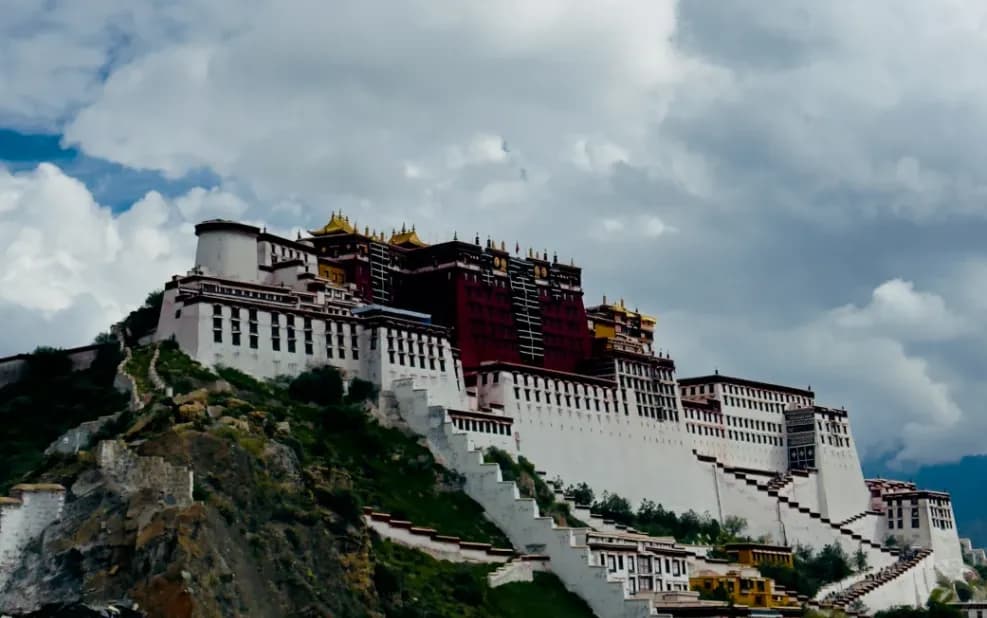
The Potala Palace is probably the most recognizable landmark in Tibet and one of the first places international travelers think of when planning a trip to Lhasa.
Built on Red Mountain in the Lhasa Valley, the palace complex contains the White Palace and Red Palace and is closely associated with the history and religious traditions of Tibet.
The Potala Palace is also part of the UNESCO World Heritage property known as the Historic Ensemble of the Potala Palace, which also includes Jokhang Temple and Norbulingka. UNESCO describes the property as an important example of Tibetan architecture and a place with outstanding historical, religious and artistic value.

Potala Palace Location
Address: No. 35 Beijing Middle Road, Chengguan District, Lhasa
Potala Palace Ticket Price
The standard 2026 peak-season ticket for the main Potala Palace sightseeing route is RMB 200 per person. The official 2026 notice lists RMB 200 for Route 1 and RMB 100 for Route 2 during the peak season from May 1 to October 31.
Important: the Potala Palace introduced a separate Xuecheng sightseeing route from September 20, 2026. The Xuecheng route has its own ticket, priced at RMB 25 per person during the peak season, and does not include the main White Palace and Red Palace buildings.
Suggested Potala Palace Route
For the main palace visit, a practical route is:
Security check → zigzag stone stairs → Deyang Xia Square → White Palace → Red Palace → Golden Roofs → exit.
The climb is one of the most physically demanding parts of the visit. At high altitude, even a relatively short staircase can feel much harder than expected.
The Potala Palace's official visitor guidance also recommends allowing time to walk through the palace buildings and see the murals, cultural relics and architectural details rather than rushing through the route.
Do Foreign Tourists Need to Reserve Potala Palace Tickets?
Yes. This is one of the most important practical points.
In 2026, visitors need to make a real-name reservation through the official Potala Palace ticket reservation system or the official Potala Palace WeChat account. The palace does not sell same-day tickets under the current arrangement.
The official 2026 ticket notice also states that visitors should make reservations in advance through the official reservation system.
2026 Potala Palace Opening Schedule
From September 21, 2026, the Potala Palace resumes a weekly Monday closure schedule, except during statutory holidays. During the summer period from May 1 to October 31, opening begins at 9:00 AM and entry stops at 3:40 PM.
Always check the official reservation system before visiting because opening arrangements can change during holidays or special periods.
If the Potala Palace represents the monumental architecture of Lhasa, Jokhang Temple offers a much more intimate encounter with the city's religious and cultural life.
Located in the historic center of Lhasa, Jokhang Temple is surrounded by the Barkhor area, where visitors can experience one of the city's most recognizable historic urban environments.
UNESCO identifies Jokhang Temple as one of the components of the Historic Ensemble of the Potala Palace and notes its distinctive combination of Tibetan, Chinese, Indian and Nepalese architectural influences.

Jokhang Temple Location
Address: No. 28 Barkhor West Street, Chengguan District, Lhasa
Jokhang Temple Ticket Price
Reference ticket price: RMB 85 per person.
Ticket prices and reservation arrangements can change according to season and local management policies, so international visitors should confirm the latest information before visiting.
Suggested Jokhang Temple Route
Main entrance courtyard → Jokhang main hall → Tsongkhapa Hall → Yaksha Hall / Dragon King Hall → second-floor Dharma King Hall → Palden Lhamo Protector Chapel → Golden Roof Terrace → exit.
Do not treat Jokhang Temple as simply another sightseeing building. It remains an important religious site, so visitors should follow local instructions and behave respectfully throughout the visit.
What Should Foreign Visitors Wear at Jokhang Temple?
Choose modest and comfortable clothing. Avoid behavior that could be considered disrespectful inside religious spaces.
Photography restrictions may apply in certain interior areas. Follow signs and staff instructions rather than assuming that photography is allowed everywhere.
If you want to see a greener and more forested side of Tibet, Basongcuo should be high on your itinerary.
Basongcuo is a high-altitude lake surrounded by mountains and forests in Nyingchi. It is officially recognized as a National 5A Scenic Area and is described by the local tourism authorities as Tibet's first National 5A natural-scenery scenic area.

Unlike the dense historic atmosphere of central Lhasa, Basongcuo is primarily about landscape: turquoise-green water, snow-covered mountains, forests, villages and the small island in the lake.
Basongcuo Location
Address: Cuogao Township, Gongbujiangda County, Nyingchi
Basongcuo Ticket Price
Reference peak-season ticket price: RMB 120 per person.
Local tourism information lists RMB 120 as the peak-season admission price, while seasonal policies can provide different arrangements. Visitors should check the official scenic-area information before traveling.
Suggested Basongcuo Route
Tourist shuttle → Daqiela Viewing Platform → Tashi Island → Jiebacun Village → Forgotten Wharf for sunset.
This route combines panoramic views, lake scenery, village life and photography opportunities.
What Makes Basongcuo Different?
One of the highlights is the contrast between the green-blue lake and the surrounding forests and mountains.
The lake's central island is another major attraction. Visitors can combine sightseeing with a quieter walk around the lake area and explore nearby villages.
Local tourism authorities describe Basongcuo as a destination combining lakes, mountains, forests, waterfalls, pastureland and cultural heritage.
Tashilhunpo Monastery is one of the most important cultural attractions in Shigatse and one of the five National 5A Scenic Areas in Tibet.
For travelers continuing west from Lhasa, Tashilhunpo Monastery provides a very different experience from the Potala Palace and Jokhang Temple.

The monastery is associated with the Gelug tradition of Tibetan Buddhism and contains important religious buildings, statues, murals and stupas.
Tashilhunpo Monastery Location
Address: No. 1 Jikilangka Road, Samzhubze District, Shigatse
Tashilhunpo Monastery Ticket Price
Reference ticket price: RMB 100 per person.
Confirm the latest ticket arrangements before departure because scenic-area ticket policies can change.
Suggested Tashilhunpo Monastery Route
Tsochen Hall → Jampa Buddha Hall → Stupa Hall of the Fourth Panchen Lama → Stupa Hall of the Tenth Panchen Lama → Jannalakang → circumambulation path / Buddha Exhibition Platform.
What Should You Look For at Tashilhunpo Monastery?
Do not focus only on taking photographs of the buildings.
Pay attention to the architectural layout, religious artwork, murals, statues and the relationship between the monastery and the surrounding mountains.
The experience becomes much richer when you understand that the monastery is a living religious and cultural site rather than simply a historical attraction.
The Yarlung Tsangpo Grand Canyon is the most dramatic natural landscape among Tibet's five 5A scenic areas.
Located around Pai Town in Nyingchi's Milin area, the canyon combines the Yarlung Tsangpo River, snow mountains, forests, villages and enormous changes in elevation.

Local government information describes the canyon as extending for more than 500 kilometers, with a maximum depth of around 6,009 meters.
Yarlung Tsangpo Grand Canyon Location
Address: Pai Town, Milin, Nyingchi
Yarlung Tsangpo Grand Canyon Ticket Price
Reference ticket price: RMB 150 per person.
Visitors should confirm the current admission package, transportation arrangements and seasonal pricing before traveling.
Suggested Yarlung Tsangpo Grand Canyon Route
Pai Town Visitor Center → Daduka Ruins → Millennium Ancient Mulberry Square → Namcha Barwa Viewing Platform → Yarlung Tsangpo Riverside Viewing Platform.
Can You See Namcha Barwa?
One of the biggest reasons photographers visit the Yarlung Tsangpo Grand Canyon is the opportunity to see Namcha Barwa, one of the most recognizable mountains in southeastern Tibet.
Weather and cloud conditions have a major influence on visibility, so there is no guarantee that the mountain will be completely visible on the day of your visit.
For travelers interested in photography, it is worth allowing some flexibility in the itinerary rather than treating a single viewing platform as a guaranteed photo opportunity.
You do not necessarily need to visit all five attractions on your first Tibet trip.
The right combination depends on how much time you have and what type of travel experience you want.
| If You Like | Consider |
|---|---|
| Tibetan architecture and history | Potala Palace + Jokhang Temple |
| Religious culture | Jokhang Temple + Tashilhunpo Monastery |
| Lakes and forests | Basongcuo |
| Mountain photography | Yarlung Tsangpo Grand Canyon |
| First-time Tibet travel | Lhasa attractions first, then add Nyingchi or Shigatse |
| Longer Tibet road trip | Combine Lhasa, Shigatse and Nyingchi according to route and altitude adaptation |
Short Tibet Trip
If you only have a few days, focus on Lhasa.
A simple itinerary can combine Potala Palace + Jokhang Temple with other Lhasa attractions. This reduces the amount of long-distance transportation and gives you more time to adapt to the altitude.
One-Week Tibet Trip
With around one week, you can consider combining Lhasa with either Shigatse or Nyingchi.
For culture and history, Lhasa plus Shigatse is a natural combination.
For forests, lakes and mountain scenery, Lhasa plus Nyingchi offers a very different landscape experience.
Longer Tibet Road Trip
If you have more time, you can consider building a longer route that connects Lhasa, Shigatse and Nyingchi.
However, do not underestimate the distances. Tibet is geographically enormous, and a route that looks short on a map can require many hours of road travel.
The biggest practical difference between visiting Tibet and visiting most other destinations in China is altitude.
Lhasa itself sits at roughly 3,650 meters above sea level, while some attractions and mountain routes are considerably higher.
For first-time visitors, the most sensible approach is to allow time for acclimatization instead of immediately planning a packed sightseeing schedule.
Do Not Make Your First Day Too Busy
After arriving in Lhasa, consider keeping your first day relatively easy.
Walking slowly around the city, resting at your hotel and drinking enough fluids can be more comfortable than immediately climbing a large number of stairs.
Be Careful at the Potala Palace
The Potala Palace requires climbing a long series of stairs. At high altitude, this can feel significantly more strenuous than expected.
Walk slowly and take breaks when necessary.
Watch the Weather
Mountain weather in Tibet can change quickly.
Before visiting remote attractions such as Basongcuo or the Yarlung Tsangpo Grand Canyon, check the latest weather and road conditions.
Lhasa's 2026 travel advisory also reminds visitors to monitor weather changes and geological-disaster warnings and to avoid undeveloped areas without adequate safety measures.
Several of Tibet's 5A attractions are active religious sites.
Visitors should therefore behave differently from how they might behave at a normal tourist attraction.
Follow signs and staff instructions.
Do not touch religious objects unless explicitly permitted.
Do not photograph areas where photography is prohibited.
Dress respectfully when visiting religious sites.
Do not disturb people who are praying or performing religious practices.
Follow designated visitor routes and avoid entering restricted areas.
Lhasa's official 2026 travel guidance specifically reminds visitors to respect local customs, cultural traditions and religious beliefs when visiting temples.
There is no single best month for all five destinations.
| Destination | Seasonal Highlight | What to Expect |
|---|---|---|
| Potala Palace | Spring to autumn | Good conditions for city sightseeing and photography |
| Jokhang Temple | Most travel seasons | Historic Lhasa and religious culture |
| Basongcuo | Spring to autumn | Green forests, lake scenery and seasonal colors |
| Tashilhunpo Monastery | Spring to autumn | Comfortable conditions for sightseeing and photography |
| Yarlung Tsangpo Grand Canyon | Spring to autumn | Mountain scenery, river landscapes and changing weather |
Spring is particularly attractive around Nyingchi because of seasonal flowers, while autumn can offer colorful forests and clearer mountain views in some areas.
However, weather conditions vary from year to year, so travelers should check current forecasts rather than relying only on seasonal expectations.
Based on the reference prices used in this guide, the five attractions have different admission costs.
| Scenic Area | Reference Admission Price |
|---|---|
| Potala Palace | RMB 200 for the 2026 peak-season main Route 1 |
| Jokhang Temple | RMB 85 |
| Basongcuo | RMB 120 reference peak-season admission |
| Tashilhunpo Monastery | RMB 100 |
| Yarlung Tsangpo Grand Canyon | RMB 150 |
These figures should be treated as reference prices rather than guaranteed prices. Some attractions use seasonal pricing, transportation packages, reservation systems or separate tickets for specific areas.
For example, Basongcuo's local tourism information notes that seasonal policies can change admission arrangements, while the Potala Palace introduced a separate Xuecheng ticket in September 2026.
No.
They are five National 5A scenic areas, but Tibet has many other destinations that can be meaningful to travelers.
Depending on your route, you may also consider attractions such as Namtso, Norbulingka, Tibet Museum, Mount Everest area, Sakya Monastery and other natural and cultural sites.
The official Tibet tourism authority's current A-level scenic-area list includes many additional 4A and 3A attractions beyond the five 5A sites.
Therefore, a Tibet itinerary should not be designed simply as a checklist of five 5A attractions.
The more useful approach is to combine cultural sites, landscapes and travel routes while allowing enough time for altitude adaptation.
How many 5A scenic areas are there in Tibet?
As of 2026, Tibet has five National 5A Scenic Areas: Potala Palace, Jokhang Temple, Basongcuo, Tashilhunpo Monastery and the Yarlung Tsangpo Grand Canyon.
Which Tibet 5A attraction is in Lhasa?
There are two: Potala Palace and Jokhang Temple.
Which Tibet 5A scenic areas are in Nyingchi?
There are two: Basongcuo and the Yarlung Tsangpo Grand Canyon.
Which Tibet 5A scenic area is in Shigatse?
Tashilhunpo Monastery is the 5A scenic area in Shigatse.
Which Tibet 5A attraction should I visit first?
For many first-time visitors, Lhasa is a practical starting point because Potala Palace and Jokhang Temple are both located there. More importantly, starting in Lhasa allows travelers to begin adapting to Tibet's high altitude before continuing to other destinations.
Do I need to book Potala Palace tickets in advance?
Yes. The 2026 official arrangements require visitors to make a real-name reservation through the official Potala Palace ticket reservation system or official WeChat account. Same-day ticket sales are not available under the current arrangement.
Is Basongcuo worth visiting if I have already seen Lhasa?
It offers a completely different experience. Lhasa focuses heavily on historic architecture and Tibetan cultural heritage, while Basongcuo is primarily a natural landscape destination featuring a high-altitude lake, forests, mountains and villages.
Can I visit all five 5A scenic areas in one trip?
Yes, a longer Tibet itinerary can potentially include all five, but the trip requires careful planning because the attractions are spread across Lhasa, Shigatse and Nyingchi. Travel time between destinations can be substantial, and altitude adaptation should be considered when planning the route.
Tibet's five National 5A Scenic Areas are not simply five versions of the same tourist attraction.
Potala Palace is about monumental architecture and the history of Lhasa.
Jokhang Temple brings visitors into the religious and cultural heart of the old city.
Basongcuo offers an entirely different side of Tibet, with forests, mountains and a striking alpine lake.
Tashilhunpo Monastery provides an important cultural and religious experience in Shigatse.
The Yarlung Tsangpo Grand Canyon is the choice for travelers looking for dramatic mountain, river and canyon landscapes.
If this is your first trip to Tibet, you do not need to rush through all five simply to complete a checklist.
A better approach is to choose destinations that match your interests, allow enough time to adapt to the altitude, and leave some flexibility for weather and transportation conditions.
That way, the five 5A scenic areas become more than a list of attractions. They become five different ways to understand Tibet.
Your journey, simplified
How We Work
From the first idea to the final day, every detail is handled with care.
Share your travel ideas
Tell us where you want to go and what you enjoy.
Meet your travel advisor
We shape a personal itinerary around your priorities.
Confirm your journey
Review every detail and reserve with confidence.
Travel with support
Our team stays available throughout your trip.
Travel expert
Contact Your Travel Specialist
Get practical advice from a local specialist and turn this route into a trip that fits you.
Start planningRelated Articles
Swipe to explore