Autumn in Xinjiang 2026: Best Places to Visit in Tekes County
Best Places to Visit in Tekes CountyIf you are planning an autumn trip to Xinjiang in 2026, Tekes County in the Ili Valley deserves a place near the top of your itinerary.
If you are planning an autumn trip to Xinjiang in 2026, Tekes County in the Ili Valley deserves a place near the top of your itinerary.
Tekes is different from the classic summer image of Xinjiang. In autumn, the grasslands gradually turn from green to gold, mountain forests begin to change color, wooden villages become quieter, and the famous Bagua City takes on a softer atmosphere as the summer crowds disappear.

For travelers who enjoy photography, road trips, nature, local culture, and slower-paced travel, autumn is an especially interesting time to explore Tekes.
In 2026, Tekes has launched dedicated autumn travel routes covering grasslands, Bagua City, traditional villages, folk experiences, and countryside stays. The official autumn travel season is promoted from roughly mid-August through late November, although the best scenery varies considerably by altitude and location.
Tekes sits in the western part of the Tianshan Mountains and is surrounded by grasslands, valleys, forests, and mountain scenery. The area is particularly attractive in autumn because several landscapes change at different speeds.
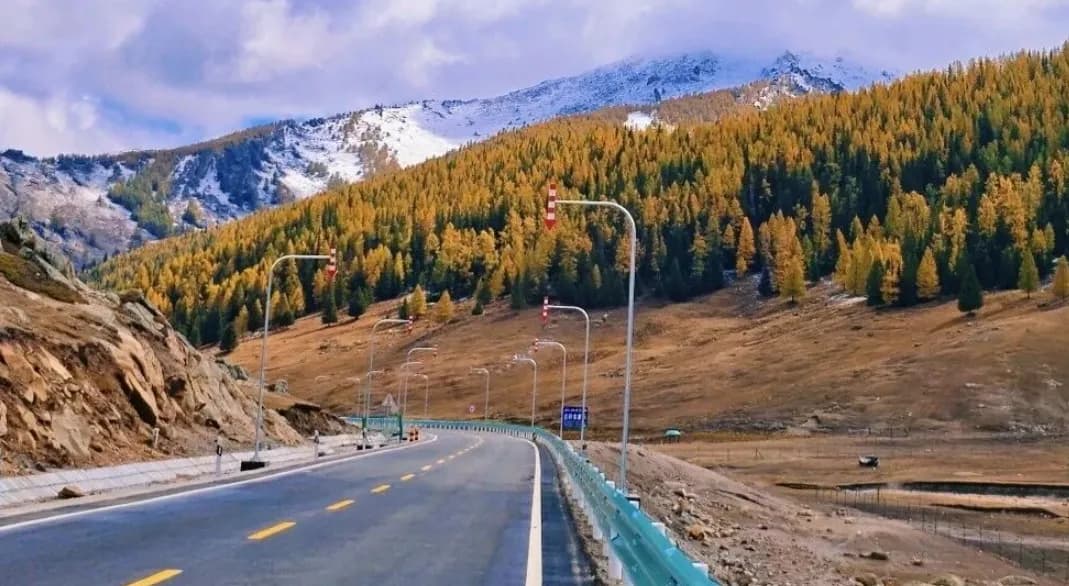
Higher grasslands may turn yellow while lower valleys still retain some green. Birch and poplar trees add golden color, while the darker evergreen forests create strong contrast. This gives photographers more layers to work with than a single-color autumn landscape.
Autumn is also a good season for travelers who prefer a quieter experience. Instead of trying to cover several major Xinjiang destinations in a few days, Tekes works well as a slow-travel base for exploring nearby grasslands and villages.
| Destination | Best Autumn Experience | Recommended Time | Ideal For |
|---|---|---|---|
| Kalajun Scenic Area | Golden grasslands, mountain valleys and panoramic views | Half day to 1 day | Photography, nature, hiking |
| Tekes Bagua City | City layout, local culture, museums and evening views | Half day to 1 day | Culture, architecture, first-time visitors |
| Aktas Maiden Peak Scenic Area | Autumn grasslands and Kazakh cultural experiences | Half day to 1 day | Families, culture, easy sightseeing |
| Qiongkushitai Village | Golden forests, wooden houses, valleys and village life | 1 to 2 nights | Slow travel, photography, couples |
Kalajun is one of the most recognizable landscapes around Tekes, but autumn gives the grassland a completely different appearance from its summer season.
As the green grass gradually turns yellow, the rolling terrain becomes more strongly defined. The famous curved grassland landscape, often described by photographers as the “Human Body Grassland,” looks particularly striking when low autumn sunlight falls across the slopes.

The contrast between golden grass, darker forest, distant mountains, and blue sky makes autumn especially attractive for landscape photography.
What to See in Kalajun in Autumn
The main attraction is not one single viewpoint. It is the combination of grassland, valleys, forests and changing light.
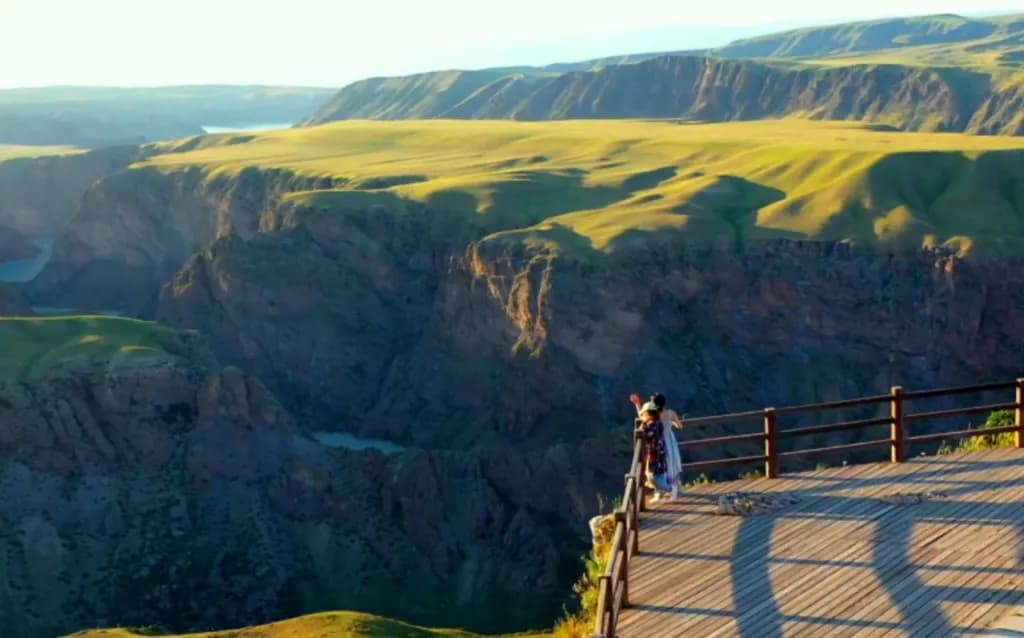
The Kuokesu Grand Canyon area provides a different visual experience from the open grassland. Instead of looking across a broad plateau, visitors can see deeper valleys and dramatic terrain.
For travelers who do not want a demanding hike, sightseeing vehicles connect major viewing areas, making it possible to experience large sections of the scenic area without walking long distances.
Recent 2026 autumn travel information from Tekes specifically includes Kalajun as one of the county's core autumn routes.
When Is the Best Time to Visit Kalajun in Autumn?
For golden grassland scenery, September is generally more suitable than the height of summer. By mid-September 2026, recent travel reports describe the grassland as transitioning toward golden autumn colors rather than the green-and-flower landscape associated with early summer.
This distinction is important when planning a trip. If your priority is wildflowers and intensely green grass, early summer is more appropriate. If you want golden slopes, stronger autumn colors and softer afternoon light, September and early autumn are more relevant.
Practical Tip for Photographers
Try to avoid photographing only at midday. Early morning and late afternoon usually provide more directional light and stronger shadows across the rolling terrain.
Bring both a wide-angle lens for the large landscape and a medium or telephoto lens for compressing layers of grassland, forest and mountains.
Tekes Bagua City is one of the most unusual urban layouts in Xinjiang. Rather than being a conventional grid city, its streets are organized around a central area in a pattern associated with the Eight Trigrams.
The city is not simply a place to stop for dinner before heading to the mountains. It is worth spending at least one night here because it provides a useful cultural counterpoint to the surrounding grasslands.

Recent 2026 coverage highlights the city's distinctive circular street structure and its role as a cultural and travel hub in the Tekes area.
What to Do in Bagua City
A relaxed day can start with a walk through Li Street, where visitors can explore local shops and traditional craft experiences.
After lunch, visit the local museum and the Yijing Cultural Park to learn more about the cultural background associated with the city's distinctive layout.
In the evening, head toward Taiji Altar or another elevated viewpoint. Watching the city from above as the streets and buildings gradually light up gives you a much better understanding of the unusual urban plan than simply walking through the streets.
How Long Should You Stay in Tekes Bagua City?
One night is enough for travelers on a tight schedule, but two nights are more comfortable if Tekes is being used as a base for Kalajun and nearby villages.
A practical combination is to explore Bagua City in the afternoon and evening, visit a nearby grassland destination the following day, and return to the city for dinner and accommodation.
Aktas Maiden Peak is located in the Wusun Mountains north of Tekes and is one of the easier places to combine mountain scenery with local cultural experiences.
The landscape includes highland grassland, mountain slopes and grazing animals. In autumn, the grass changes from summer green toward yellow, creating a quieter and more muted landscape.

The destination is also different from Kalajun because the experience is not limited to landscape photography. Cultural activities and traditional experiences are an important part of the visit.
What Makes Aktas Maiden Peak Different?
The scenic area has developed a range of Kazakh cultural experiences, including traditional performances, craft demonstrations and opportunities to learn about pastoral life.
In 2026, the destination was included in an autonomous regional list of preferred folk-culture tourism sites, with cultural activities featuring traditional welcome ceremonies, music, dance and handicraft demonstrations.
This makes Aktas particularly suitable for families who want more than a scenic viewpoint. Children can combine outdoor sightseeing with hands-on cultural experiences, depending on the activities operating on the day of their visit.
2026 Self-Driving Information
If you are driving yourself, check the latest ticket and vehicle-access rules before leaving. In August 2026, the scenic area changed its self-driving service fee structure from a per-person charge to a vehicle-based charge, with different rates for smaller and larger passenger vehicles. The published self-driving access period was 08:30 to 20:30.
Because operating policies can change during the season, international visitors should confirm the latest information through the scenic area's official channels or local accommodation before setting out.
If Kalajun is about wide-open landscapes, Qiongkushitai is about atmosphere.
The village lies in a mountain valley and is known for its traditional wooden houses, grassland surroundings, forests and streams. It is also associated with the northern entrance of the historic Wusun Ancient Trail.

People's Daily reported in 2026 that the village can be reached from central Tekes by a mountain road of roughly 90 kilometers, with the journey commonly taking more than two hours. The article also describes its traditional wooden houses, surrounding mountains, grasslands and streams.
Why Visit Qiongkushitai in Autumn?
Autumn changes the character of the village.
Birch and poplar trees turn yellow, while evergreen forests remain darker. Traditional wooden houses sit between the slopes and valley, and the combination of golden trees, green forest and grassland creates a layered landscape that is very different from the open views of Kalajun.
Early morning can be particularly atmospheric when mist forms around the valley. During the day, you can walk along the river, explore the village or arrange a horseback-riding experience with local operators where available.
At sunset, the wooden houses and surrounding hills become especially attractive for photography.
How Many Nights Should You Stay in Qiongkushitai?
One night is possible, but two nights are better if your schedule allows.
The main reason is simple: Qiongkushitai is not a destination that needs to be rushed. Arriving in the afternoon, staying overnight, photographing the village in the early morning, and spending the following day exploring the surrounding valley creates a much more relaxed experience.
Accommodation ranges from village guesthouses to more comfortable boutique-style stays. During autumn weekends and holiday periods, booking ahead is sensible.
If this is your first visit, a three-day itinerary gives you enough time to experience the major highlights without turning the trip into a race.
| Day | Plan | Recommended Stay |
|---|---|---|
| Day 1 | Arrive in Tekes, explore Bagua City, visit Li Street and enjoy the city after sunset | Tekes |
| Day 2 | Visit Kalajun, explore the grasslands and canyon viewpoints, return to Tekes | Tekes |
| Day 3 | Visit Aktas Maiden Peak or drive toward Qiongkushitai for a slower village experience | Qiongkushitai or Tekes |
If you have four days, avoid adding too many distant destinations. Instead, slow down around Tekes.
| Day | Route | Travel Style |
|---|---|---|
| Day 1 | Tekes Bagua City | Culture and city walk |
| Day 2 | Tekes to Kalajun and return | Grassland and photography |
| Day 3 | Tekes to Aktas Maiden Peak | Mountain scenery and cultural experiences |
| Day 4 | Tekes to Qiongkushitai | Village life and slow travel |
Self-Driving
A rental car gives you the most flexibility because the attractions are spread across a large mountainous area.
However, mountain weather can change quickly in autumn. Check road and weather conditions before leaving, avoid driving after dark on unfamiliar mountain roads, and keep enough fuel and drinking water in the vehicle.
Private Driver or Tour
For international visitors who are not comfortable driving in remote mountain areas, hiring a local driver can make the itinerary easier.
This is especially useful if you want to combine Tekes with other parts of the Ili Valley without worrying about navigation, parking, changing road conditions or long mountain drives.
Public Transportation
Public transportation can be used for reaching Tekes, but it is less convenient for connecting several rural attractions. For a multi-day autumn itinerary covering Kalajun, Aktas and Qiongkushitai, private transportation is generally more practical.
Autumn in the mountains is not the same as autumn in a major city. Temperatures can change significantly between sunny afternoons and early mornings.
| Item | Why You Need It |
|---|---|
| Light down jacket or warm mid-layer | Useful for cold mornings, evenings and mountain areas |
| Windproof jacket | Grasslands can be exposed and windy |
| Comfortable walking shoes | Useful for grassland viewpoints and village roads |
| Sunglasses | Bright sunlight can be strong at higher elevations |
| Sunscreen | Important even when temperatures feel cool |
| Power bank | Useful during long drives and rural excursions |
| Offline maps | Helpful when mobile coverage becomes inconsistent in mountainous areas |
Do Not Expect Summer Colors
This is probably the most important seasonal distinction.
Autumn Tekes is not the same destination shown in many summer travel photographs. The famous green grasslands and flower-covered meadows gradually change into yellow and brown tones.
If you specifically want wildflowers and intensely green grass, plan for an earlier season. If you want golden grasslands, autumn forests and softer light, autumn is the better match.
Book Rural Accommodation in Advance
Qiongkushitai has a much smaller accommodation supply than a city. Weekend demand can also be higher than weekday demand.
For international travelers, it is worth confirming whether the accommodation accepts foreign guests before making a non-refundable booking.
Check Opening Conditions Before Visiting
Mountain attractions can change operating hours and vehicle-access rules according to weather, road conditions and seasonal management.
Do not rely on an old travel blog for opening hours or ticket information. Check the latest official information shortly before departure.
Allow Extra Time for Mountain Roads
A route that looks short on a map can take considerably longer on winding mountain roads. Do not build an itinerary around unrealistic driving times.
This is particularly important for Qiongkushitai, where the road from Tekes involves mountainous terrain and the journey can take more than two hours despite the relatively modest distance.
Tekes is particularly suitable for travelers who want to experience several sides of Xinjiang within one relatively compact area.
You can photograph golden grasslands at Kalajun, understand the unusual urban design of Bagua City, experience Kazakh cultural traditions at Aktas Maiden Peak, and slow down among wooden houses and autumn forests in Qiongkushitai.
The biggest advantage is that these experiences complement rather than repeat one another.
For a first autumn trip to Xinjiang, Tekes is therefore better approached as a slow-travel destination rather than simply another sightseeing stop.
When is the best time to visit Tekes in autumn?
September is a particularly useful month for combining golden grasslands with relatively accessible mountain travel. Autumn tourism products promoted by Tekes in 2026 extend from around mid-August into late November, but actual colors vary by altitude and weather.
Is September too cold for Tekes?
Not necessarily. Sunny daytime conditions can still be comfortable, but mornings and evenings can become cold, especially in higher-elevation grasslands and mountain villages. Layered clothing is the safest approach.
Can I visit Kalajun and Tekes Bagua City on the same day?
Yes. A common approach is to spend the morning and afternoon exploring Kalajun and return to Tekes in the evening. If photography is your priority, however, giving Kalajun more time will allow you to work around changing light.
How long should I stay in Tekes?
Two to four days is a practical range for a first visit. Two days works for Bagua City and one major nature attraction, while three or four days allows you to add Aktas Maiden Peak and Qiongkushitai without rushing.
Is Qiongkushitai suitable for families?
Yes, particularly for families who enjoy nature and village experiences. However, mountain roads can be tiring for young children, and parents should choose accommodation and activities based on road conditions and the child's tolerance for longer drives.
Is Tekes suitable for photographers?
Yes. Autumn offers several complementary subjects: golden grassland, mountain forests, wooden houses, rivers, livestock, valleys and traditional village life. The strongest photography opportunities usually come from early morning and late afternoon light rather than simply visiting at midday.
If you are searching for the best places to visit in Xinjiang in autumn 2026, you do not necessarily need to build a huge itinerary covering the entire region.
Tekes offers something more relaxed.
Spend a day among the golden grasslands of Kalajun. Walk through the unusual streets of Bagua City. Experience local culture at Aktas Maiden Peak. Then slow everything down in Qiongkushitai, where golden trees, wooden houses, mountain streams and quiet valleys create a very different side of Xinjiang.
For travelers who prefer meaningful experiences over ticking off as many attractions as possible, autumn in Tekes can be one of the most rewarding ways to experience the Ili Valley.
Your journey, simplified
How We Work
From the first idea to the final day, every detail is handled with care.
Share your travel ideas
Tell us where you want to go and what you enjoy.
Meet your travel advisor
We shape a personal itinerary around your priorities.
Confirm your journey
Review every detail and reserve with confidence.
Travel with support
Our team stays available throughout your trip.
Travel expert
Contact Your Travel Specialist
Get practical advice from a local specialist and turn this route into a trip that fits you.
Start planningRelated Articles
Swipe to explore